The left didn't collapse because of external forces. It collapsed from within. That's the provocative thesis from NYU sociology professor Vivek Chibber, who argues the contemporary left has abandoned its core commitment to class analysis and replaced it with identity politics that alienates the working people it claims to represent.
The Intellectual Degeneration of the Left
Chibber contends the left's intellectual resources are weaker today than at any point in its history. He traces this decline to a specific shift: radical scholarship—understood as going to the root causes of modern society, namely capitalism—was abandoned in favor of identity-based analysis focused on discrimination, marginalization, and frustrated upward mobility.
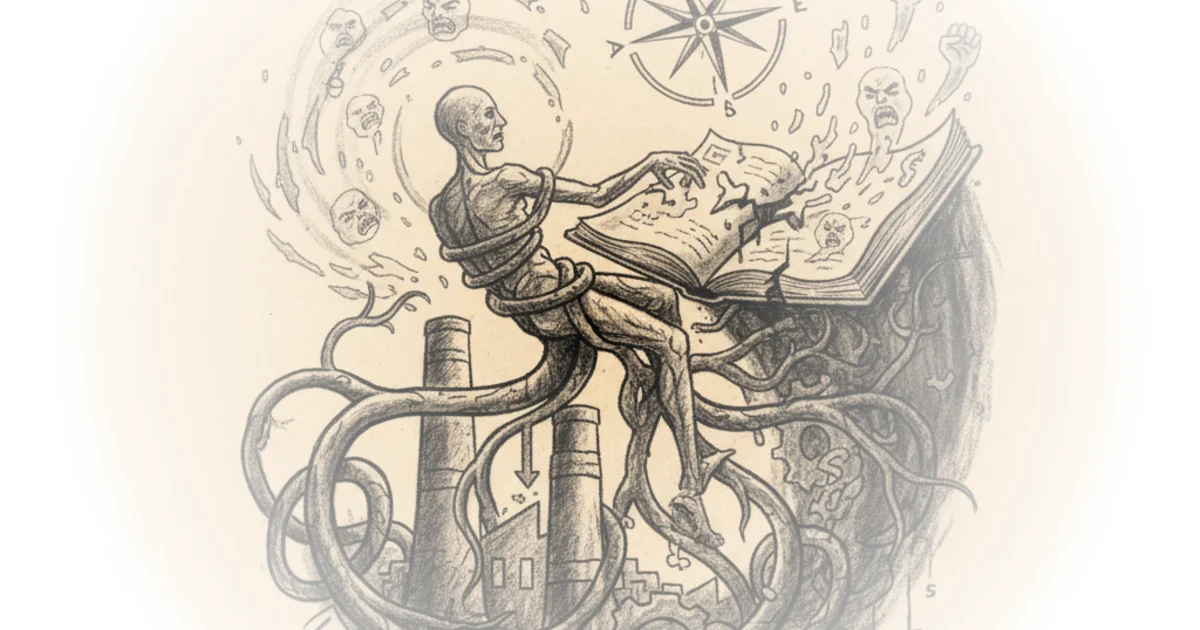
"Radicalism changes," Chibber explains. "Radicalism now becomes removing barriers to mobility. The key of which is discrimination, bias, things like that." This shift didn't just change the scholarship—it changed who enters academia in the first place.
Who Goes Into Academia Now?
The transformation of academic culture isn't just intellectual. It's biographical. Thirty years ago, sociology attracted what Chibber describes as "decent people"—progressive liberals open to left-wing ideas who wanted to do meaningful work. That pipeline has dried up.
Now, academia attracts professionals fleeing the private sector job market. They want advancement and career success. They have no connection to grassroots movements. Their radicalism matches their professional ambitions—a radicalism that uses the language of oppression but ceases to link it to broad systemic issues.
"They just want to be car salesman," Chibber says. "Their mentality is of car salesmen, but they want their self-image to be justice warriors."
The Attitude Toward Workers
Perhaps the most damning element of the current left is its attitude toward working people. When workers vote for Trump, the response isn't introspection—it's dismissal.
"They say they're voting against their interests," Chibber notes. "But worse yet, they say this is what racism gets you." Rather than asking how the left failed to reach these voters, the current left treats worker votes as vindication of their own superior moral position.
Chibbor draws on a historical example: in the 1930s, Italian Communist leader Toliati asked what the left did wrong when workers veered toward fascism. The classical left saw it as their failure to bring the masses to their program. The current left sees it as proof of worker ignorance and moral deficiency.
"This one, its instinct is to blame the masses and trumpet its own virtuousness," Chibbor says.
The Woke Left's Brand Problem
The woke left has accomplished something remarkable: it's made itself hated by the very people it claims to represent. Because public perception now sees identity-focused left politics as incompatible with ordinary working values, socialists face a branding crisis.
"Any legitimate left that's going to be coming up now is associated with this illegitimate woke left," Chibbor argues. "And because the public hates the woke left, despises them, it puts socialists on a very difficult footing because they're branded, they're painted with the same brush as critical race theory, as poststructuralism, as postcolonial theory."
What Needs to Happen
Chibbor believes the left must openly and vocally criticize identity politics—despite fear of alienating their audience. "Unless you start criticizing this stuff, you're going to go down with the woke left," he says. "We're a lot weaker than either of these factions because the current left is in organizations whose culture doesn't come out of class building, of confronting capital."
The left's cultural problem isn't just strategic—it fundamentally misunderstands who its supposed constituents are.
"Most workers are white racists or misogynists or transphobes. I'm going to go in there to teach them."
This attitude—arriving to educate people rather than organize with them—is why the left has lost the working class it claims to champion.
Counterarguments Worth Considering
Critics might note that identity politics emerged from genuine failures in the civil rights and feminist movements—that addressing discrimination isn't inherently anti-working-class. Others would argue that Chibbor's nostalgia for a unified left ignores real historical achievements of identity-based organizing, which produced measurable gains for marginalized communities. The shift he critiques wasn't purely about professionalization—it also reflected legitimate scholarly advances in understanding oppression.
Bottom Line
Chibbor's strongest insight is diagnostic: the left lost its connection to workers because it stopped talking about class and started talking about individual grievances. His vulnerability is prescriptive—he offers criticism without a clear alternative vision for what a renewed left should look like. The piece succeeds as critique but leaves the reader wanting more concrete direction.