This piece delivers a scathing, first-hand account from within CBS News that frames recent executive firings not as routine corporate restructuring, but as a targeted silencing of hard-hitting journalism. Robert Reich presents an indictment of the new leadership at Paramount Skydance and CBS News, arguing that the removal of veteran staff follows a pattern where truth-telling is punished by an administration seeking to control narratives. The evidence here is visceral: it moves beyond abstract policy debates into the raw emotion of a newsroom in shock, offering a rare glimpse behind the curtain of media consolidation.
A Night of Disruption
Reich opens by centering the human cost of corporate decision-making, quoting Scott Pelley's description of the event as a "Black Thursday massacre." This is not hyperbole; it describes the sudden removal of an entire senior leadership team that had just delivered record growth and multiple Emmy awards. Reich highlights Pelley's shock at seeing his colleagues wiped out overnight, noting that "one-third of our correspondents have been fired" while a new executive with zero television experience was installed to lead them. The argument here is stark: the administration's mandate for "modernization" has resulted in the decapitation of institutional knowledge and a betrayal of the staff who risk their lives covering global conflicts.
"My colleagues and I have worked together 10, 20, 30 years... We travel together. We dine together. We go into literal combat together."
The framing is effective because it contrasts the deep bonds of the newsroom with the cold, transactional nature of the new management. Reich points out that the new leadership, specifically Nick Bilton and Bari Weiss, failed to offer any explanation or even a face-to-face meeting before imposing these changes. Instead, Pelley describes a scene where Bilton read a statement from his phone to a grieving staff, a moment Reich characterizes as "callous" and "tone deaf." Critics might argue that legacy media does need disruption and that new blood is necessary for survival in the digital age. However, Reich effectively counters this by showing that the new leadership lacks basic understanding of the industry, citing an email where Bilton suggested the show was stuck in 1968 despite its massive global online presence.
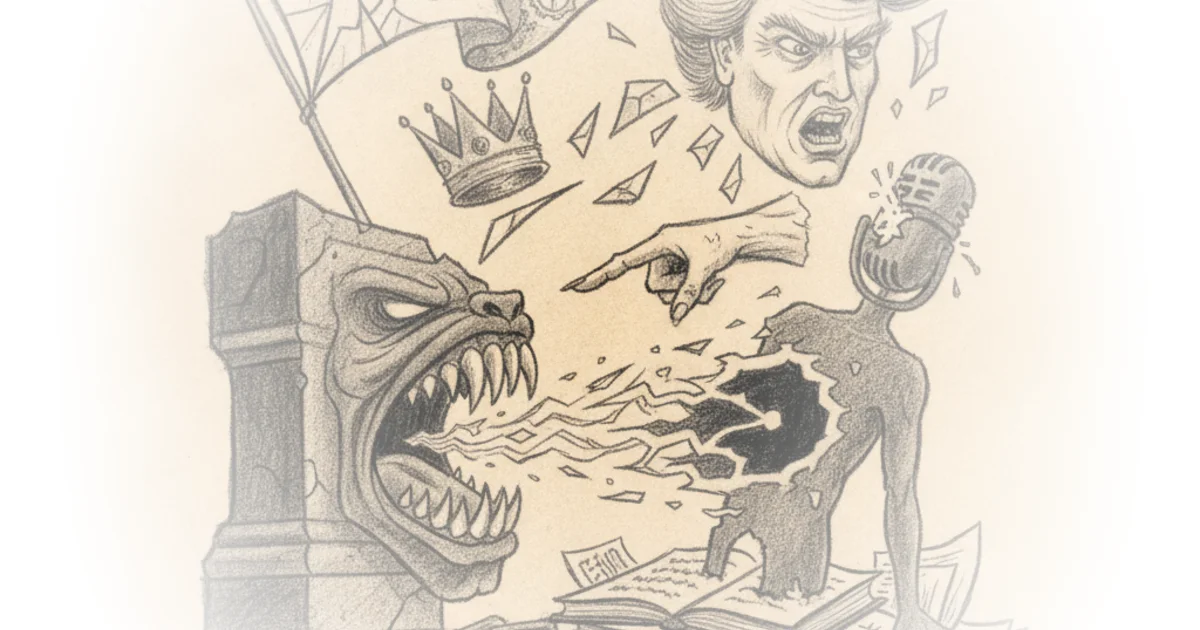
The Erosion of Editorial Independence
The commentary then shifts to the specific mechanisms used to dismantle the newsroom's integrity. Reich details how Bari Weiss, appointed with a mandate to evolve CBS News, immediately questioned the team's bias without providing data or metrics. This sets the stage for what Pelley describes as an attempt to inject "falsehoods and bias" into politically sensitive stories. Reich recounts a specific instance where Weiss allegedly pressured the team to alter a story about protests in Minneapolis, demanding images that portrayed protesters as aggressive rather than focusing on the killings of civilians by law enforcement.
"They put out a big spread of bagels like we were all going to feel better."
This detail serves as a powerful metaphor for the disconnect between corporate leadership and the reality of the newsroom. Reich argues that the administration's actions are driven by a desire to avoid scrutiny, drawing a parallel between Pelley's firing and the previous removal of Stephen Colbert. The core of Reich's argument is that these moves are not about business efficiency but about controlling the narrative regarding the executive branch's actions. He notes that the sale of Paramount was approved shortly after a "multi-million-dollar bribe" was paid to settle a lawsuit, suggesting a quid pro quo relationship between corporate survival and political appeasement.
"I looked around the room... I realized I was the senior person. So when I saw Nick Bilton's email... I felt that somebody had to stand up not just for the broadcast but for the people."
Reich uses Pelley's account of his own firing meeting to illustrate the breakdown of due process. The president of CBS News, Tom Cibrowski, allegedly accused Pelley of physical abuse—a claim he retracted immediately when challenged—before ending the conversation in ten minutes and firing him. This sequence of events supports Reich's thesis that the new leadership operates with a disregard for journalistic norms and basic human decency.
Bottom Line
Robert Reich's most compelling contribution is his ability to translate corporate restructuring into a story about the suppression of truth, using Pelley's firsthand testimony to expose the fragility of independent journalism under new ownership. The piece's greatest vulnerability lies in its reliance on a single source for the internal dynamics, though the consistency of Pelley's account across multiple interviews lends it significant weight. Readers should watch closely to see if other senior staff come forward with corroborating details, as this could define the future of accountability in American broadcast news.