A Cultural Institution Under Pressure
The Kennedy Center stands as one of America's premier cultural institutions, yet recent leadership changes have triggered an unprecedented wave of artist cancellations and public controversy. Sarah Longwell, Tim Miller, Bill Kristol's visit to Washington captures a moment when partisan politics and arts administration collide.
The Leadership Transition
The piece documents a series of administrative changes beginning in early 2025. The center's president was removed, the board was reconstituted, and new leadership was installed. These changes provoked immediate reactions from the artistic community.
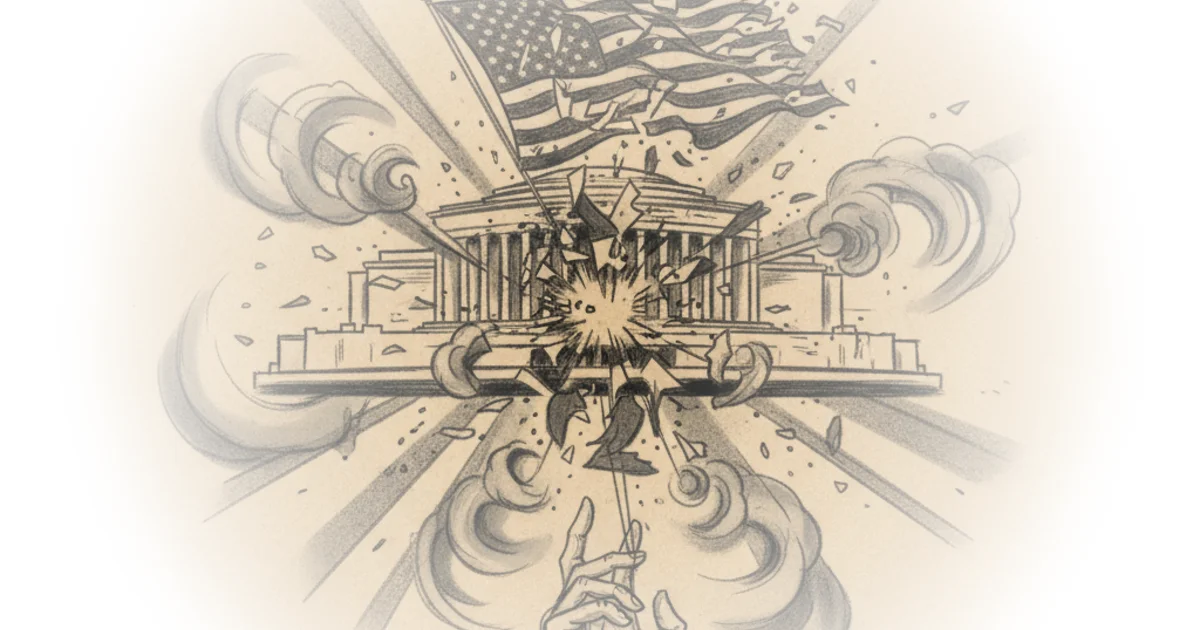
Sarah Longwell, Tim Miller, Bill Kristol writes, "First came the decision in February 2025 (announced via Truth Social, naturally) to fire Kennedy Center president Deborah Rutter, whom he accused of mismanagement of the venue and, worse, allowing too much 'woke' programming."
The cancellations followed swiftly. Issa Rae canceled a sold-out show. The touring company of Hamilton bailed on its scheduled 2026 run. Philip Glass withdrew a symphony commissioned by the National Symphony Orchestra. The Washington National Opera announced it was leaving the center altogether.
Sarah Longwell, Tim Miller, Bill Kristol puts it, "The Kennedy Center is not the house artistic organ of whichever party controls the White House but a bipartisan cultural institution."
"The issue is Trump's interference and a board full of Trump toadies attempting to ingratiate themselves with the big man by doing the only things he actually cares about: putting his name on buildings and acting like he's all-knowing and all-powerful."
Critics might note that cultural institutions have always reflected the political climate of their era, and that claims of bipartisan neutrality often mask underlying ideological assumptions about what constitutes appropriate programming.
Inside the Concert Hall
The author attended a National Symphony Orchestra performance to experience the center before its planned two-year closure for renovations. The atmosphere was tense but the music was transcendent.
Sarah Longwell, Tim Miller, Bill Kristol writes, "Before that, though: refreshments. On my way to the bar, I came across a quartet discussing the sad state of things at the Kennedy Center and lamenting the upcoming closure."
Long-term attendees expressed deep concern. Wayne and Bonnie had been coming since 1976. Robert and Rachel started in 1996. Rachel recalled thinking opera attendees were "tony swells" until a music director's postcard converted them to Wagner's Ring cycle.
Robert's assessment was blunt: "I was just outside and saw Trump's name on the building for the first time, and that's just profoundly depressing and enraging."
The performance itself featured Tchaikovsky's Piano Concerto No. 1 and Shostakovich's Symphony No. 8. The program notes highlighted how Shostakovich's work "covertly depicted the impossible position of the independent artist and intellectual in Stalin's Russia."
Sarah Longwell, Tim Miller, Bill Kristol writes, "Shostakovich, he said, was composing with a fake smile—'Like this one,' Noseda said, pulling his own mouth into a rictus grin."
The Comedy Contrast
The evening brought a different audience. Jeff Foxworthy's standup performance drew a crowd with "more mustaches and mullets" and at least one cowboy hat. Adam Carolla had performed the weekend before. Tony Hinchcliffe was scheduled for May 2.
Sarah Longwell, Tim Miller, Bill Kristol writes, "I say this not to stereotype but merely to describe: more mustaches and mullets in the evening show."
Yet both audiences shared appreciation for the institution itself. People lamented the two-year closure. They posed for selfies with Robert Berks' sculpture of Kennedy.
The bartender, one of roughly 400 employees facing uncertain employment during the closure, simply shrugged when asked about his plans.
Critics might argue that diversifying programming to appeal to different audiences is not inherently problematic—arts institutions must evolve to remain financially viable, and standup comedy has legitimate cultural value alongside symphony and opera.
The National Symphony Orchestra Context
The National Symphony Orchestra has used the Kennedy Center as its main venue since 1971 and its headquarters since 1986. The orchestra represents one of America's finest musical institutions, performing over 200 concerts annually. Its residency at the Kennedy Center has defined both the orchestra's identity and the center's artistic credibility.
Sarah Longwell, Tim Miller, Bill Kristol writes, "The Kennedy Center's other major resident, the Washington National Opera—which also has been there since the beginning—announced in January that it was leaving the center altogether, a decision made all the more shocking by the fact that there simply aren't many suitable replacement venues in the Washington, D.C. region."
Bottom Line
The Kennedy Center's turmoil reflects a broader pattern: when cultural institutions become instruments of political validation rather than independent artistic spaces, the artists leave first. The music continues—for now. But the institution's credibility, once compromised, takes far longer to rebuild than its marble facade.