Tom van der Linden tackles a question that haunts every busy mind trying to make sense of a chaotic world: are we doomed to force our messy lives into the neat, often disappointing boxes of the "hero's journey"? This piece stands out because it refuses to offer a simple self-help fix, instead arguing that the very act of storytelling is a double-edged sword that gives us identity while simultaneously distorting our reality. In an era of curated social media narratives and political grandstanding, van der Linden's exploration of why we crave closure—and why it is often an illusion—is not just philosophical; it is a necessary corrective to the pressure to perform a perfect life.
The Illusion of the Perfect Moment
The core of van der Linden's argument rests on the distinction between living an experience and narrating it. He draws heavily on existential philosophy to dismantle the idea that life naturally follows a script. "Life must be lived forwards but can only be understood backwards," he notes, quoting Søren Kierkegaard to illustrate the lag between action and meaning. The author suggests that we are constantly trying to retrofit the chaos of the present into a coherent plot, a process that often leads to disillusionment when reality refuses to provide a satisfying climax.
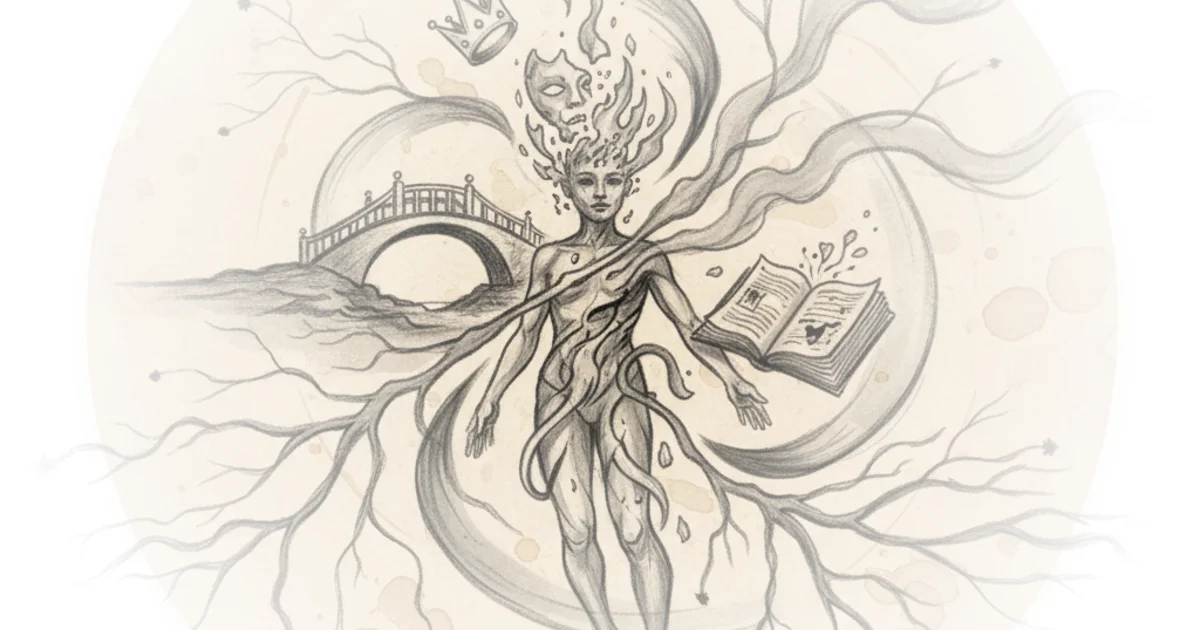
This framing is particularly sharp when applied to modern expectations of success. van der Linden writes, "The original meaning and purpose of the hero's journey became somewhat twisted because of this, how it became a pressure for people to compete with each other for ever more exciting adventures." The commentary here is vital: it identifies a cultural pathology where the structure of the story has become more important than the substance of the life being lived. Critics might argue that this perspective risks paralyzing ambition, suggesting that without a grand narrative, effort is futile. However, van der Linden counters this by suggesting that the pressure to find a "perfect moment" is actually what blinds us to the value of the mundane.
We turn events into adventures by experiencing them as such.
The author points out that real life rarely offers the "perfect moments" found in fiction, such as the decisive victory in a war or the grand kiss that solves a relationship. Instead, he observes, "Large-scale conflicts, personal relations, and quests for meaning are rarely defined or bookended by singular moments, especially ones that we experience as such." This is a crucial insight for anyone feeling stuck in a long-term struggle, whether it be a health crisis or a career pivot. The expectation of a sudden, cinematic resolution is a trap that prevents us from appreciating the slow, often invisible work of resolution.
The Trap of Cosmic Determinism
van der Linden then pivots to the metaphysical implications of our storytelling. If the hero's journey is so pervasive, is it because we invented it, or because it reflects a cosmic truth? He examines the popular advice to "follow your bliss," a concept often attributed to Joseph Campbell, and finds it lacking. "If you follow your bliss," van der Linden writes, "you put yourself on the kind of track that has been there waiting for you." While comforting, he argues this view reduces human agency to a mere passenger on a pre-laid track.
This section is the piece's most daring, as it challenges the spiritual comfort many seek in destiny. The author admits that without a grand cosmic story, we risk nihilism, yet he finds the alternative—believing in a pre-written script—equally unsatisfying. "I would feel like a replicant in the original Blade Runner chasing a creator for answers I'm not going to get," he writes, capturing the profound alienation of seeking external validation for our internal choices. The argument holds up well because it acknowledges the human need for meaning without surrendering to the fantasy of a guaranteed outcome.
Critics might note that van der Linden's rejection of cosmic determinism leaves the reader with a somewhat cold universe, one where meaning is entirely self-generated and fragile. Yet, this is precisely his point: the fragility is what makes the meaning real. He suggests that the alternative to a pre-ordained path is not chaos, but a different kind of freedom. "There seems to be in essence within us that simply refuses nihilism," he argues, implying that our ability to create stories is an act of resistance against meaninglessness, not a delusion.
The Middle Ground of Ongoing Narration
Ultimately, van der Linden proposes a middle ground between the tyranny of the perfect story and the despair of a meaningless existence. He suggests that we must accept that our stories are never truly finished. "Stories is a fully formed, fully resolved story then nothing more than an ideal that's forever out of reach," he writes, highlighting the impossibility of closure while we are alive. The solution, he implies, is to embrace the ongoing nature of the narrative.
This is where the piece offers its most practical value for the busy reader. By accepting that "everything is more complicated than you think," as quoted from the film Synecdoche, New York, we can stop waiting for the plot twist that will fix everything. The author's analysis of the film Before Midnight serves as a powerful counter-example to Hollywood romance, showing that true connection is found in the unglamorous, ongoing work of a relationship rather than the initial spark. "If you want true love then this is it, this is real life," he paraphrases, grounding his philosophical musings in a relatable, human truth.
A fully formed, fully resolved story is nothing more than an ideal that's forever out of reach.
The strength of van der Linden's conclusion lies in its refusal to offer a pat answer. He acknowledges that we are "doomed to a state of perpetual storytelling," but reframes this not as a curse, but as the very condition of being human. We are the authors and the characters, constantly rewriting our pasts and futures in real-time. This perspective shifts the burden of meaning from the universe to the individual, empowering the reader to find significance in the process rather than the destination.
Bottom Line
Tom van der Linden's piece is a masterful deconstruction of the modern obsession with narrative arcs, offering a compelling argument that the search for a "hero's journey" often obscures the rich, messy reality of actual life. Its greatest strength is the synthesis of existential philosophy with pop culture analysis to reveal why we feel so often disappointed by our own biographies. The argument's only vulnerability is its potential to feel abstract to those seeking concrete steps for immediate change, but its ultimate verdict—that we must find meaning in the unresolved present—is a necessary and liberating truth.