Friedrich Nietzsche's "will to power" has been misunderstood for over a century as a drive for domination. That's not what he meant at all.
Cecil argues that understanding this concept unlocks one of philosophy's central insights: the entire free will versus determinism debate is a pointless distraction that brilliant thinkers like Nietzsche and Schopenhauer already moved past.", "## The Schopenhauer Problem
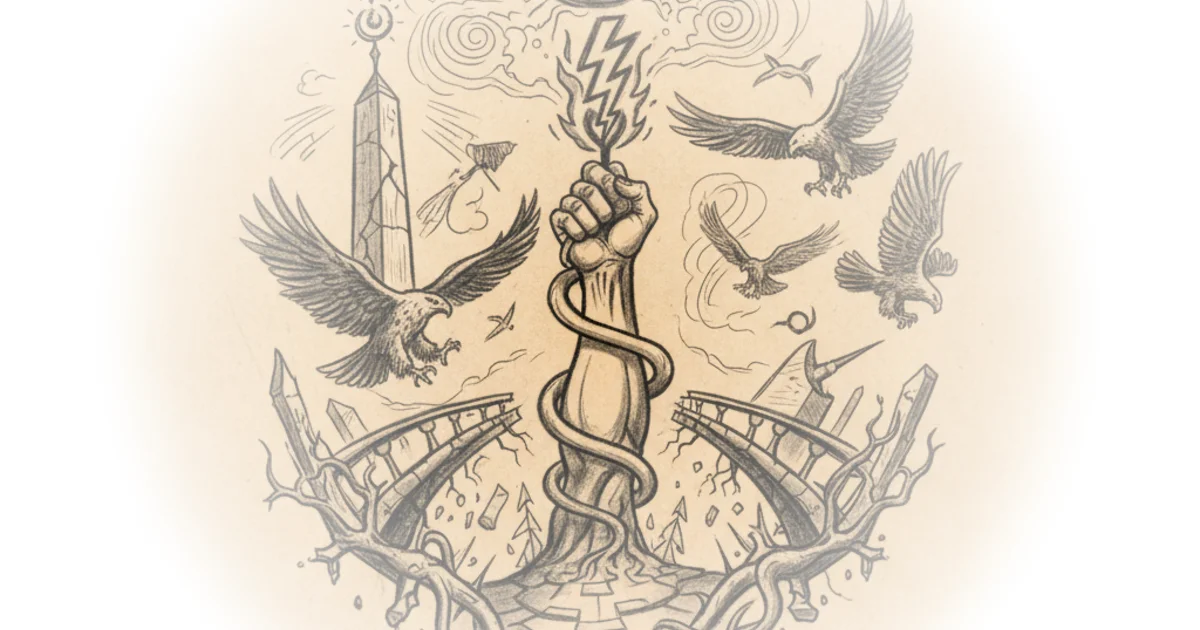
Arthur Schopenhau influenced Nietzsche profoundly, but Nietzsche was responding to him — and disagreeing with him. Schopenhau's central idea: the will is not a choice. It's a natural force, a universal hunger that drives us to eat, sleep, pursue sexual desire, and constantly seek fulfillment. We don't choose to have this will. It simply exists.
This framework reframes the entire debate. The question isn't whether we choose our will — we don't. The question is what we do with it once we have it.", "For Schopenhauer, this created suffering because the will is unfulfillable. You can never fully satisfy it. Life is suffering until you learn to starve it — to quiet it into immobility. This sounds remarkably like Buddhism, and indeed Schopenhauer was heavily influenced by Indian philosophy, particularly the Upanishads.
Art offered a temporary respite, an aesthetic way to satiate the will without addressing its root cause.", "## Nietzsche's Response
Nietzsche agreed that the will is a force — but he saw it completely differently. Rather than a source of suffering requiring transcendence, the will to power is a drive to flourish, overcome, and expand. This drive is fundamental to all life.
We want to struggle. We want to be challenged. We want to overcome. We want to flourish. That's what the will to power actually means — not domination, but growth.
Nietzsche saw this as fundamentally positive. The joy of life comes from this overflowing, thriving sense. It's properly understood as a drive toward meaningful existence rather than escape from existence.", "## Beyond the Old Debate
Here's where Nietzsche reframes everything: our existence is this willing to power. We don't exist outside the field of willing — we are it.
When people argue about free will versus determinism, they're asking the wrong questions. Either we're mechanical automatons with no choice, or we do what we want and have free will. But Nietzsche points out that within having a will — which is necessary — there's a wide range of possibilities.
We don't have one unitary will. We have all kinds of competing desires, different environments, different opportunities. The question isn't whether we're determined. We're necessarily going to will something. The question is what we will, and how we organize those willings.", "## What Exists Is Real
Nietzsche pushes further: the psychology, the phenomenology of life — that's what's real enough. There might be some deeper reality behind everything, but it doesn't matter. What matters is what we experience.
Within that experiential reality, we have massive possibilities for growth and change. The degree to which you're able to shape your willings — to organize them, to direct them toward flourishing — that's the degree to which you are a great human.", "Critics might note that Nietzsche's framework assumes most people will fail at this kind of flourishing. He wasn't a democratizer — he believed in hierarchies of human achievement. The "will to power" becomes almost aristocratic in its implications."]