The Hated One delivers a chilling warning that transcends typical political outrage: the assassination of Charlie Kirk is being weaponized not just for vengeance, but as a blueprint for a new era of authoritarian control. The author argues that a crowdsourced doxxing website, "Charlie's Murderers," is actively dismantling the line between violent incitement and protected speech, turning private disagreements into public death warrants. This is not a standard condemnation of online harassment; it is a forensic dissection of how "shock doctrine" tactics are being deployed to erode privacy and free speech for everyone, regardless of political affiliation.
The Mechanics of the Mob
The core of the argument rests on the terrifying efficiency of the doxxing platform described by The Hated One. The author details how the site aggregates private information—full names, employers, and locations—based on a loose interpretation of "complicity." "It's a terrifying website, especially now that it claims to hold over 50,000 profiles that they are assembling into a searchable public database," The Hated One writes. The author's evidence is particularly damning because it highlights the lack of vetting; the site punishes not just those celebrating violence, but those merely expressing grief, satire, or even quoting Kirk himself.
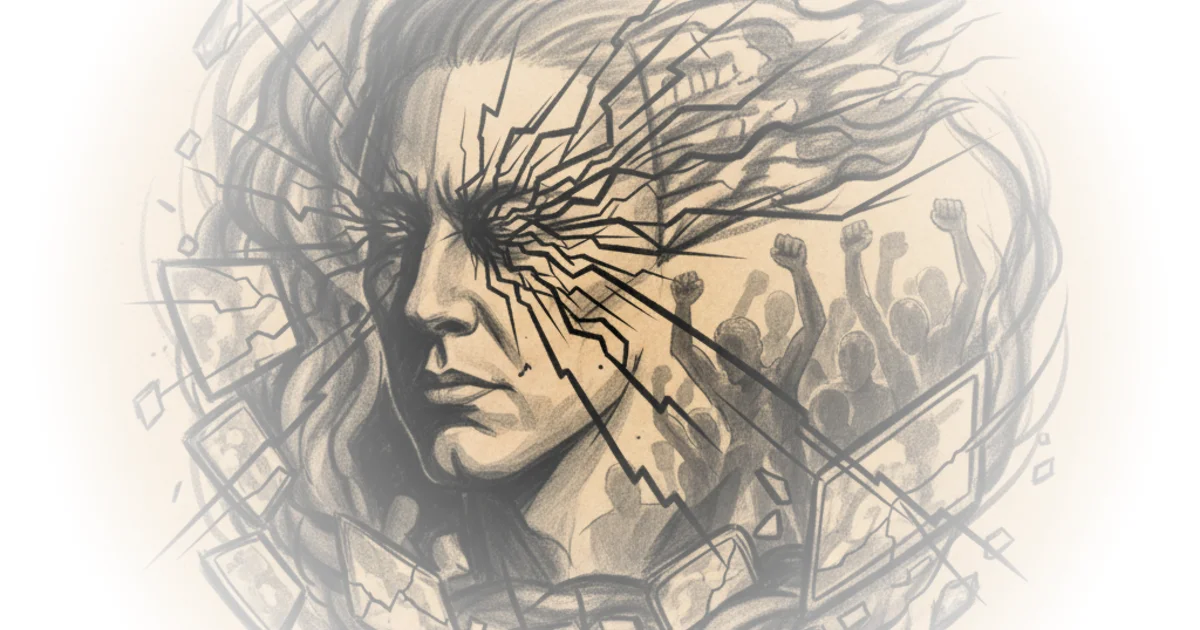
The Hated One illustrates this with the case of Rachel Gilmore, who was targeted despite explicitly stating, "I do not believe violence is ever the answer." The author notes that the mob used the website's data to flood her with death and rape threats, revealing the lethal real-world consequences of this digital vigilantism. This evidence holds up well because it demonstrates a clear disconnect between the stated goal of the website—stopping violence—and its actual function: punishing dissent. Critics might argue that the author is being too sympathetic to those who celebrate violence in private chats, but the distinction made between public rhetoric and private conversation is a crucial legal and ethical boundary that the mob ignores.
The Shock Doctrine Framework
The piece's most distinctive claim is framing this event through the lens of the "shock doctrine." The Hated One draws a direct parallel between the post-9/11 Patriot Act and the post-Kirk assassination crackdown, arguing that elites on both sides of the political spectrum exploit tragedy to consolidate power. "Charlie Kirk's assassination is today's shock doctrine event... it is being amplified by political and economic elites in the same way the previous ones were to direct your anger at your fellow countrymen while the powerful work tirelessly to establish a new doctrine to steal even more of your rights," The Hated One writes. This framing is effective because it moves the conversation beyond the immediate tragedy to the systemic erosion of civil liberties.
The author points out the irony that Kirk himself, a figure built on debate, would likely condemn this suppression of speech. The Hated One recalls a moment where Kirk denounced a fan's violent rhetoric, stating, "We have to be the ones that do not play into the violent aims and ambitions of the other side." By contrasting Kirk's past principles with the current mob mentality, the author underscores the tragedy of the situation. However, the argument assumes a level of elite coordination that some might find conspiratorial; while the outcome is similar, attributing it to a unified "doctrine" rather than chaotic opportunism is a bold leap.
The saddest part is that now you can be proud to say that you don't believe in these principles at all, and the algorithms will reward you for it.
The Erosion of Digital Privacy
The final section of the commentary shifts from analysis to a stark warning about the future of digital existence. The Hated One argues that the only way to survive this new environment is to retreat into anonymity, suggesting that public expression under one's real name is becoming untenable. "Any political opinion you make online will be stochastically weaponized to shut it down," The Hated One asserts. The author provides practical advice on securing accounts, using tools like Signal and hardware security keys, but the underlying message is one of retreat: the public square is no longer safe.
The author critiques the role of big tech, suggesting that figures like Elon Musk and Mark Zuckerberg are complicit in trading user privacy for regulatory favors. "Giving the government your privacy and censoring your speech is a heavy cost they are very happy to pay," The Hated One writes. This is a compelling critique of the current tech landscape, though it perhaps underestimates the resilience of encrypted communication tools that exist outside of these major platforms. The advice to lock down accounts is sound, but the implication that anonymity is the only remaining path to free speech is a sobering, if necessary, conclusion.
Bottom Line
The Hated One's strongest argument is the demonstration of how quickly the line between justice and vengeance can blur when crowdsourced doxxing is involved, turning a tragic event into a tool for authoritarian overreach. The piece's biggest vulnerability is its reliance on a unified "shock doctrine" narrative, which may oversimplify the chaotic and opportunistic nature of online mobs. Readers should watch for how this specific incident influences future legislation on online speech and privacy, as the precedent set here could redefine the boundaries of acceptable public discourse for years to come.