Tim Mak's reporting from Kyiv delivers a jarring, necessary truth: in 2026, the heatwave is becoming a more lethal adversary than the missiles striking the city. By centering the narrative on an ice producer rather than a general or politician, Mak exposes how climate collapse is weaponizing itself against a population already fractured by war, creating a crisis where survival depends on a commodity that requires electricity to make.
The Business of Survival
Mak introduces Roman Cherniakhivsky not as a victim, but as an entrepreneur whose livelihood hinges on the very disaster destroying his country. "Back then you simply couldn't buy ice anywhere," Mak writes, quoting Roman's recollection of 2006 when the idea was absurd. Today, that absurdity has become a grim necessity. The author effectively uses Roman's story to illustrate the paradox of the modern Ukrainian summer: demand for cooling is at an all-time high, yet the infrastructure required to produce it is systematically dismantled.
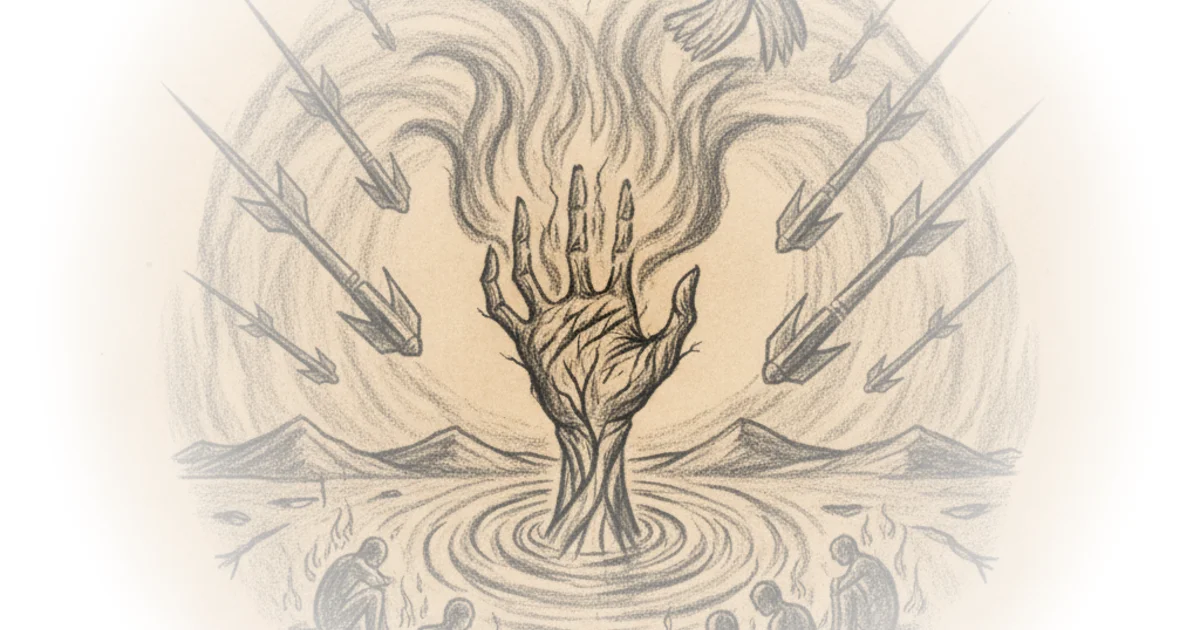
The piece highlights how global warming has shifted from an abstract threat to a daily killer. Mak notes that while 2024 was likely the warmest year on record since 1880, the current reality in Ukraine is even more precarious due to energy shortages. "Unfortunately, this is already the new climate reality," expert Vira Balabukh tells Mak. The argument here is compelling because it refuses to treat the heatwave as a separate event from the war; instead, it shows them as compounding forces.
"At the current rate, the heatwave in Ukraine is more dangerous than Russian attacks."
This stark comparison, drawn from UN data and mortality estimates, is the article's most provocative claim. Mak supports this by citing European parallels, noting that Germany saw an estimated 810 heat-related deaths in a single summer. The framing forces the reader to confront a terrifying metric: thermal stress is now a primary cause of civilian death, rivaling kinetic violence. Critics might argue that comparing climate mortality to direct combat casualties risks minimizing the unique horror of war, but Mak's evidence suggests the two are converging into a singular humanitarian catastrophe.
The Fragility of Infrastructure
The commentary shifts to the logistical nightmare facing small businesses like Roman's "Red Ice." Mak describes how production halts when the grid fails, leaving reserves to melt just as demand soars. "Every ice company keeps reserves — 100 tons, 200 tons [of ice]. Then the electricity goes out, production drops, the heat continues, sales soar, and eventually the reserves run out," Roman explains. This cycle illustrates a systemic failure that no amount of individual grit can solve.
Mak wisely connects this local struggle to broader European trends without losing sight of the specific Ukrainian context. He references the 2026 anticyclone from North Africa, which pushed temperatures past 40 degrees Celsius, but anchors it in the specific vulnerability of Ukraine's grid. The author notes that while Roman can retreat to his minus twenty-degree freezer, the average citizen has no such refuge. This distinction is crucial; it separates those with resources from those without.
The piece also touches on the physical toll of extreme weather, noting how heavy rains and storms often follow heatwaves, damaging facilities like Roman's factory roof. "The main problem is that the chainsaw itself burns," Roman laughs when describing his dream of an ice-and-fire show. This moment of dark humor underscores the absurdity of trying to maintain normalcy in a collapsing environment.
The Diplomatic Reality Check
Beyond the human story, Mak weaves in a sobering update on international support, grounding the local crisis in geopolitical reality. The Netherlands has signaled it has reached its limit on military aid, with Defense Minister Dilan Yeşilgöz-Zegerius stating they have "done so much...we are at our limit." Similarly, Czech Prime Minister Andrej Babiš indicated his country would not commit new funds, despite not blocking NATO measures. These details are vital for understanding why the energy grid remains vulnerable.
NATO Secretary General Mark Rutte's warning that interceptor supplies are not "endless" serves as a grim backdrop to Roman's story. When Ukraine's stockpile ran low and failed to repel a massive missile attack on Kyiv, killing 19 people, it was not just a military failure but a direct cause of the heat-related vulnerability Mak describes. The lack of air defense means more infrastructure destruction, which means less power for cooling, which means higher mortality.
"Our primary task is not only to slow climate change but also to learn how to live and work under these new climatic conditions."
This quote from expert Vira Balabukh encapsulates the article's central thesis: adaptation is no longer optional. The administration and its allies must recognize that providing missiles alone is insufficient if the energy grid cannot support basic life functions during extreme weather events.
Bottom Line
Tim Mak's most powerful achievement is reframing the climate crisis not as a future threat, but as an active combatant in Ukraine today. The strongest part of this argument is the data-driven comparison of heat-related deaths to war casualties, which forces a re-evaluation of what constitutes "survival" in 2026. However, the piece's biggest vulnerability lies in its reliance on anecdotal evidence for mortality rates; without official Ukrainian statistics, the full scale remains estimated. Readers should watch for how international aid shifts from purely military hardware to critical energy infrastructure repair, as this will determine whether the heatwave becomes a mass casualty event or a manageable crisis.