Matthew Clayfield delivers a stinging critique of Australia's literary establishment, arguing that the nation's most prestigious cultural institutions have surrendered to a middlebrow sensibility that prioritizes comfort over craft. Rather than merely complaining about ticket prices, he exposes a deeper rot: a feedback loop where broadcasters, festival organizers, and readers collectively reward mediocrity while dismissing challenging prose. This is not just a review of a book list; it is an indictment of an entire ecosystem that has forgotten how to value the written word.
The Echo Chamber of the Cultural Elite
Clayfield opens by dismantling the Sydney Writers' Festival, describing it not as a celebration of literature but as an expensive extension of public radio programming. He notes that the festival's moderators are overwhelmingly affiliated with the Australian Broadcasting Corporation, creating a closed circuit where the same voices moderate panels that are later broadcast for free. "The vast majority of SWF moderators are ABC-affiliated or -adjacent," he observes, pointing out that attendees pay exorbitant fees to hear conversations they could access without cost. This observation is sharp, yet it risks overlooking the logistical reality that festivals need revenue to operate, even if the pricing model alienates the broader public.
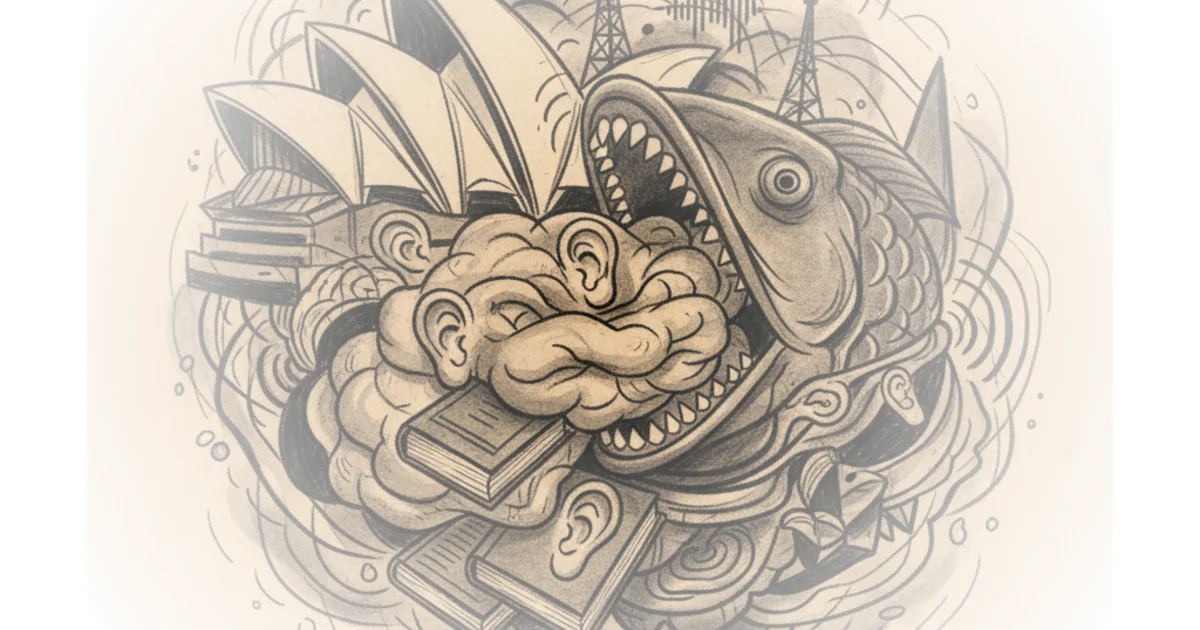
The author argues that this dynamic has created a specific, insular audience profile. He describes a demographic that is "middlebrow, parochial lovers of the mediocre, connoisseurs of the unchallenging and bland." This characterization is provocative, suggesting that the very people tasked with curating culture are actually its greatest enemies. The evidence he marshals is the recent Radio Network's "Top 100 Books of the 21st Century" poll, which he views as the ultimate symptom of this decline. The list, he argues, is dominated by recency bias and screen adaptations, revealing a readership that prefers the familiar to the difficult.
"Under no circumstances whatsoever, should such people and their tastes be allowed to dictate the programming of a literary festival."
Clayfield's frustration is palpable as he dissects the top ten list. He points out that more than half the books have been adapted for screen, questioning how many voters actually read the source material versus consuming the Netflix or Apple TV+ version. He highlights the absurdity of a national list where four of the top ten books are Australian, attributing this not to quality but to a phenomenon he calls the "Cringe Inverted." This is a crucial distinction in his argument: the shift from self-deprecation to an unthinking, bombastic nationalism that celebrates the weakest work simply because it is local.
The Death of Prose in Favor of "Feels"
The core of Clayfield's argument shifts from the list itself to the methodology of literary criticism that produced it. He contends that Australian discourse has abandoned the analysis of style and sentence structure in favor of emotional resonance. He recalls a moment on the ABC's First Tuesday Book Club where a panel dismissed a critique of bad writing in Ann Tyler's A Spool of Blue Thread. "The writing didn't matter," he writes, noting that the panel prioritized the story's emotional impact over the quality of the prose. This dismissal, he argues, has become the primary model for mainstream literary discourse.
He suggests that this trend is not accidental but structural, driven by gatekeepers who lack the vocabulary or willingness to engage with form. "It's thanks to these shows, alongside the festivals at which their hosts appear as moderators, that this has become the primary model," Clayfield asserts. The result is a culture where readers are unwilling to be challenged. He contrasts this with the vibrant, albeit smaller, ecosystems of universities and independent journals where style is still debated. However, he admits these spaces have little influence on the "hivemind" of the general public.
"We just announced to the entire world that our favourite ice cream flavour is vanilla."
This metaphor serves as a punchy summary of his critique: the celebration of the bland as a national achievement. He identifies a specific author, Trent Dalton, as the embodiment of this trend, describing his work as "infantilises his audience by feeding them palatable maxims." While some might argue that popular success is a valid metric for literary value in a democracy, Clayfield insists that popularity in this context is a sign of cultural stagnation. He draws a parallel to George Orwell's observations on bookstore sales, suggesting that the most popular books are often the least demanding.
The Feedback Loop of Mediocrity
Clayfield concludes by questioning the direction of causality in this cultural decline. Is the audience driving the demand for easy reads, or are publishers and journalists manufacturing the demand? He describes a scenario where "readers, writers, publishers, and journalists are all stuck in some ungodly feedback loop in which everyone's constantly agreeing with one another without ever stopping to ask whether they should." This is the piece's most unsettling insight: the problem is not just bad books, but a system that prevents the recognition of good ones.
He acknowledges the value of having a national radio network dedicated to books, but insists that the content of that dedication matters. The list, he argues, reveals a depressing truth about what the nation values. "I can't help but feel that RN's list, and especially its top ten, says something kind of depressing about what books we value, why we value them, and how we talk about that value," he writes. The argument holds weight because it moves beyond simple elitism to identify a structural failure in how culture is produced and consumed.
Critics might note that Clayfield's definition of "challenging" literature is subjective and potentially exclusionary, dismissing popular genres that resonate deeply with millions of readers. Yet, his central point remains: a culture that refuses to engage with the mechanics of writing risks losing the very tool that allows it to think critically.
"Are readers, writers, publishers, and journalists all stuck in some ungodly feedback loop in which everyone's constantly agreeing with one another without ever stopping to ask whether they should?"
Bottom Line
Matthew Clayfield's piece is a necessary, if uncomfortable, intervention that forces a confrontation with the state of Australian literary culture. Its greatest strength lies in connecting the dots between broadcasting, festival programming, and reader behavior to reveal a systemic preference for the unchallenging. The argument's vulnerability is its potential dismissal of popular taste as inherently inferior, yet the evidence of a self-reinforcing media loop is compelling. Readers should watch for whether this critique sparks a genuine shift in how institutions select and discuss books, or if the feedback loop simply continues to churn out more vanilla.