Chad W. Post rejects the standard marketing playbook to argue that the true value of literature lies not in curated previews, but in the disorienting, unmediated shock of encountering a text without a trailer. He posits that the upcoming "Fall 2025–Winter 2026" season of Dalkey Essentials is defined by a singular, overwhelming quality: excess.
The Case Against the Preview
Post begins by dismantling the very format he is writing in. He admits that a standard listicle would have been "a little boring" and that he personally "hate[s] trailers," preferring to go into artistic experiences "as close to blind as possible." This is a provocative stance for an editor whose job is to sell books, yet it frames the upcoming releases not as products to be consumed, but as intellectual challenges to be endured. He suggests that the information is already public, rendering the "preview" redundant, and instead chooses to map the "intellectual drift" of the catalog.
"I want to go into most of my artistic experiences as close to blind as possible. I prefer the surprise."
This preference for the uncurated experience is central to his editorial philosophy. He views the Essentials series not as a marketing funnel, but as a "superhighway connecting all those on-ramps," designed to help readers navigate the "gigantic, sprawling set of titles" that make up the Dalkey Archive Press backlist. By refusing to simplify the path, Post forces the reader to engage with the material on its own terms. A counterargument might suggest that such an approach alienates casual readers who need guidance, but Post's target audience appears to be those seeking the friction of discovery rather than the comfort of a summary.
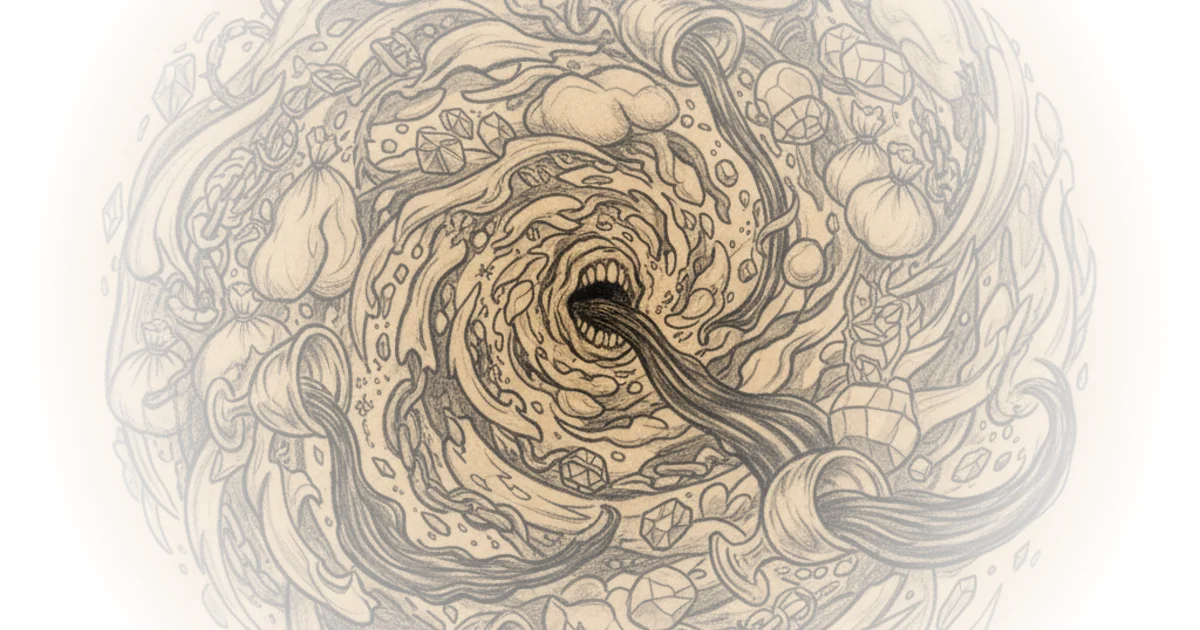
The Architecture of Voice and Repetition
The core of Post's commentary focuses on how these books utilize "excess" as a narrative tool, specifically through voice and repetition. He highlights Stanley Elkin's The Franchiser as the entry point for a "writer's writer" whose work is defined by "slangy, chatty" characters who "never shut up." Post doesn't just describe the plot; he immerses the reader in the text's manic energy, quoting a deathbed monologue that spirals into a biological and existential nightmare.
"Ben, everything there is is against your being here! Think of get-togethers, family stuff, golden anniversaries in rented halls, fire regulations celebrated more in the breach than the observance, the baked Alaska up in flames, everybody wiped out..."
Post uses this passage to illustrate how Elkin's "lists never end" and how the "patter is constant." He argues that this relentless verbal output is not a flaw but the very point of the novel, creating a "prototypical voice-driven" experience. The strength of his analysis here is his willingness to let the quote breathe, allowing the reader to feel the exhaustion and the humor simultaneously.
This theme of excess escalates with Gertrude Stein's The Making of Americans. Post notes that the phrase "as I was saying" appears "at least 955 times" in the 1,022-page volume. He describes the reading process as a transformation, where the reader begins to "write and speak and think like this book."
"When that makes total sense to you, you know you've been Stein-pilled."
This is a striking admission of the text's power to alter the reader's cognitive state. Post argues that Stein's repetition allows phrases to "accrue a richness of meaning," functioning as a "code for the aspect of being." He frames the upcoming reading guide by Cecilia Konchar Farr and Janie Sisson as a crucial tool for navigating this "excess of language," noting that it is shocking that a guide for such a monumental work is only arriving a century after its publication.
Critics might argue that celebrating such dense, repetitive prose ignores the accessibility barriers it creates for a general audience. However, Post's commentary suggests that the "excess" is the reward itself, requiring the reader to "give yourself up to" the pacing rather than trying to control it.
Meta-Fiction and the Struggle to Write
The final section of Post's piece turns to Chapel Road by Louis Paul Boon, a novel that fits into a broader Dalkey tradition of "books with a character within the book writing a book." Post connects this to a lineage of meta-fiction stretching from Flann O'Brien to John Barth, where the novel is "aware of its construction in progress."
"This sort of play, in which a novel is aware of its construction in progress, dates back to the Greeks, runs through Joyce and Tristram Shandy... and is, to a lot of people who fall into the orbit of Dalkey Archive's backlist, incredibly fun and rewarding."
Post personalizes this argument by recounting his own trip to the Netherlands to research Boon, an author he initially mispronounced and who was "critically respected but maybe not that well-read." He frames the book as part of a subset of titles where the narrator is "trying over and over again to tell a story," often "incapable of advancing the plot." This reframing turns the lack of traditional plot progression into a feature, not a bug, aligning with the season's theme of excess.
"The Making of Americans is incredibly aware of itself as an attempt to write a novel."
By weaving together Elkin's verbal mania, Stein's repetitive accumulation, and Boon's meta-fictional struggle, Post constructs a cohesive argument: these books are not merely stories, but experiments in the limits of language and narrative. The "excess" is the mechanism by which they force the reader to confront the nature of storytelling itself.
Housing policy was built on racist foundations, and we never tore them up. We just stopped talking about it.
Bottom Line
Chad W. Post's commentary succeeds by refusing to treat these books as commodities, instead presenting them as rigorous intellectual exercises that demand the reader's full surrender. The strongest element of his argument is the reframing of "excess" from a marketing liability into a literary necessity, though it risks alienating readers who prefer traditional narrative arcs. The upcoming season is less about what happens in the stories and more about how the stories happen to the reader.