Michael Ruhlman transforms a simple recipe for homemade bagels into a profound meditation on the loss of digital community and the enduring power of human connection. While the piece ostensibly celebrates the chemistry of boiling dough and the specific texture of a New York bagel, its true argument is that the internet's shift from open dialogue to algorithmic isolation has severed the very ties that make cooking a shared, communal act. This is not merely a culinary tutorial; it is a eulogy for the blogosphere and a manifesto for why we must actively rebuild our social fabric, one meal at a time.
The Chemistry of Connection
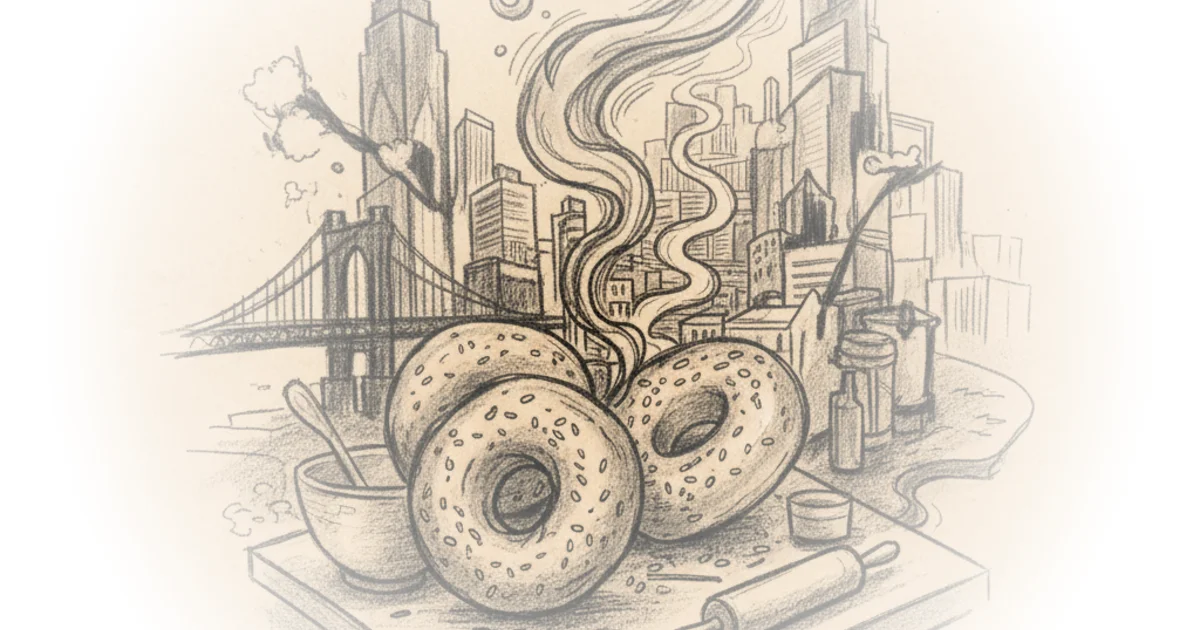
Ruhlman begins by grounding the reader in the sensory reality of the bagel, contrasting the convenience of buying one in New York City with the labor of making it at home. He acknowledges the absurdity of the endeavor in a "teensy apartment" without a stand mixer, yet insists on the process because "bagels are just too cool." The core of his culinary argument rests on the specific chemical reaction required to achieve the perfect crust. He details a conversation with baker Bruce Ezzell, who updated his technique after fifteen years, moving from baking soda to a more potent alkaline solution. "Rather than boiling with baking soda, I switched to sodium carbonate," Ezzell explains via email, noting that the stronger pH makes the crust "a bit chewier." This technical pivot is significant; it mirrors the article's broader theme of refining old methods to fit new realities. The inclusion of historical context adds depth here, as the use of sodium carbonate (or soda ash) connects modern home baking to the industrial processes used for pretzels, a link that elevates the home cook's effort to a professional standard.
"If you can make bread, you can make bagels."
This assertion serves as a bridge between the technical and the accessible. Ruhlman argues that the barrier to entry is not skill, but the willingness to engage with the process. However, the narrative takes a sharp turn when he reflects on the origin of the recipe. He traces it back to 2011, a time he describes as "when blogging was fun and connected people with one another, before Search Engine Optimization (SEO) took over." This is the piece's emotional anchor. Ruhlman suggests that the current digital landscape, dominated by algorithms designed to monetize attention rather than foster conversation, has eroded the community that once made such exchanges possible. He notes that when he tried to return to blogging, he found the world had transformed, with old content and connections replaced by "a smattering of unfamiliar faces." Critics might argue that social media platforms have simply evolved to offer different, perhaps broader, forms of connection, but Ruhlman's lament highlights a specific loss: the depth of dialogue that existed when the internet was a collection of personal diaries rather than a feed of optimized content.
The Dinner as a Digital Antidote
The narrative then pivots from the virtual to the physical, chronicling a dinner Ruhlman shared with writer Jenny Rosenstrach and her husband, Andy Ward. This section serves as the practical application of his thesis: connection requires presence. Ruhlman describes the joy of meeting Rosenstrach, a writer he had admired for years, at Loring Place, a restaurant known for its vegetable-forward menu. He recounts the meal with vivid detail, from the "outstanding butternut squash fries" to the "mushroom rigatoni" that rivaled traditional meat dishes. The food serves as a metaphor for the unexpected richness of human interaction. "Only connect," Ruhlman quotes E.M. Forster, using the phrase to frame the evening not just as a meal, but as a deliberate act of resistance against the isolation of the digital age.
He reflects on his own history, noting that he got into blogging in 2006 thanks to Meg Hourihan, a figure who helped shape the early web. This historical nod underscores how the infrastructure of the internet has changed. In those early days, the web was a place where one could "rant" and receive genuine responses. Today, the emphasis on SEO and monetization has made that kind of organic community difficult to sustain. Ruhlman's decision to move to a newsletter platform is presented not as a retreat, but as an attempt to reclaim that lost intimacy. He writes, "Connecting with readers is one of the greatest pleasures I take from this newsletter." This sentiment is reinforced by the anecdote about Melissa Kirsch's "The Good List," which suggests a group text to preserve dinner party recommendations. Ruhlman embraces this idea, arguing that such small acts "enforce the connections in our lives" and act as a "forcefield defending us from the chaos."
"In a world full of peril and uncertainty, our connections can be a forcefield defending us from the chaos."
This line captures the urgency of Ruhlman's argument. He posits that in an era of fragmentation, the simple act of sharing a meal or a recipe is a radical assertion of shared humanity. The piece avoids the trap of nostalgia by focusing on the actionable: the recipe, the dinner, the newsletter. It suggests that while we cannot undo the changes in the digital landscape, we can choose to prioritize genuine interaction over algorithmic engagement. The mention of the "Lemon-lime Pound Cake" from his book Ratio and the specific details of the Amaro Nonino cocktail further ground the piece in the tangible, sensory world, contrasting sharply with the abstract nature of online metrics.
The Fragility of Community
While Ruhlman's celebration of connection is compelling, it is worth noting the privilege inherent in his experience. The ability to host dinners, travel to workshops, and maintain a paid newsletter relies on a level of stability and resources that not all writers or cooks possess. Furthermore, the shift away from open blogging to walled-garden newsletters like Substack, while fostering intimacy, also fragments the public square. The community Ruhlman describes is curated and paid, which raises questions about who is excluded from these new digital "haunts." Yet, even with these limitations, the piece succeeds in highlighting a universal desire for belonging. The story of the American in Moscow who found the bagel recipe years later serves as a reminder that these connections, however fragile, can span decades and continents.
The article concludes with a reflection on the arts, from the theater production of Death of a Salesman to the film The Gift, reinforcing the idea that stories and shared experiences are the glue of society. Ruhlman's personal recovery from knee surgery adds a layer of vulnerability, reminding the reader that the physical act of creating—whether baking or walking—is often interrupted, but the desire to connect remains. He writes, "I just heard from Bruce by email—after 15 years!" This moment of reconnection is the climax of the piece, proving that the bonds formed in the early days of the internet, though dormant, are not broken.
Bottom Line
Michael Ruhlman's piece is a masterful blend of culinary instruction and cultural critique, using the bagel as a vehicle to explore the erosion and potential restoration of community. Its greatest strength lies in its refusal to separate the technical act of cooking from the social act of sharing, arguing that the two are inseparable. The argument's vulnerability is its reliance on a specific, somewhat privileged form of connection that may not be accessible to everyone, yet the emotional resonance of the piece transcends these limitations. In a world increasingly defined by digital isolation, Ruhlman's call to "only connect" is not just a nostalgic plea, but a necessary strategy for survival.