Tom van der Linden argues that Martin Scorsese's The Irishman is not merely a gangster film, but a melancholic eulogy for the entire genre, stripping away the glamour to reveal the hollow reality of aging and regret. While most critics focus on the film's runtime or its controversial visual effects, van der Linden identifies a deeper structural shift: the movie functions as a post-gangster epilogue, where the thrill of the rise is entirely replaced by the weight of the fall.
The Epilogue to a Genre
Van der Linden posits that the film deliberately deconstructs the romanticism found in earlier classics like The Godfather or Goodfellas. He notes that while the movie retains the "trappings of the genre," specifically the music and the excitement, these elements eventually "fall away and we're left grappling with the reality of what exists after this life." This framing is crucial because it suggests the film is not about the life of crime, but about the aftermath of it. The narrative arc does not end with a bang, but with a whimper of isolation.
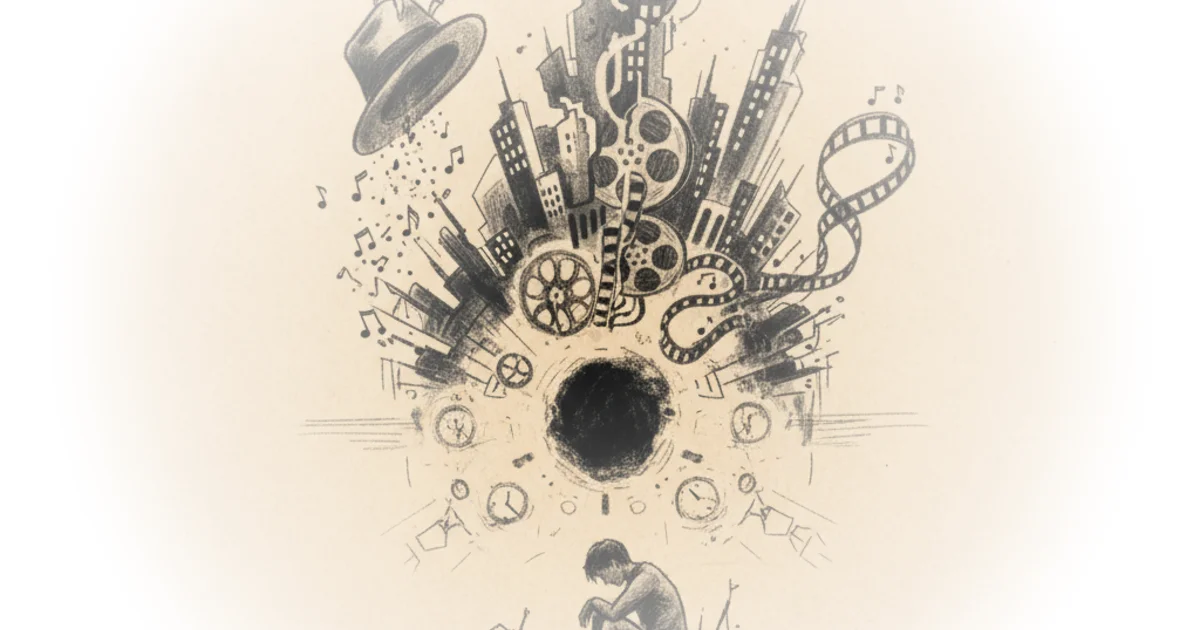
The author draws a compelling parallel between the film's structure and the real-world aging of its cast, suggesting a meta-narrative where the actors and director are reflecting on their own pasts. "It feels like a deconstruction," van der Linden writes, "like an old man's solemn look back at the young life not just the young gangster life but also maybe an older filmmaker older actors all reflecting back on um the stuff that they thought was maybe more interesting when they were younger." This perspective transforms the film from a simple crime drama into a meditation on memory and the passage of time. The choice to have the same actors play their younger selves, rather than casting new, younger actors, reinforces this theme of looking back through a distorted, aged lens.
"It feels like a deconstruction like an old man's solemn look back at the young life not just the young gangster life but also maybe an older filmmaker older actors all reflecting back on um the stuff that they thought was maybe more interesting when they were younger."
Critics might argue that this meta-commentary is unintentional, a byproduct of the production's constraints rather than a deliberate artistic statement. However, the consistency of this theme throughout the film's three-and-a-half-hour runtime suggests it is a core component of the director's vision.
The Failure of the Illusion
A significant portion of the commentary addresses the film's most divisive technical element: the de-aging technology. Van der Linden is candid about the initial jarring nature of the effect, admitting that the transition from an elderly face to a youthful one "breaks the immersion completely." He points out specific moments where the technology fails to capture the physical reality of youth, such as a scene where the protagonist's body moves with the stiffness of an octogenarian despite a young face.
"The whole physics day kind of yes shrivel a little bit," van der Linden observes regarding the physical transformation, noting that while the face might be digitally altered, the body's movement remains authentically aged. He questions whether this was a deliberate artistic choice to represent the fallibility of memory or simply a technical limitation. "I'm almost wondering to what extent there's a deliberateness to it," he muses, suggesting that the disconnect between the face and the body might symbolize how an old man's memory of his youth is imperfect and disjointed. Yet, he ultimately concedes that the effect is a flaw, stating, "I think those are flaws in this movie it's a flawed it's a flawed film but uh I think there's enough else that is compelling about it for me that yeah definitely willing to overlook those those elements."
The argument here is nuanced; van der Linden does not dismiss the film because of the technology but rather uses the technology's imperfections to deepen the thematic analysis. The failure of the illusion becomes a feature, not a bug, reinforcing the idea that the past cannot be perfectly recreated.
A Legacy of Emptiness
In comparing The Irishman to Sergio Leone's Once Upon a Time in America, van der Linden highlights a shared thematic trajectory: the realization that the gangster life is ultimately a waste. He contrasts this with films like Scarface or The Wolf of Wall Street, where the destruction is at least accompanied by a sense of exhilaration. In The Irishman, however, the "roller coaster" has crashed, and there is no fun left to be had.
"Now it was kind of feeling a certain emptiness looking back reflecting on his Youth and kind of deconstructing the gangster life that he thought or once thought was valuable and meaningful and now only at the end of his life realizes that it was all like a waste," van der Linden explains. This distinction is vital for understanding the film's place in cinema history. It marks the end of an era where the gangster was a figure of power and style, replacing him with a figure of regret and irrelevance. The film serves as a final, somber note in a long musical composition, acknowledging that the music has stopped and only the silence remains.
"Now it was kind of feeling a certain emptiness looking back reflecting on his Youth and kind of deconstructing the gangster life that he thought or once thought was valuable and meaningful and now only at the end of his life realizes that it was all like a waste."
Bottom Line
Van der Linden's analysis successfully reframes The Irishman from a technical curiosity into a profound meditation on the end of the gangster mythos. His strongest argument lies in connecting the film's aging cast and imperfect visual effects to its central theme of memory and regret. The piece's primary vulnerability is its reliance on the viewer accepting the de-aging technology as a thematic device rather than a distraction, a leap that not all audiences may be willing to make. For the busy reader, the takeaway is clear: this film is not about the thrill of the crime, but the heavy, quiet cost of living with it.