Richard Hanania proposes a radical reframing of the global fertility collapse: it is not a failure of policy or a rejection of family, but a biological mismatch where modern abundance has unlocked an ancient, often overlooked human instinct—the craving for solitude. While most analysts fixate on the cost of living or the rise of the smartphone, Hanania argues we are witnessing the same evolutionary trap that drives obesity, only this time the "junk food" is isolation. This is a provocative, uncomfortable thesis that demands we stop blaming culture wars and start looking at the deep architecture of human nature.
The Evolutionary Trap of Abundance
Hanania begins by dismantling the standard narratives. He observes that birth rates are plummeting even as nations grow wealthier, a trend that defies simple economic explanations. "The fertility crisis is in part a coupling crisis," he writes, noting that while fertility among married couples has remained relatively stable, the formation of those couples is the real bottleneck. He draws a powerful parallel to the rise of obesity, suggesting that just as humans evolved to gorge on calorie-dense food in a calorie-scarce world, we may have evolved to seek solitude in a world that was once relentlessly communal.
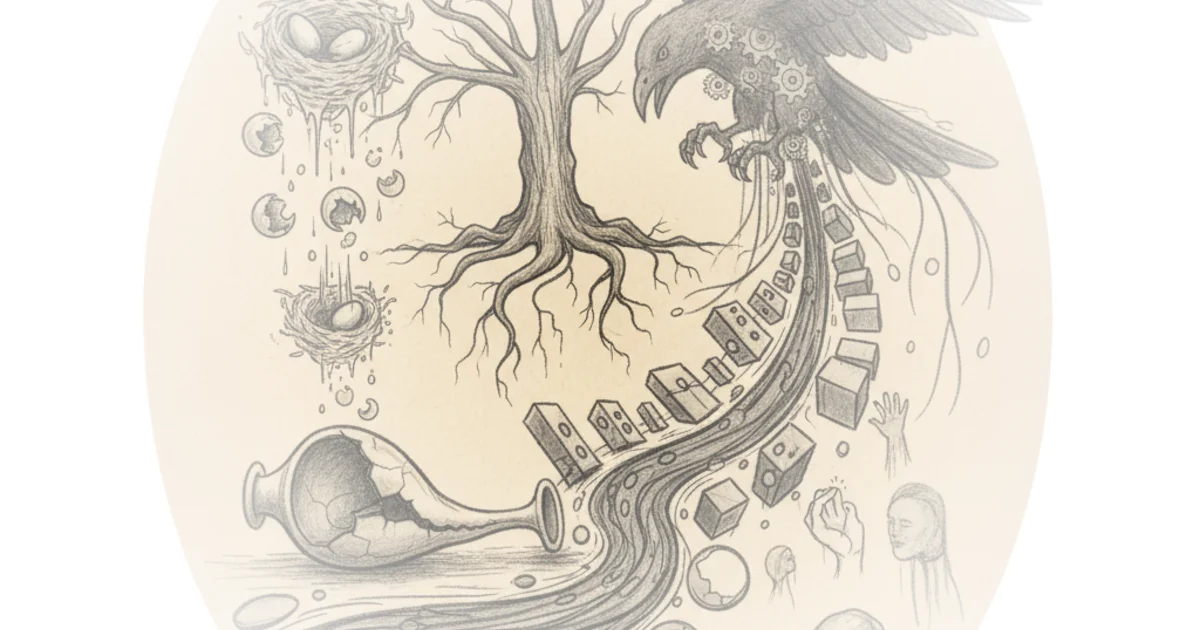
The core of Hanania's argument rests on the idea that our ancestors rarely experienced true isolation. "Primitive humans did most things communally, including hunting, sleeping, and leisure activities," he notes. In that environment, a simple rule emerged: "Whenever you have a chance to be alone, take it. You might not get another for a long time." This instinct, once a survival mechanism for mental decompression or hiding resources, has become a maladaptive force in the modern era. "As societies become wealthier, innovation and economic developments cater to human preferences," Hanania explains. We didn't just buy more food; we bought more privacy. "Instead, we purchased solitude."
This framing is compelling because it shifts the blame from specific technologies like the iPhone to the underlying human drive that made those technologies so irresistible. "People may like high-fructose corn syrup, but if that hadn't been invented other things would play a similar role," he argues. The market is simply fulfilling a deep-seated biological urge. Critics might note that this biological determinism risks absolving social structures of their role in alienation, but Hanania's point is that the urge exists regardless of the structure.
Instead, we purchased solitude. The market is shaping itself around our preferences, not the other way around.
The Burden of Kinship and the Flight to Privacy
Hanania deepens his argument by examining the social costs of communal living, drawing on specific historical and cross-cultural contexts. He references the "black tax" in African societies, where "93 percent of Kenyan entrepreneurs agree that success in business leads to financial demands from family and friends." This informal redistribution creates a powerful incentive to hide one's success and, crucially, to avoid deep social entanglements. "South Africans even have a name for the sharing obligations that define African kinship groups: 'the black tax,'" he writes. The result is a constant tension where the ambitious must obfuscate their wealth to survive, leading to a retreat from community.
He also points to the experiences of Chinese factory workers in Factory Girls, who fled rural social obligations for the anonymity of the city, only to retreat further into their phones. "Each step is toward greater solitude," Hanania observes. This connects the dots between the crushing weight of traditional kinship norms and the modern preference for digital isolation. The argument suggests that the desire for privacy is not a new cultural affectation but a rational response to the pressures of communal expectation. "It is easy to see how under such conditions it would be difficult to go beyond the optimal level of solitude," he concludes. By weaving in these specific examples of kinship pressure, Hanania provides a concrete mechanism for why the "solitude instinct" is so potent in the modern world.
The Limits of Willpower and the Case for Intervention
If the problem is evolutionary, Hanania asks, can it be solved by willpower or moral suasion? He is skeptical. "It was difficult if not impossible to get fat throughout most of our evolutionary history. Yet people who overeat today end up with health problems," he writes. Just as banning junk food failed to stop the obesity epidemic, he argues that cultural campaigns against phones or for more socializing will likely fail against the tide of human nature. "The only thing that seems to work on a wide scale for people susceptible to being overweight is fiddling with our biology," he notes, pointing to the rise of GLP-1 drugs.
This leads to his most controversial suggestion: perhaps we need a pharmaceutical solution for sociability. "Perhaps we need something similar in this area?" he asks. He even speculates that an uptick in the use of party drugs might be a sign that young people are trying to overcome their natural aversion to social friction. "At some point, societies need to get serious about collapsing fertility," Hanania asserts. "The reason we couldn't stop obesity from increasing before GLP-1 drugs was that the evolutionary impulses towards sloth and overeating are too strong." He suggests that governments could accelerate this by ensuring that any drug improving sociability is covered by national health insurance.
This is where the argument faces its steepest climb. While the analogy to obesity is structurally sound, the leap to pharmacological social engineering is a massive ethical and practical hurdle. Critics might argue that this path ignores the root causes of alienation, such as economic precarity or the erosion of third places, in favor of a technological fix. Yet, Hanania's point is that the challenge is so immense that we must be willing to consider options that currently seem radical. "Giving up is unacceptable. But we need to realize the enormity of the challenge," he writes.
Perhaps we need a pharmaceutical solution for sociability, just as we developed drugs to counteract our evolutionary drive to overeat.
Bottom Line
Hanania's most significant contribution is reframing the fertility crisis not as a policy failure but as a biological mismatch, effectively arguing that we are fighting our own evolutionary history. The strongest part of his case is the analogy to obesity, which successfully explains why cultural blame games and minor policy tweaks have failed to reverse the trend. However, the argument's biggest vulnerability lies in its reliance on pharmaceutical intervention as a primary solution, a leap that may overlook the complex social and economic reforms needed to rebuild community. Readers should watch for how this evolutionary lens influences future policy debates, particularly as the search for biological fixes for social problems accelerates.