Matt Stoller delivers a devastating critique of the very metrics economists use to declare victory, arguing that the current economic boom is a statistical illusion masking a reality of deepening financial extraction. While official data paints a picture of robust growth and low inflation, Stoller exposes how the machinery of national accounting has been hijacked by monopolistic pricing and financial engineering, turning essential services into hidden taxes that drain the middle class. This is not just a complaint about high prices; it is a structural indictment of an economic model that no longer measures human welfare.
The Illusion of Prosperity
Stoller begins by dismantling the assumption that rising GDP and corporate profits equate to public well-being. He points to the jarring disconnect between a 4.4% growth rate in the third quarter and the lowest consumer sentiment ever recorded. "If you look not at whether sentiment is correlated with growth, but at absolute levels, the situation is even more clear. Growth has been pretty good from 2021-2025, but the public is really mad." This observation is crucial because it forces policymakers to confront a reality their models ignore: the public is not suffering from a lack of information, but from a lack of purchasing power that the data refuses to show.
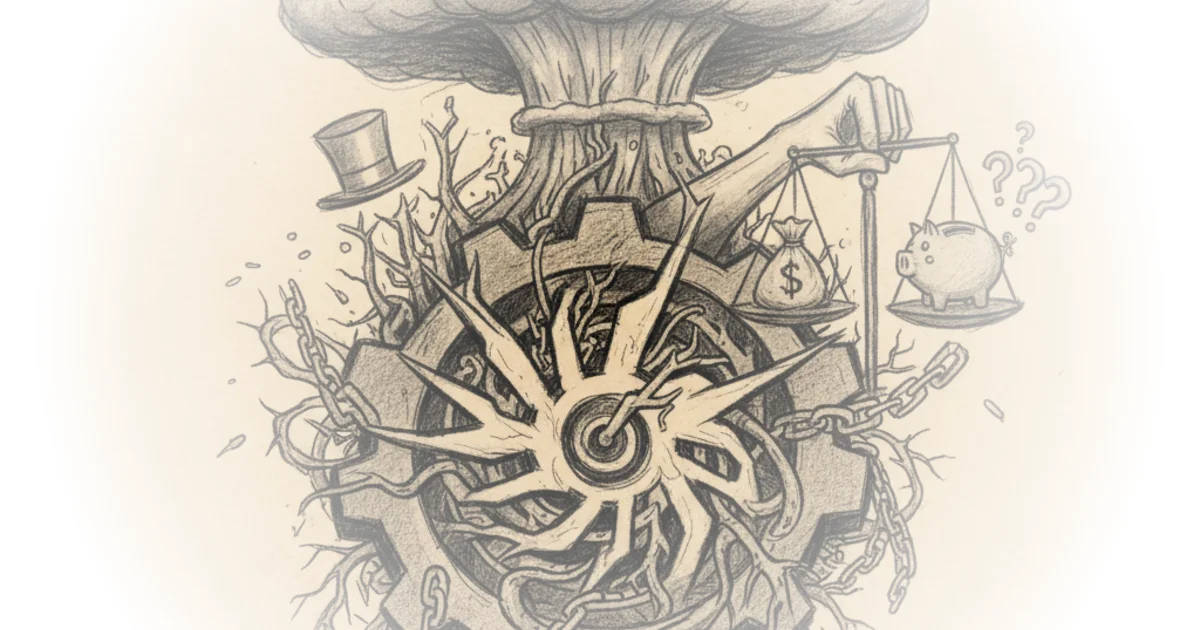
The author argues that the Federal Reserve, now facing a new leadership appointment, is operating with a broken compass. The administration's focus on keeping the public happy with the economy is thwarted because the tools used to measure success are fundamentally flawed. Stoller notes that while wages have risen at the same pace as in the previous term, the sentiment has collapsed because the cost of living has shifted in ways standard inflation metrics miss. "The public wasn't mad at phantom inflation, they were mad at real inflation that the 'experts' didn't see." This distinction is vital; it suggests that the anger is rational, not psychological, and that the disconnect is a failure of measurement, not a failure of the populace to understand their own finances.
The consumer powers ahead, even if consumers are unhappy. But in general, when the stats and the public mood conflict, I believe the public is usually correct.
Critics might argue that consumer sentiment is inherently volatile and often lags behind hard data, but Stoller's evidence suggests the lag is actually a sign of structural decay. When the data says "boom" and the people say "recession," the data is likely lying.
The Hidden Tax of "Free" Banking
Stoller's most original contribution is his dissection of a specific, often overlooked line item in government spending data: "Financial services furnished without payment." He explains that when banks pay below-market interest rates on deposits, the difference is counted by the Bureau of Labor Statistics as a service the consumer "bought," artificially inflating consumer spending figures. "When you keep your savings in a bank, and that bank pays you much less than the market rate of interest, that's a cost you don't necessarily see, but a cost nonetheless." This is a brilliant deconstruction of how GDP is manufactured.
The analysis reveals a stark contrast between the two recent terms. In the first term, this hidden cost was relatively stable. However, in the current period, as interest rates rose, banks failed to pass those gains to depositors, instead pocketing the difference. Stoller calculates that Americans paid an additional $230 billion annually to banks during this period, a sum that shows up in the data as increased economic activity. "No one wants a banking app or checks, it's non-discretionary, akin to taxes. No one says 'consumers choose to continue paying taxes,' because it's not a choice." This reframing transforms a statistic of "growth" into a statistic of extraction.
This argument aligns with historical critiques of the "real bills doctrine," where the focus on nominal transaction volumes obscured the actual distribution of wealth. Just as the Great Depression revealed the fragility of credit-based growth, today's data reveals the fragility of spending-based growth when that spending is driven by monopoly power rather than genuine demand.
Spending Inequality and the Currency of Class
Perhaps the most provocative part of Stoller's argument is the introduction of "spending inequality." He posits that we are living in a world where the value of a dollar depends entirely on who holds it. "Imagine if there were a different currency for Americans based on class. Let's say there were poor people dollars, which are worth 80 cents apiece, normal people dollars, which are worth 95 cents apiece, and rich people dollars, which are worth 105 cents apiece." This metaphor cuts through the noise of aggregate income statistics to reveal the true erosion of the middle class.
Stoller argues that standard inequality metrics, which focus on income or wealth, fail to capture the reality that the poor pay more for the same goods due to market consolidation. "What if your dollar doesn't go as far if you're poor?" he asks, noting that poorer metropolitan areas have experienced significantly higher food inflation than richer ones. This is not just a matter of having less money; it is a matter of being charged more for the essentials of life. The economic term "economic termites" is used to describe companies that exploit market power to extract value without creating it, a phenomenon that has become rampant in healthcare and banking.
We need to know about spending inequality as well. What looks like an increase in real wages in aggregate might not be an increase for some, because poor people dollars don't go as far as rich people dollars.
A counterargument worth considering is that market consolidation is a long-term trend, not a sudden post-pandemic anomaly. However, Stoller's point is that the impact of this consolidation has been amplified by the specific policy choices of the current era, particularly the failure to enforce competition rules while raising interest rates.
The Monopoly Inflation Blind Spot
The piece concludes with a sharp critique of the Federal Reserve's refusal to acknowledge monopoly power as a driver of inflation. While the administration and Wall Street readily blame supply chains or tariffs for price hikes, they ignore the role of corporate pricing power. "Macro-economists scoff at market power as a driver of inflation, except when it comes to working people getting raises or immigration." Stoller argues that this selective blindness allows banks and other monopolies to raise prices without consequence, effectively transferring wealth from consumers to shareholders.
The argument is that the current economic management is pushing buttons that are mislabeled. The models assume a single, integrated economy, but the reality is a tiered system where the wealthy thrive while the working class faces recessionary conditions. "While corporate America is experiencing good times, much of the country is experiencing recessionary conditions." This duality explains why the "boomcession" feels like a depression to so many.
Bottom Line
Matt Stoller's analysis is a necessary corrective to the complacency of official economic narratives, proving that GDP is a poor proxy for welfare when market power distorts prices. The argument's greatest strength is its ability to translate abstract accounting quirks into tangible financial pain, but it leaves the reader with a daunting question: if the data is broken, how can policy ever be fixed? The next step for observers is to watch whether the new Federal Reserve leadership acknowledges the role of monopoly power or continues to chase phantom inflation metrics while the public grows angrier.
The models underpinning how policymakers think about the economy just don't reflect the realities of modern commerce.