In an era where patriotism often devolves into performative tribalism, Wayfare offers a startlingly different roadmap for the nation's 250th anniversary: it argues that true love of country requires not blind celebration, but a rigorous commitment to protecting minorities and embracing the messy compromises of civic life. This piece stands out by reframing the US Constitution not as a static monument to greatness, but as a living "sacred secular" covenant born from the same human fallibility found in Genesis—a theological and political synthesis rarely heard outside specific faith communities.
The Architecture of Greatness vs. Goodness
Wayfare begins by acknowledging the undeniable scale of American achievement before pivoting sharply to its core thesis: greatness is a given, but goodness is a choice. The editors report that "the USA is great in landmass, great in population, great in economic impact," yet they caution against conflating this with moral perfection. Instead, the piece draws a hard line between patriotism and nationalism, arguing that while patriotism involves seeing a people clearly to lift them up, nationalism "mistakenly generalizes that local good and tribal decoration for a divine mandate."
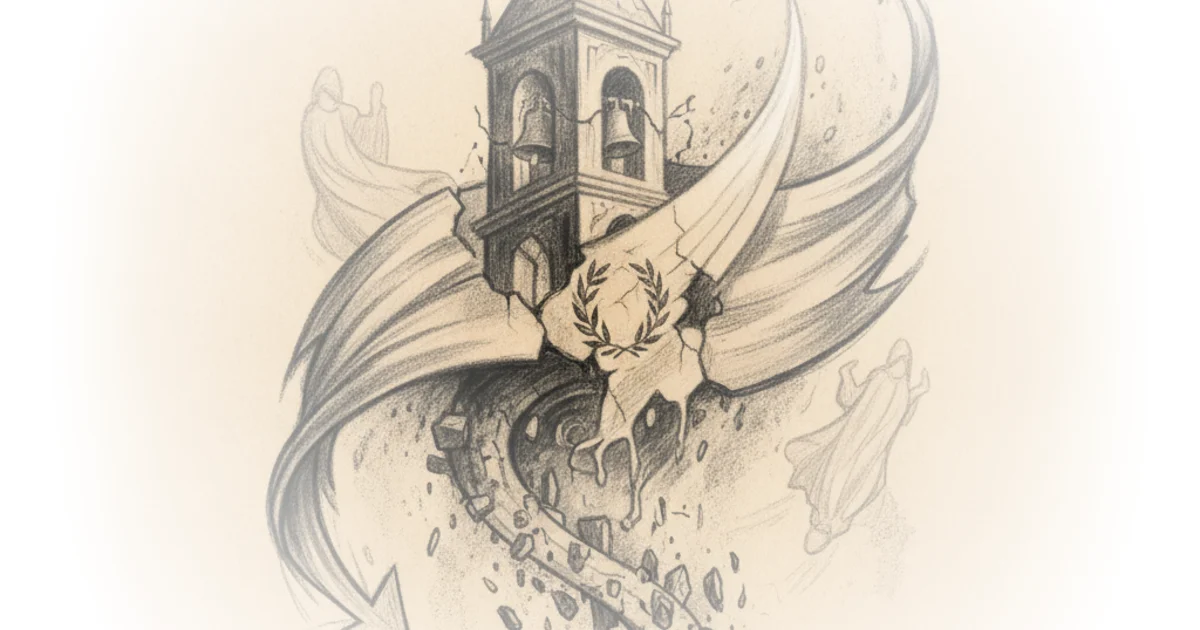
This distinction is crucial because it challenges the reader to reject the seduction of ethno-supremacy. The argument gains depth when the text notes that nationalist traditions across Russia, Ukraine, Turkey, and Germany often sound identical in their claims of unique superiority. By invoking Lord Acton's observation that "exile is the mother of nationality," Wayfare suggests that American identity is forged not by bloodline, but by the shared experience of being a minority in need of protection. This reframing effectively strips nationalism of its mystical allure, reducing it to what the piece calls "dull as it is dangerous" and noting that both its root and fruit are war.
Patriotism is hard and particular; nationalism is as dull as it is dangerous, and both its root and its fruit is war.
Critics might argue that this theological framing limits the appeal of the argument to a specific religious demographic, potentially alienating secular readers who view the Constitution as a purely civic document. However, the piece counters this by grounding its logic in historical reality rather than dogma alone, pointing out that early Latter-day Saints, alongside Irish and Italian immigrants, were not considered "white" during the era of slavery—a reminder that the boundaries of belonging have always been contested.
The Sacred Secular and the Minority Experience
The commentary then moves to its most provocative claim: that the US Constitution is a "sacred secular" framework designed specifically for minorities. Wayfare argues that the founders' decision to invoke a Creator without naming a specific church created a unique space where religious freedom could flourish. The editors note, "Minority religions are especially dependent upon a constitutional guarantee of free exercise of religion," and urge readers to see this not just as a legal right, but as a moral imperative.
This section leverages the historical context of the Church's own history of persecution to build empathy for current minorities. By referencing the "tyranny of the majority" and the scriptural narratives of nomads and exiles, the piece posits that protecting the vulnerable is the most American and the most faithful act one can perform. It cites President Oaks to emphasize that without these guarantees, the nation could not have served as a host for religious restoration or universal rights. The argument suggests that the only way to break the cycle of oppression is for former oppressed minorities to lead with solidarity rather than seeking revenge.
The piece effectively uses the metaphor of the "Fall" in Genesis to explain the necessity of government and compromise. Just as Adam and Eve moved from innocence to a world requiring sweat and toil, Wayfare argues that the Constitution acknowledges human imperfection. It quotes James Madison's famous insight: "If men were angels, no government would be necessary... you must first enable the government to control the governed; and in the next place oblige it to control itself." This connection between theological maturity and civic responsibility provides a fresh lens for understanding why compromise is not a weakness, but a divine requirement.
We live in a society made up of many minorities, a plural society: a plural society requires living with compromises.
A potential counterpoint here is that the "sacred secular" concept can be difficult to operationalize in a polarized political climate where religious rhetoric often divides rather than unites. The piece acknowledges this tension by warning against fear and violence, urging citizens to engage in the hard work of jury duty, tax-paying, and informed voting instead of retreating into ideological silos.
The Call for Civic Maturation
Ultimately, Wayfare rejects the idea that there is a "magic solve-all" for national problems. Instead, it calls for a return to the basics of civic engagement, framing voting not as a ritual but as a profound exercise in conscience. The editors highlight a recent warning from church leadership: "Merely voting a straight ticket or voting based on tradition without careful study of the candidates and their positions on important issues is a threat to democracy and inconsistent with revealed principles." This is a direct challenge to the lazy partisanship that often plagues modern elections.
The piece concludes by tying the 250th anniversary back to the concept of growth. Just as the author learned as a child that painting the flag required effort beyond a simple cake, Wayfare argues that maintaining the republic requires continuous work. The reference to the "two founding Moses moments"—Juneteenth and Independence Day—serves to broaden the definition of American freedom, linking the end of slavery with the rejection of monarchy as twin pillars of national identity.
Bottom Line
Wayfare's strongest contribution is its refusal to separate faith from civic duty, arguing instead that a deep religious commitment necessitates a fierce defense of pluralism and minority rights. Its biggest vulnerability lies in its heavy reliance on specific theological premises that may not resonate with a secular audience, though the underlying historical arguments about the fragility of democracy remain universally applicable. Readers should watch for how this "sacred secular" framework influences upcoming debates on religious freedom and civic engagement as the nation approaches its semiquincentennial.