Most people assume memory is a filing cabinet, a static archive where the past is stored intact and retrieved unchanged. Kenny Easwaran dismantles this comforting illusion by arguing that human memory functions less like a closet and more like a box of Lego bricks: we store the pieces, not the castle, and we must rebuild the structure every single time we recall it. This isn't just a psychological quirk; it fundamentally upends how we understand knowledge itself. If our past is constantly being reconstructed, can we truly claim to "know" what happened, or are we merely generating a plausible story in the present moment?
The Lego Metaphor and the Death of the Archive
Easwaran begins by contrasting the traditional "closet drawer" model of memory with a more dynamic "Lego storage" analogy. He writes, "if i build a lego castle but i want to store it i usually don't put the whole castle away i'll take it apart and just store the pieces and then later on if i want it again i'll have to put it back together." This distinction is crucial because it suggests that the act of remembering is an active, creative process rather than a passive retrieval. The implications are staggering: if the reconstruction process allows for new pieces to be added or old ones swapped out, the memory we hold today may differ significantly from the experience we originally had.
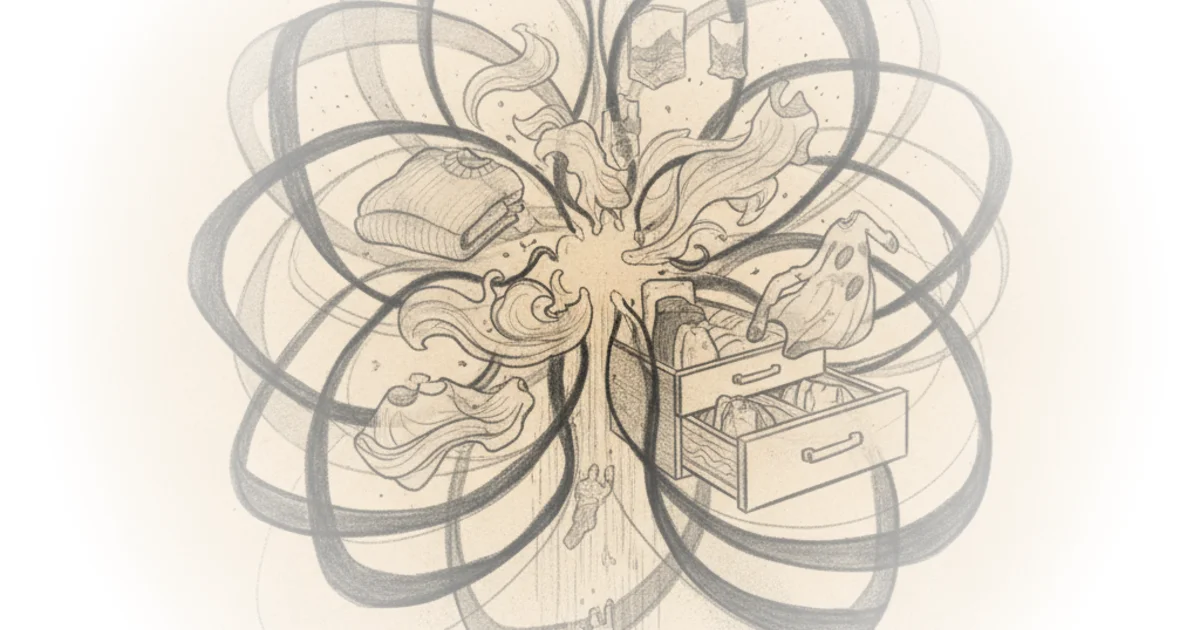
The author argues that this constructive nature forces a revision of the dominant philosophical view, known as the causal theory of memory. Easwaran notes, "our confidence in the causal theory has been to a certain extent unfounded for the psychology of constructive memory poses a significant challenge to the causal theory of memory." He posits that we cannot simply assume a memory is valid because it is causally linked to a past event; we must also account for the transformations that occur during storage and retrieval. This reframing is effective because it bridges the gap between empirical psychology and abstract philosophy, showing that real-world cognitive mechanisms have direct consequences for how we define truth.
Memory is after all called constructive in part because it is supplemental because some of the changes that occur between the study and the test involve memory for information that was not contained in the input.
Critics might argue that this view risks making memory too unreliable to serve as a foundation for knowledge. If every recall is a reconstruction, where does the line between memory and imagination lie? Easwaran anticipates this, suggesting that the process is not random but guided by specific cognitive rules, yet the potential for error remains an inherent feature of the system.
The Mechanics of Reconstruction
To explain how this reconstruction happens, Easwaran breaks down the process into four distinct stages: selection, abstraction, interpretation, and integration. He writes, "selection only certain incoming stimuli are selected for encoding... abstraction the meaning of a message is abstracted from the syntactic and lexical features of the message." In plain terms, we don't record everything; we filter the noise and keep the gist. When we later try to remember, we fill in the gaps using our existing knowledge base.
This is where the concept of "doxastic generation" enters the conversation. Easwaran explains that memory can produce new content, meaning we can come to believe things we never actually experienced or were never explicitly told. He states, "the generation of a new belief occurs at retrieval when the agent accepts a retrieved record that she did not previously accept." This challenges the idea that memory is purely preservative. Instead, it is a generative epistemic source, capable of creating new justifications for belief.
The author highlights the role of "source monitoring," where we infer the origin of a memory based on its features. "the source of a memory trace is inferred perhaps automatically and unconsciously from certain features of the content e.g its level of detail," Easwaran writes. This explains why we sometimes confidently remember a story as a personal experience when it was actually something we heard from a friend. The brain fills in the context, and in doing so, it can inadvertently alter the truth.
If there is nothing lost by construction at one stage there need be nothing lost by reconstruction of the other if there is something gained by construction at one stage there might also be something gained by reconstruction at the other.
This section is the intellectual core of the piece. By detailing the specific mechanisms of how memories are altered, Easwaran moves the discussion from vague skepticism to a precise analysis of cognitive architecture. However, a counterargument worth considering is whether this level of detail is necessary for everyday functioning. While the philosophical implications are profound, our brains may prioritize speed and coherence over perfect accuracy, a trade-off that serves survival better than truth.
The Philosophical Stakes
Ultimately, Easwaran's analysis leads to a revised version of the causal theory of memory that accommodates these constructive processes. He argues that we must update our theories to include conditions that account for the transformation of content. "i argue on the basis of this interpretation for an updated version of martin and deutsche's influential causal theory of memory," he writes. This updated theory acknowledges that memory is not a perfect record but a dynamic reconstruction that can still yield knowledge, provided we understand its limitations.
The significance of this work lies in its refusal to treat memory as a static object. By accepting that memory is generative, we open up new ways of understanding how we learn and how we justify our beliefs. Easwaran concludes by sketching the implications of this updated theory for the question of memory status as a generative epistemic source. He suggests that we can become justified in believing things through our memory that we were never actually believing before.
As long as we are in the grip of a picture on which a memory trace or engram is a faithful record of experience we will be inclined to suppose that remembering must be a matter of retrieving the trace unaltered but if we realize that the trace itself is constructed it should begin to seem much less obvious that remembering should be a matter of retrieving it unaltered.
This final point serves as a powerful reminder that our understanding of the past is always mediated by the present. The "truth" of a memory is not a fixed point in time but a negotiated reality between what was stored and what is currently needed.
Bottom Line
Easwaran's argument is a masterclass in applying empirical psychology to solve a philosophical stalemate, successfully demonstrating that memory is a creative act rather than a passive recording. The strongest part of the piece is its rigorous breakdown of the reconstruction process, which makes the abstract concept of "generative memory" tangible and undeniable. The biggest vulnerability remains the practical challenge: if memory is so malleable, how do we distinguish between a useful reconstruction and a dangerous delusion in legal or historical contexts? Readers should watch for how this framework is applied to real-world issues of testimony and evidence in the coming years.