A Nobel laureate is arguing that the bedrock of modern physics is built on a logical fallacy, and his solution requires abandoning one of humanity's most cherished intuitions: free will. Sabine Hossenfelder dissects Gerard 't Hooft's radical proposal that the universe is not probabilistic but strictly deterministic, a claim that, if true, would fundamentally rewrite the limits of quantum computing and our understanding of reality itself.
The Illusion of Randomness
Hossenfelder begins by establishing the standard view of quantum mechanics, where particles exist in a haze of probability until measured. She notes that this randomness is not just a lack of knowledge but a fundamental feature of the theory, a point that famously troubled Einstein. 't Hooft, however, rejects this indeterminism entirely. As Sabine Hossenfelder explains, 'He thinks that the randomness of quantum mechanics has the same origin as any other randomness we observe. Like when you throw a die. It's not that the outcome of the throw wasn't determined. We just can't calculate it because we don't know the exact initial state.'
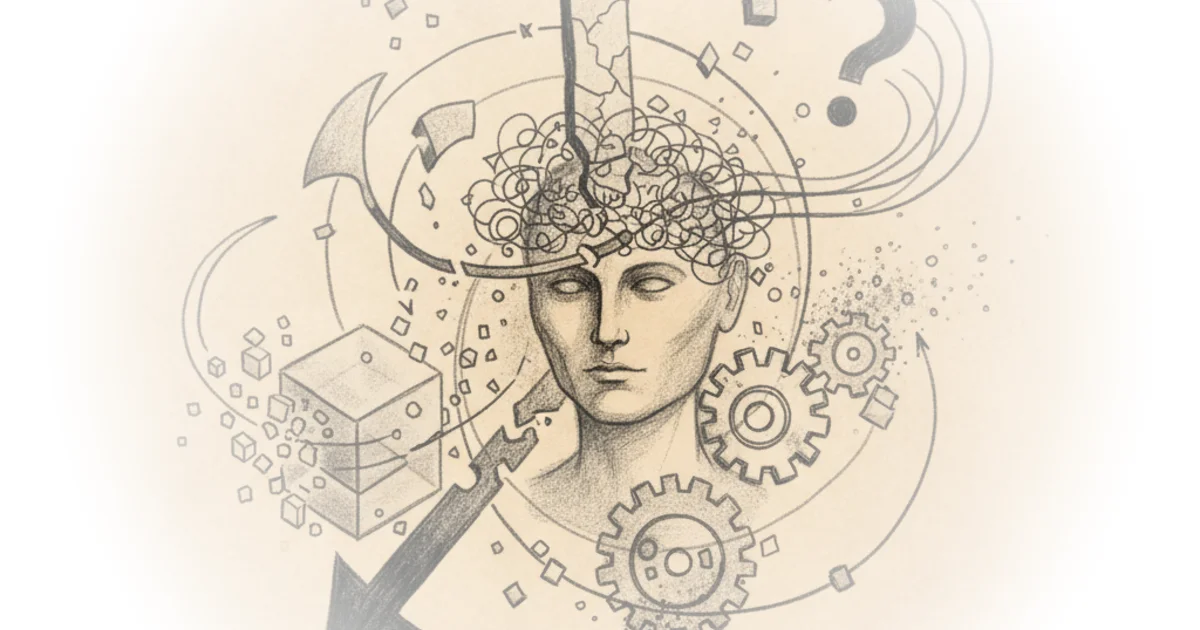
This framing is crucial because it reframes the quantum mystery not as a breakdown of logic, but as a data problem. The core of 't Hooft's argument is that the universe is deterministic, and the apparent randomness is merely a reflection of our inability to access the full initial conditions. Hossenfelder writes, 'In 't Hooft's version, it does [determine the result]. It's just that we can't predict the result because we lack information.' This is a bold move that aligns with Einstein's famous dictum that God does not play dice, yet it requires a price most physicists are unwilling to pay.
The Cost of Determinism
The price of restoring determinism is the elimination of free will, a concept 't Hooft views as a mathematical assumption rather than a physical reality. Hossenfelder highlights how this assumption is central to Bell's theorem, the 2022 Nobel-winning proof that seemingly rules out local deterministic theories. 't Hooft argues that the theorem's validity hinges on the idea that experimenters can freely choose what to measure. Sabine Hossenfelder quotes 't Hooft directly on this point: 'Like it or not, the experimental actions are determined by laws of physics. Their decisions logically have their roots in the distant past going back all the way to the big bang.'
This is where the argument becomes most provocative. If the experimenter's choice and the particle's state were correlated since the Big Bang, the violation of Bell's inequality no longer disproves determinism. Hossenfelder summarizes this as 'superdeterminism,' noting that 'the decision of what you measure is correlated with the state of the system that you measure.' Critics might note that this view borders on conspiracy theory, suggesting a pre-ordained universe where every experiment is rigged from the start. However, Hossenfelder points out that 't Hooft sees this not as causation, but as a necessary correlation encoded in the laws of nature. The argument holds a strange internal logic, even if it feels philosophically uncomfortable.
The wave function that we use in quantum mechanics is all well and good to describe what's going on, but it isn't real.
The Cellular Automaton Reality
To explain how this deterministic universe functions, 't Hooft proposes that reality is composed of 'cellular automata'—discrete, grid-like units interacting with neighbors at the Planck scale. Hossenfelder describes these as 'quantum versions of gears' that combine to form particles and space itself. This model has a tangible prediction: it places a hard limit on the power of quantum computers. As Sabine Hossenfelder puts it, 'Factoring a number with millions of digits into its prime factors will not be possible. If engineers ever succeed in making such quantum computers, it seems to me that the cellular automaton theory is falsified.'
This provides a clear, testable boundary for the theory, which is rare in foundational physics debates. However, Hossenfelder is skeptical of the mechanism. She argues that 'anything discrete be that in space or in time will violate the symmetries of Einstein's theories.' She suggests that while the idea of ontological states (real, definite states) is viable, the specific cellular automaton model struggles to reconcile with the smooth symmetries of relativity. A counterargument worth considering is that Hossenfelder's skepticism might be premature; history is full of theories that seemed to conflict with established symmetries before a new mathematical framework resolved the tension.
The Tragedy of Ignored Ideas
Perhaps the most poignant part of Hossenfelder's commentary is her observation of the scientific community's reaction. Despite 't Hooft's credentials, his ideas have been largely dismissed. 'You'd think that someone with as many credentials as 't Hooft would have a chance that his ideas be taken seriously, but evidently not,' she writes. This highlights a potential stagnation in the field, where radical but rigorous ideas are filtered out by the weight of consensus. Hossenfelder concludes that while the cellular automaton model may be flawed, the underlying push for an ontological, deterministic reality offers a 'fresh perspective on an old problem.'
Bottom Line
Sabine Hossenfelder effectively presents 't Hooft's challenge to quantum mechanics as a coherent, if unsettling, alternative that trades randomness for a pre-determined universe. The strongest part of this argument is its falsifiability: the claim that quantum computers have a hard ceiling provides a clear path to proving or disproving the theory. Its biggest vulnerability remains the philosophical and physical difficulty of accepting superdeterminism, which many physicists view as a dead end rather than a solution. Readers should watch for experimental results in quantum computing, as they may soon settle the debate on whether the universe is truly a giant, deterministic machine.