Tim Mak's reporting from Cúcuta strips away the geopolitical abstraction of "regime change" to reveal the raw, suffocating reality of a border town holding its breath. While Washington debates the merits of naval blockades, Mak documents a hospital system already operating at the breaking point, where the threat of war is not a strategic variable but an immediate precursor to mass starvation and displacement. This piece is essential because it refuses to let the reader look away from the human cost of the administration's largest military deployment in the Caribbean since the Cuban Missile Crisis.
The Human Toll of Escalation
Mak anchors the story in the visceral chaos of the Hospital Erasmo Meoz, describing a scene where "IV tubing crosses the room, and bandaged feet rest on wheelchair steps, while fans push the humid air — failing to clear the smell of sweat and desperation." This sensory detail does heavy lifting; it forces the audience to confront the physical reality of the crisis before the political rhetoric even begins. The author notes that by law, the hospital must treat every patient regardless of status, yet the influx is driven by a collapse that has pushed nearly 8 million Venezuelans to flee since 2013.
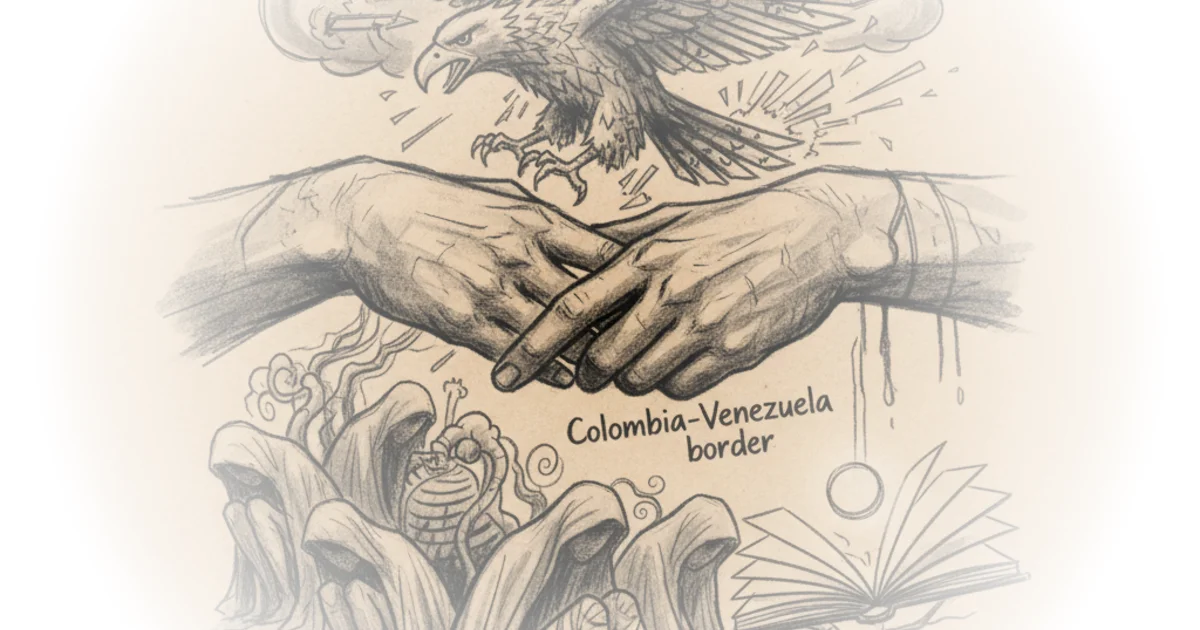
The administration frames its military buildup as a necessary strike against narcotrafficking, but Mak highlights the grim disconnect between this narrative and the human outcome. "Since the operation began in September, at least 76 people have died in extrajudicial killings in South American waters," Mak writes, noting that "the Trump administration has provided no evidence linking the victims to drug trafficking." This lack of transparency is a critical vulnerability in the official story. Critics might argue that the fog of war makes real-time verification difficult, yet the administration's silence on specific cases—such as the Colombian government's claim that an innocent fisherman was killed in a boat strike—undermines the moral clarity of the mission.
"Whether the Colombian government takes action or not, whether the government in Venezuela takes action or not — it makes no difference to us. Poor people continue to come here so that we can help them."
This quote from Hospital Manager Hernando Gómez captures the jaded resilience of the border community. Mak uses this to illustrate that for the people on the ground, the specific actor triggering the violence matters less than the inevitability of the suffering. The framing is effective because it shifts the focus from the "who" of the conflict to the "what" of the consequence: a humanitarian emergency that local infrastructure cannot absorb.
The Economics of Survival and Separation
Moving beyond the hospital, Mak introduces Nermari, a mother separated from her children, to humanize the statistics of migration. Her story is not one of political ideology but of economic desperation and the terror of state violence. Mak writes that her deepest ambition is simple: "for her entire family to live together again in a house of their own in Venezuela — a place where no one can kick them out and the government can't take their property." This personal stake highlights the failure of the Maduro regime to provide basic security, a point reinforced by the ex-army officer who describes the military as a facade for organized crime.
The former officer's testimony is particularly damning regarding the internal dynamics of the Venezuelan state. He explains that the economic disparity is so severe that "a carton of eggs costs more than a soldier earns in a month," forcing rank-and-file troops into a choice between starvation and criminality. Mak uses this to argue that the migration crisis is not merely about economics, but about terror. "People think Venezuelans migrate only because of the economy. No. They migrate because of fear. Because of violence. Because of persecution. Because of criminal control. Because of hunger. Because of the collapse of the system," the officer asserts.
This perspective challenges the narrative that a military intervention would face unified resistance. Instead, Mak suggests that the Venezuelan military is fractured and demoralized. "If the United States intervenes, Venezuelan soldiers will not fight," the officer claims. "They'll drop their weapons and surrender." While this offers a glimmer of hope for a swift resolution, it also raises the specter of a power vacuum that could lead to further chaos, a risk the article acknowledges but does not fully resolve.
The Fragility of the Border
The narrative then shifts to Tibú, a town where Venezuelans make up a third of the population, to illustrate the fragility of the region's social fabric. Community leader Jaime Botero warns that any escalation would result in "total chaos," with everyone scrambling for refuge. Mak notes that the town is critically unprepared, a situation exacerbated by "U.S. cuts to USAID funding," which have left humanitarian groups with limited resources to respond.
This intersection of domestic policy cuts and international conflict is a crucial, often overlooked dynamic. Mak writes that Botero confessed his social life has plummeted due to threats from armed groups, adding a layer of personal risk to the professional burden of managing a crisis. "We have conflict like everyone else," Botero said. "But we are coping. Not all of us are guerrillas." This distinction is vital; it humanizes the local leadership and rejects the simplistic labeling of border communities as zones of pure lawlessness.
Critics might note that the article places significant weight on the testimony of a single anonymous former officer, which, while powerful, lacks independent corroboration. However, the consistency of his account with the broader patterns of desertion and abuse reported by human rights groups lends it significant credibility. The piece effectively uses his voice to bridge the gap between the macro-level geopolitical maneuvering and the micro-level reality of a starving soldier.
Bottom Line
Tim Mak's reporting succeeds by refusing to let the reader hide behind the abstraction of "strategic deterrence," instead forcing a confrontation with the smell of sweat, the sound of crying children, and the silence of a hospital overwhelmed by the consequences of war. The strongest part of the argument is its unflinching exposure of the gap between the administration's justification for military action and the reality of extrajudicial killings and humanitarian collapse. The biggest vulnerability remains the uncertainty of what happens after the initial shock of intervention; while the article suggests the Venezuelan military may crumble, it leaves the reader with the terrifying question of who fills the void. The reader should watch not for the next headline about naval movements, but for the next wave of displacement that will inevitably follow.