In an era where social media myths harden into accepted history, a viral claim that Black Americans were legally barred from buying vanilla ice cream until the Fourth of July demands scrutiny. Kahlil Greene dismantles this popular narrative not to erase Black suffering under Jim Crow, but to reclaim the actual, profound history of Black ingenuity that the myth obscures. This is a story about how a specific flavor became a cultural touchstone, rooted in the labor of an enslaved gardener whose name was almost lost to time.
The Myth of the Vanilla Ban
The piece begins by addressing a pervasive internet rumor that has gained traction on platforms like TikTok and in museum exhibits. Greene writes, "Every summer, a story about ice cream circulates on social media. Black people in the Jim Crow South could not buy vanilla ice cream except on the Fourth of July, and so they settled on butter pecan instead." He notes that this claim, while emotionally resonant, crumbles under historical examination. As he puts it, "Reporters and historians who went looking for evidence of a vanilla rule found none."
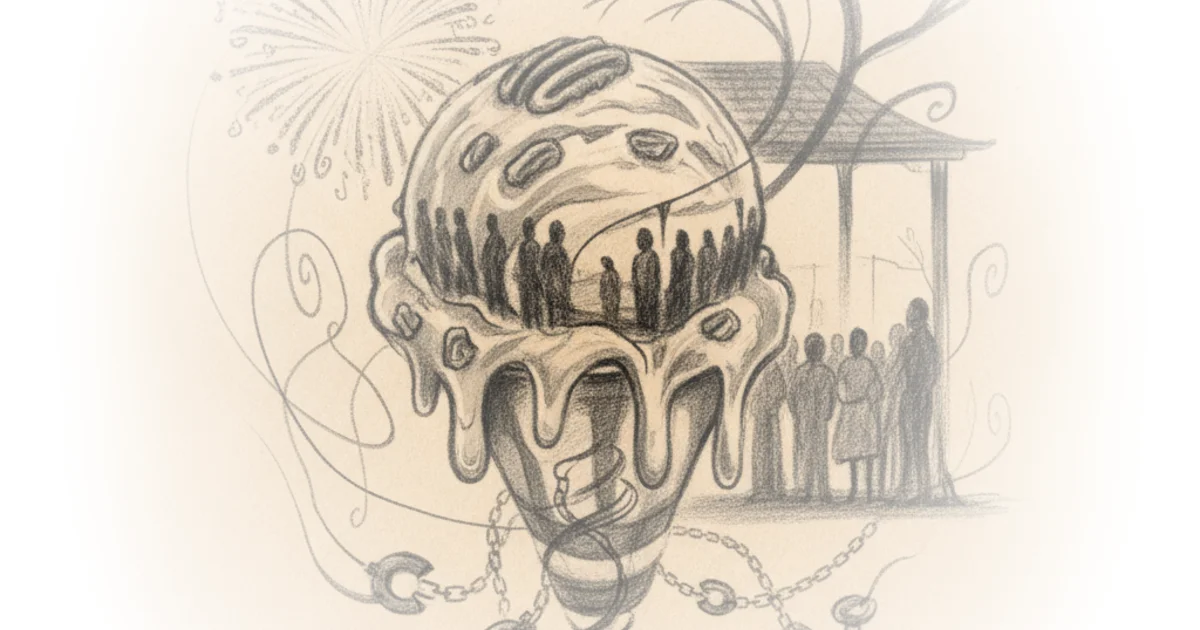
Greene traces the origin of this myth to a 2014 essay by culinary historian Michael Twitty and memoirs by Maya Angelou and Audre Lorde, which described segregation in stark, personal terms. However, the author points out that these accounts describe exclusion from service or seating, not a specific flavor restriction. Jennifer Wallach, a professor of history, explains to Greene that the economic logic of segregation contradicts the myth: "White business owners wanted Black customers' money." The reality was that Black patrons could buy ice cream but were often denied the dignity of sitting down to eat it, a humiliation that the vanilla myth inadvertently sanitizes by focusing on a flavor preference rather than the systemic denial of public space.
"The vanilla story pulls attention away from harsher facts about segregation."
Critics might argue that the specific details of the myth matter less than the broader truth of racial exclusion it represents. Yet Greene's insistence on accuracy is vital; conflating a fictional flavor ban with the very real, documented struggles at soda fountains risks turning historical tragedy into folklore, diluting the specific legal and social battles fought by figures like Edna Griffin in Des Moines.
The Real Inventor of the Pecan Industry
Having cleared the air on the myth, Greene pivots to the actual history that explains the flavor's dominance: the horticultural genius of an enslaved man named Antoine. The article details how, in 1846, Antoine successfully grafted pecan trees, solving a problem that had stumped growers for decades. Greene writes, "An enslaved gardener in Louisiana made commercial pecan farming possible." He recounts how Antoine grafted 126 trees, producing a thin-shelled nut that could be cracked by hand, a breakthrough that launched the American pecan industry.
The author highlights the tragic irony of this innovation: "Antoine received no payment, no credit, and no recorded acknowledgment during his life." This erasure mirrors the fate of Edmond Albius, the enslaved boy on the French island of Réunion who discovered how to hand-pollinate vanilla orchids in 1841. Greene draws a powerful parallel between these two figures, noting that just as the vanilla orchid's global spread relied on Albius's labor, the Southern pecan industry relied on Antoine's. The connection to the broader history of the Illegal drug trade is subtle but present in the way unregulated, illicit markets often rely on the labor of the marginalized, though here the focus remains on the agricultural economy. Similarly, the soda fountain context mentioned in the background serves as the physical space where these flavors were consumed, yet the labor that produced the ingredients was invisible.
Greene argues that the preference for butter pecan among Black Southerners is not a result of exclusion from vanilla, but of abundance and tradition. "Georgia and Texas lead American pecan production, and Southern farms have supplied the nut for generations," he notes. This preference traveled north during the Great Migration, becoming a staple at church socials and cookouts in Chicago and Detroit. The author concludes that the flavor's popularity is a testament to resilience and adaptation, not a secondary choice forced by racism.
"Black Americans eat butter pecan ice cream because pecans grew where their families lived and because an enslaved man in Louisiana solved a horticultural problem that let growers farm the nut commercially."
A counterargument worth considering is whether focusing on the economic success of the pecan industry inadvertently softens the brutal reality of slavery. Greene addresses this by emphasizing the lack of compensation and credit Antoine received, ensuring the narrative does not celebrate the industry without condemning the system that built it.
Bottom Line
Kahlil Greene's piece succeeds by replacing a comforting myth with a more complex, albeit painful, truth. The strongest part of the argument is its refusal to let the myth of the "vanilla ban" stand when it obscures the actual contributions of Black laborers like Antoine. The biggest vulnerability lies in the difficulty of shifting public perception once a viral story has taken root, but the evidence provided—ranging from agricultural records to economic logic—is compelling. Readers should watch for how this corrected narrative influences future discussions on food history, ensuring that the credit for culinary innovation is finally assigned to those who earned it.