Yascha Mounk makes a startling claim that cuts through the noise of daily political polling: the current administration is not a temporary aberration, but a "world-historical" force permanently dismantling the post-WWII global order. While Democrats celebrate recent electoral gains, Mounk argues they are missing the forest for the trees, focusing on who holds the White House while ignoring how the executive branch has fundamentally altered the machinery of American power and foreign policy.
The World-Historical Individual
Mounk anchors his analysis in an unlikely source: G.W.F. Hegel's early 19th-century philosophy of history. He posits that the current leader fits the profile of a "world-historical individual"—a figure who accelerates the transition between eras, often through destructive means, regardless of their personal intent. "Hegel viewed history as consisting of stages punctuated by times of upheaval," Mounk writes, noting that these figures are driven by passions that defy conventional morality to achieve a historical necessity. This framework is provocative because it strips away the moral outrage that usually dominates political discourse, replacing it with a cold, structural analysis of why the status quo cannot be restored.
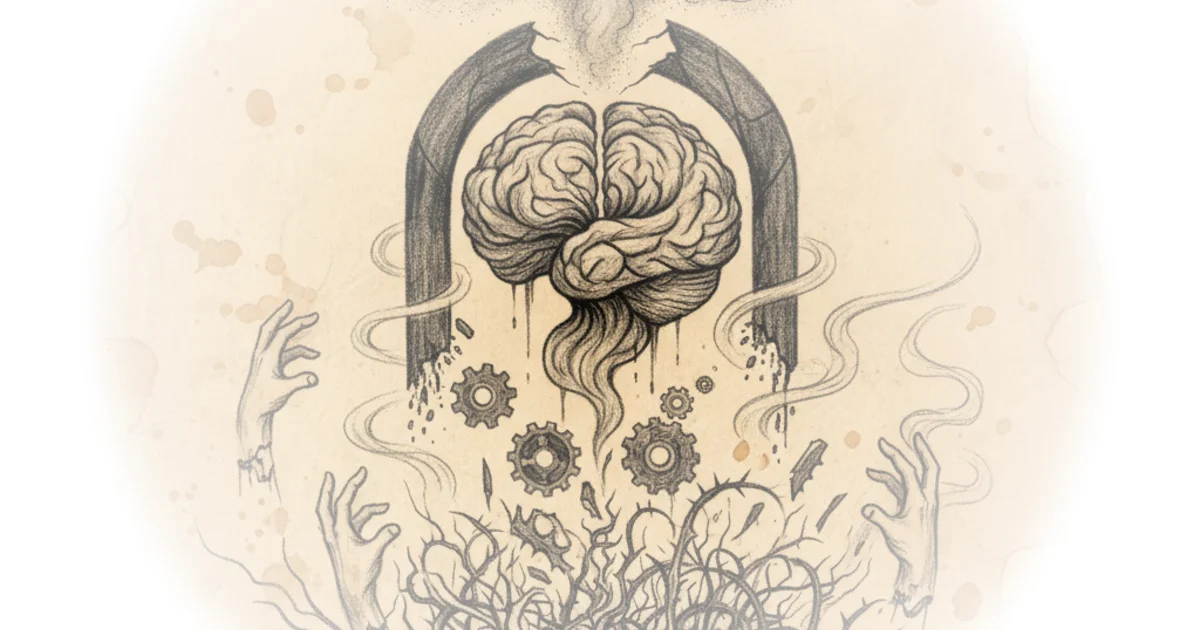
The author suggests that the old consensus of neoliberalism and liberal internationalism was already crumbling due to failed wars and economic dislocation before the current administration took office. "When established political leaders failed to recognize that the old order was disintegrating, politicians and populist movements sprung up on the left and right that did," Mounk observes. By framing the current administration as the agent of this inevitable shift, he explains why the administration's actions—such as rejecting the World Trade Organization or bypassing traditional alliances—feel less like policy errors and more like the demolition of a broken structure. Critics might argue that this philosophical lens risks absolving the administration of accountability by treating their actions as the inevitable march of history rather than deliberate choices. However, Mounk insists that the destruction is real regardless of the philosophical justification.
These leaders often leave death and destruction in their wake. To achieve their results, Hegel writes, "They must trample down many an innocent flower, crush to pieces many an object in its path."
The End of the Old Consensus
Mounk details how the administration has systematically dismantled the pillars of the post-1945 international system. He notes that while the first term was a rejection of free trade and global institutions, the second term has escalated into a complete overhaul of foreign policy doctrine. "He declared a new 'Donroe Doctrine' that justified kidnapping Venezuela's head of state," Mounk writes, highlighting a shift from spreading democracy to exercising raw power over oil-rich nations. This is a crucial distinction: the goal is no longer ideological alignment but transactional dominance, a move that aligns with Hegel's view that these figures are driven by an "unconscious impulse" to reshape the world to their will.
The commentary draws a sharp parallel between the current administration and historical figures like Napoleon, who also repudiated "sacred interests" including the constitution and checks and balances. "He shut down or fired leaders of independent agencies that Congress created," Mounk notes, pointing to the erosion of the administrative state. This connects to the broader debate on the unitary executive theory, where the administration argues that the president possesses unchecked authority over the executive branch, a concept that has moved from legal theory to operational reality. The author suggests that even if the administration eventually leaves office, the precedent of ignoring legal constraints will remain.
"My own morality. My own mind. It's the only thing that can stop me," the administration's leader responded when asked about limits on global power. "I don't need international law."
The Irreversible Legacy
The most compelling part of Mounk's argument is his skepticism that a future Democratic victory can simply "turn back the clock." He argues that the economic and geopolitical shifts driven by the administration have created a new reality that future leaders will have to navigate, not reverse. "Given recurring imbalances in the international economy, could any future president really resurrect the old dream of free trade?" Mounk asks, pointing out that even the previous Democratic president retained many of the tariffs imposed by the current administration. The consensus on free trade is dead, replaced by a focus on bilateral deals and industrial protectionism.
Furthermore, the trust that held together America's alliances has been fractured. "He has undermined, perhaps fatally, the trust that held together America's post-World War II alliances," Mounk writes, suggesting that NATO and other institutions may never regain their former cohesion. This aligns with the concept of sovereign immunity, where the administration has increasingly acted as if it is above the legal and diplomatic norms that once bound the executive branch. The author warns that the "Board of Peace" proposed by the administration, while likely to fail, has already exposed the impotency of the United Nations, signaling a permanent shift toward a more fragmented, multipolar world.
Critics might note that Mounk's reliance on Hegel's deterministic view of history overlooks the agency of civil society and legislative bodies that could still check executive overreach. Yet, his evidence of the administration's willingness to invoke archaic laws, such as the Alien Enemies Act of 1798, to justify modern deportations suggests that the institutional guardrails are already severely compromised.
Bottom Line
Mounk's strongest contribution is reframing the current political chaos not as a temporary glitch, but as the violent birth of a new historical era where the old rules of trade and diplomacy no longer apply. His argument's biggest vulnerability is its potential fatalism, which might discourage the very political engagement needed to shape the transition. Readers should watch for how future administrations, regardless of party, attempt to manage the fragmented global order the executive branch has helped create, rather than expecting a return to the past.