This piece delivers a startling historical correction: the far-right's current obsession with defending the "pristine countryside" is a modern costume worn by a movement that was, at its core, an urban phenomenon. Break-Down exposes how the rhetoric of "blood and soil" is not a genuine love of nature, but a weaponized nostalgia used to justify exclusion, tracing a direct line from 1930s fascist failures in rural England to today's anti-immigration panic.
The Urban Roots of Rural Rhetoric
The article dismantles the popular narrative that the far-right are the natural defenders of the land. Instead, it argues that their engagement with rural life is performative and opportunistic. "Fascism and the countryside... tells a far more complex story about nationalism and rural life," the piece notes, highlighting that the British Union of Fascists (BUF) only turned to agriculture after realizing their urban base was insufficient. The editors point out that the movement's reliance on London and industrial centers was the reality, while their rural forays were "tragi-comic" attempts to manufacture relevance.
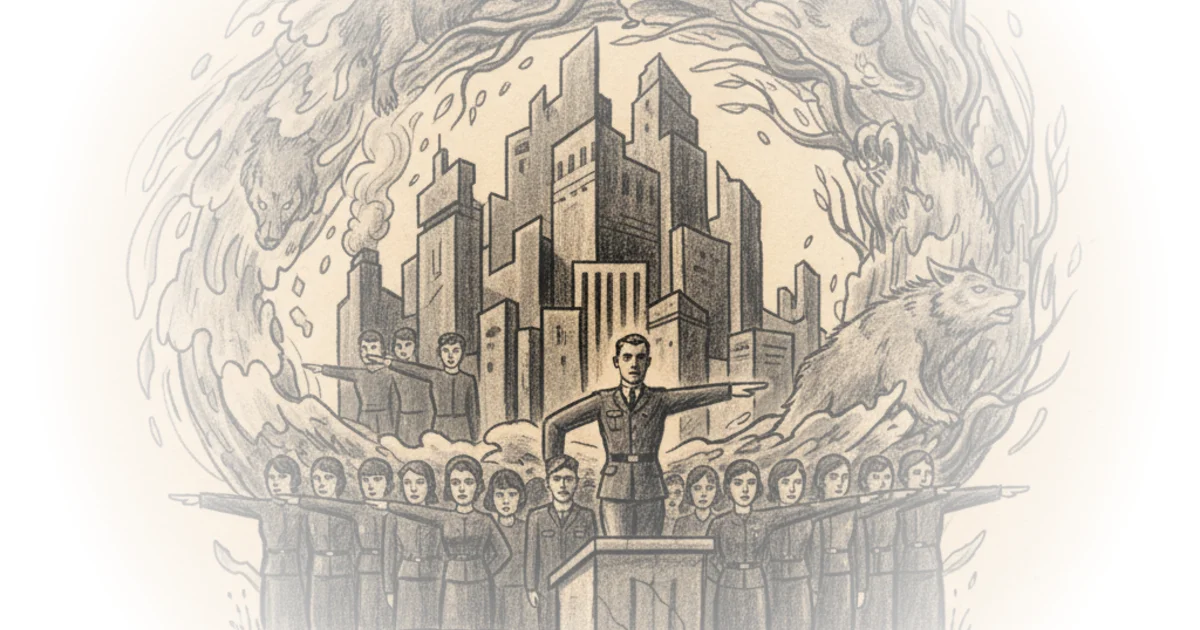
This reframing is crucial for understanding current events. When modern groups claim to protect the "greenbelt" or "indigenous species," they are echoing a strategy that failed decades ago. The piece observes that "the farmer was to the metropolitan fascist of the 1930s what the fisherman is to Farage today. He... stands for what we have lost, or surrendered." This metaphor cuts through the noise of recent protests, revealing that the "local" concerns being shouted in the streets are actually imported ideologies from the city.
The far right has long portrayed itself as the defender of a pristine nature against urban corruption, but its history in the British countryside tells a far more complex story about nationalism and rural life.
The Purity Trap
The commentary dives deep into how environmentalism is twisted to serve ethnonationalist goals. Break-Down reports that groups like the Homeland Party claim to love the land, yet their policies "all circle one particular policy point: The greenbelt is being destroyed by population growth, which is driven by mass immigration." This is not conservation; it is a demand for demographic purity disguised as ecological concern. The article quotes the Indian writer Mukul Sharma, who notes that in these right-wing framings, "pollution dilutes and vitiates a hypothetically pristine socio-cultural fabric."
This connection between environmental purity and racial purity is the piece's most chilling insight. It draws a parallel to the 1939 fears of Viscount Lymington, a fascist aristocrat who predicted "panic, looting, revolution and wholesale bloodshed" if the country did not secure its food supply. Lymington blamed the "subhuman scum of the cities," a sentiment that mirrors modern conspiracy theories about global elites destroying the farmer. The article argues that "Marsh's panicked prospect of mass starvation... recalls Viscount Lymington's influential 1939 jeremiad," showing how the same fear-mongering tactics are being recycled.
Critics might argue that farmers today have legitimate grievances regarding land use and economic pressure, regardless of who is shouting about them. However, the piece effectively counters this by showing how these grievances are co-opted. When the far-right steps in, they prioritize "action" over democratic process, turning genuine economic anxiety into a vehicle for xenophobia.
The Failure of the "Back to the Land" Myth
The text also explores the intellectual history of this movement, noting that even those who seemed to genuinely care about the land were often ideologically compromised. It mentions Rolf Gardiner, a mystic who founded the Soil Association but also promoted "anti-science, anti-industrial" views rooted in ethno-nationalism. The article highlights the irony that Gardiner's "back to the land" philosophy was a "workshop, a testing-ground for the new ideals of Fascism."
This historical depth adds weight to the argument that the current "reconnection with nature" movement must be scrutinized. The piece notes that even in Germany, the Nazi message struggled to take root among actual farmers, with one peasant telling an emissary, "They only have those in Berlin." This suggests that the rural population is often more pragmatic than the ideologues who claim to speak for them. The editors remind us that "the realities of farming life seem seldom to have found room for exotic ideologies of race and state."
The farmer was to the metropolitan fascist of the 1930s what the fisherman is to Farage today. He (and it was always a he) stands for what we have lost, or surrendered; he is both emblem and custodian of the traditions of the race, and of the values and virtues we have in our folly set aside.
Bottom Line
Break-Down's most powerful contribution is its insistence that the far-right's love for the countryside is a lie; they despise the city but are entirely of the city, using rural imagery to mask their urban, exclusionary agenda. The piece's greatest strength is its ability to link the specific failures of the 1930s BUF to the current political moment without getting bogged down in personality cults. The biggest vulnerability in the current discourse is the failure to recognize that "protecting the land" is often a code for "purifying the population," a distinction this article makes with surgical precision.