This piece from Reason cuts through the procedural fog surrounding a federal judge's misconduct scandal to ask a question that threatens the integrity of the entire judicial oversight system: who actually holds the power to decide when a judge has been disciplined? While mainstream coverage focused on the salacious details of sexual misconduct in chambers, this analysis zeroes in on a far more dangerous precedent—the unilateral decision by a chief judge to bypass the statutory body designed to check his own authority. For busy listeners tracking the erosion of institutional norms, the argument here is that the real scandal isn't just what happened between a judge and her clerks, but how the machinery meant to punish it was quietly dismantled in real-time.
The Bypass Mechanism
The core of the article's argument rests on a specific, technical maneuver by Chief Judge William Pryor of the Eleventh Circuit that effectively nullified the collective decision of his peers. Reason reports that while the Judicial Council had already issued an order on February 11, 2026, mandating a specific apology from Judge Eleanor Ross, "Chief Judge Pryor's letters of June 10 and June 11 are the first official acknowledgment that Judge Ross is the 'Subject Judge' referred to in the order." This reveals a startling gap: the Chief Judge acted as if he alone could reopen, modify, or close a case that had already been settled by the full council.
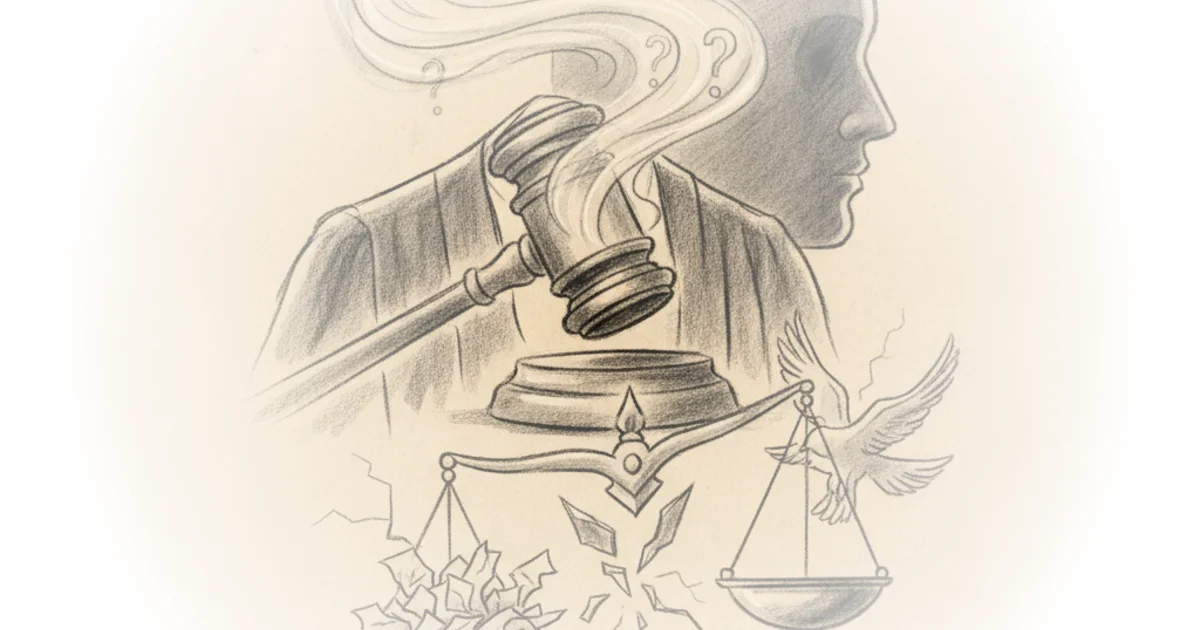
The piece argues that Pryor's actions were not merely administrative housekeeping but a fundamental violation of the Judicial Conduct and Disability Act of 1980 (JCDA). By sending private letters to Judge Ross rather than issuing a formal order subject to review, he sidestepped the very system designed to ensure accountability. "By alerting Judge Ross to the possible inadequacy of the first set of apology letters, Judge Pryor implicitly invited her to write a new set that would be treated as compliant," Reason notes. This is a critical distinction because it allowed a single individual to grant a second chance without the oversight of the council members who originally imposed the sanction.
The procedural problem here is that the apology requirement was part of the sanctions imposed by the Judicial Council – the only entity authorized to impose sanctions under the Judicial Conduct and Disability Act of 1980.
This argument lands with significant weight because it highlights a structural vulnerability in the federal judiciary: the concentration of power in the hands of a chief judge who can effectively override the council's findings without triggering an automatic review. The article draws a sharp line between what Pryor did and what he should have done under the rules, noting that had he "identified a complaint and thereafter issued a final order disposing of it, that order would have been subject to automatic review by the Judicial Council." Instead, by choosing a letter, he ensured his decision remained unreviewable. Critics might argue that chief judges need flexibility to resolve cases quickly in high-visibility situations, but the piece contends that this specific flexibility was used to shield a colleague from further scrutiny rather than to serve justice.
The Erosion of Accountability
Beyond the procedural shortcuts, the commentary delves into the substantive failures of the original sanction and how subsequent events exposed its fragility. The Judicial Council had originally justified a private reprimand by citing Judge Ross's "otherwise exemplary service to the court," a claim that Reason describes as "dubious even on the face of the order." The article points out that this rationale collapsed entirely once the New York Times published details revealing her chronic disengagement from casework, noting clerks' accounts that it was not unusual "to go weeks without hearing much from [Judge Ross] except for a brief email – 'Please docket.'"
The piece goes further, highlighting a confession within Judge Ross's second apology letter that suggests a level of misconduct far more severe than the initial reprimand addressed. Reason reports on a specific line where Ross admitted to lying to protect herself: "I [apologize] for my false accusation against you." The article argues this admission is damning in itself, stating, "It can be argued that even a single act of that kind is conduct so lacking in probity that anyone who engages in it is unfit to hold judicial office, and that no apology is sufficient to wipe out the stain on her character."
This section of the argument effectively connects the procedural bypass to a substantive failure: because Pryor bypassed the council, the full weight of this new admission was never formally weighed by the body empowered to impose heavier sanctions. The article suggests that the initial decision to keep Ross's identity private was a mistake that prevented the judiciary from addressing the broader harm she caused not just to clerks, but to the institution itself. "Neither in the Feb. 11 order nor in Judge Ross's June 11 letter to the law clerks is there any 'admission of misconduct' or 'expression of remorse' with respect to the harm she has caused to her fellow judges and to the federal judiciary," Reason observes, underscoring how the narrow focus of the apology failed to address the systemic rot.
Pathways for Correction
The article concludes by exploring whether there is any way to fix a situation where the primary enforcer has refused to enforce the rules. Reason suggests two potential avenues that remain open despite Pryor's refusal to act. First, an outside party could file a new complaint alleging that Ross's second apology did not comply with the original order, effectively forcing the system to reopen the case. "The complainant could request that the proceeding be transferred to another circuit," the piece notes, drawing a parallel to a 2006 case involving Judge Manuel Real where issues were reopened after an initial investigation had seemingly concluded.
Second, and perhaps more significantly, the article points to the potential for the Judicial Conference's Committee on Judicial Conduct and Disability to intervene directly. "The JC&D Committee could, sua sponte, reach down to the Judicial Council and direct it to reopen the proceeding in light of the new developments," Reason argues. While acknowledging that no statute explicitly authorizes this specific maneuver, the editors suggest it is not forbidden and could serve as a necessary check on the Eleventh Circuit's failure to act.
Taking the initiative in this way could lay the foundation for the Judicial Conference itself to transmit to the House of Representatives... a "determination that consideration of impeachment may be warranted."
This final point elevates the discussion from a dispute over technical rules to a potential constitutional crisis. By linking the procedural failure to the possibility of impeachment, the article forces readers to consider that the current silence of the judiciary might not be an end state, but a prelude to a much larger confrontation with Congress. The historical context here is potent; just as the 1980 Act was designed to handle misconduct without immediate resort to impeachment, this case shows how the system's internal mechanisms can fail, making external intervention inevitable.
Bottom Line
Reason's analysis delivers a powerful verdict: the scandal involving Judge Eleanor Ross is not merely about her personal misconduct, but about a chief judge who successfully insulated that misconduct from proper review by exploiting procedural loopholes. The strongest part of this argument is its demonstration of how "technical" rules regarding complaint identification can be weaponized to block accountability, while its biggest vulnerability lies in the uncertainty of whether the higher judicial bodies will actually exercise their latent power to intervene. Readers should watch closely for any move by the Judicial Conference to reopen the case, as that action would signal a rare admission that the Eleventh Circuit failed in its duty to police itself.