In a landscape saturated with sensationalist rumors about a "shooting war" in Beijing, Chris Chappell offers a rare moment of clarity: the most terrifying truth about China's political machine is not its chaos, but its terrifying order. While the internet speculates on secret executions and coups, Chappell argues that the very existence of such wild theories proves a dangerous complacency, masking the reality that Xi Jinping has consolidated power so thoroughly that a violent uprising is logistically impossible. This is not just a debunking of gossip; it is a warning that the world is misreading a dystopian stability as weakness.
The Soap Opera of Death
Chappell opens by dismantling the viral narrative that President Xi Jinping is engaged in a bloody purge of his own officials, a story fueled by the deaths of several high-ranking military figures. He notes that while three former People's Liberation Army officers died in a single month, the leap to "bloody shooting war" is a leap of imagination rather than evidence. "The wild rumors continue to pour out of China with new reports that as part of Xi's purge, CCP officials are dying off like flies," Chappell writes, highlighting the absurdity of the speculation. He points out the irony that these rumors often cite the very state media they claim to be hiding behind, noting that medical care in China is "notoriously so amazing, you don't even have to pay an arm and a leg for it. They harvest those for free."
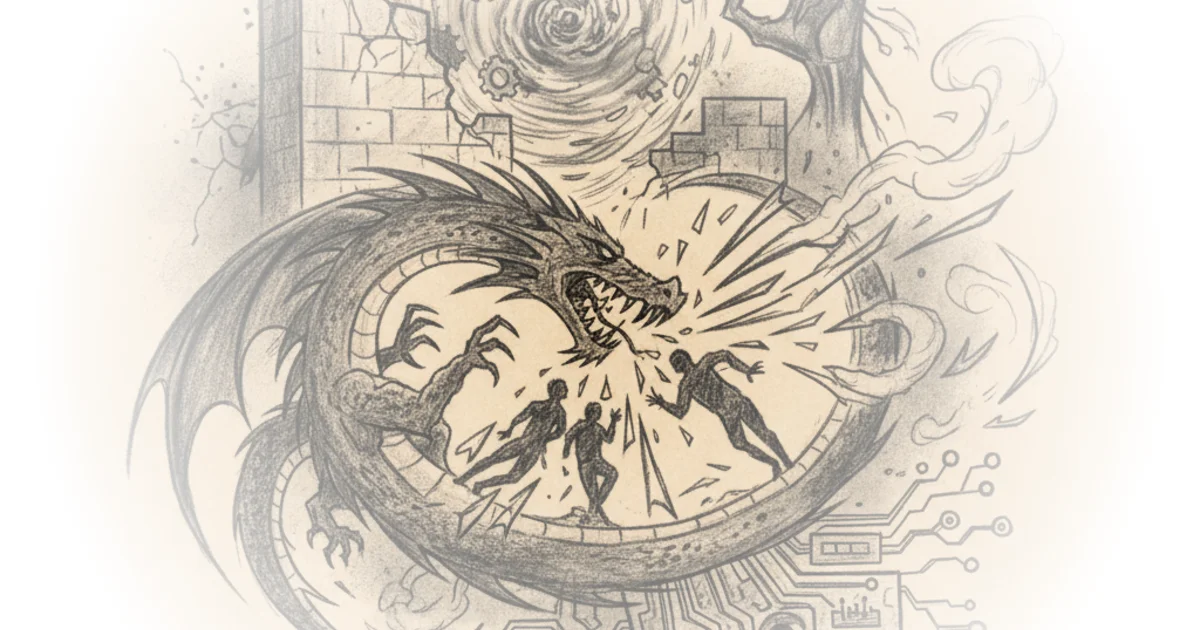
This satirical jab serves a serious purpose: it underscores how the opacity of the Chinese system invites conspiracy theories that fill the vacuum with fiction. Chappell meticulously lists the rumors surrounding former leaders like Hu Jintao and former Premier Zhu Rongji, noting that while some deaths were official, others are pure fabrication. He writes, "If Hu did die, as some allege, then why did Chinese state-run media put Hu on the January 31st list of people who visited the hospital? Obviously, it's because he's a zombie. I'm joking. But if there was a zombie outbreak, we all know it started in China."
"All this talk about CCP officials getting executed or driven to suicide is just adding fuel to the even wilder rumors that there's a shooting war and that Xi Jinping has lost control over the military."
The author's skepticism is well-placed. Critics might argue that the sheer volume of deaths among the elite warrants deeper suspicion regardless of official explanations, yet Chappell correctly identifies that the lack of verifiable sources makes these claims unreliable. He emphasizes that the narrative of a "shooting war" is not just false, but counterproductive to understanding the actual nature of the threat.
The Myth of the Coup
Moving beyond the rumors of individual deaths, Chappell tackles the broader fear that the Chinese military is fracturing. He argues that the Central Military Commission's control is so absolute that a grassroots uprising is structurally impossible. "The PLA enforces extremely strict controls over weapons and ammunition," he explains, citing the fact that soldiers on duty often lack the live rounds necessary for even a small-scale engagement. The system is designed with a "dual command system that pairs military commanders with political commissars," ensuring that no single general can mobilize troops without explicit authorization.
Chappell suggests that the idea of a coup is a fantasy born of Western wishful thinking. "Xi Jinping doesn't need to resort to something as flashy as mass executions or firefights to hold on to power," he argues. "He already has the means to stop threats to his power without resorting to overt bloodshed." This is a crucial distinction. The author posits that the CCP maintains a "veneer of legality and due process" not out of respect for the law, but to legitimize its actions. "If Xi is willing to stoop to high-level secret executions... he must be in a pretty tight spot given that this is not at all the way communists do things," Chappell writes, pointing out the logical inconsistency in the rumor mill.
The commentary here is sharp: the rumors of chaos are a distraction from the reality of a highly efficient, albeit oppressive, authoritarian machine. Chappell warns against the danger of "treating their imaginations like free-range chicken and letting it run wild," which leads to a false sense of security among observers.
The Danger of Wishful Thinking
Perhaps the most vital part of Chappell's argument is his warning against the psychological trap of believing the CCP is collapsing. He observes that unverified rumors can lead to "false hopes that a collapse of the CCP is coming soon" or the mistaken belief that figures like General Zhang Youxia are "the good guy protecting the world from Xi Jinping." He compares this delusion to "training to box what you think is a 90 lb dude with asthma only to find prime Mike Tyson show up on fight night."
This analogy drives home the stakes of the situation. The author insists that "all signs indicate that Xi Jinping is very much in control." He argues that the world cannot afford to be "so fixated on unfound information that it makes wrong assumptions." The reality, Chappell contends, is that the system is "so oppressive and dystopian that this type of shooting in the streets coup simply could not happen." The centralization of logistics, data collection, and command structures makes a spontaneous military revolt virtually impossible.
"We cannot assume that China is so weak, divided, and distracted that it is no longer able to prepare for war abroad."
Chappell's conclusion is sobering: the purges will continue, not because of a power struggle, but because the system demands it. "Xi Jinping grows more powerful than ever," he states, and as long as the Communist Party exists, the cycle of elimination will persist. The rumors of a shooting war are not a sign of the regime's weakness, but a symptom of the outside world's inability to comprehend its strength.
Bottom Line
Chappell's strongest contribution is his refusal to let the allure of a dramatic narrative obscure the mundane, terrifying reality of total control. His biggest vulnerability lies in the inherent difficulty of verifying anything within China's closed system, yet his reliance on structural analysis rather than anecdotal rumors provides a more robust framework for understanding the situation. The reader must watch for the next wave of rumors, not as evidence of a coming collapse, but as a distraction from the regime's continued consolidation of power.