Novara Media does something rare in an era of hot takes: they treat a warning from a Trump adviser not as political noise, but as a terrifyingly plausible scenario. The piece centers on David Sacks, the tech billionaire advising Donald Trump, who suggests that if Israel's defenses crumble under Iranian attrition, Tel Aviv might resort to the unthinkable. This isn't speculative fiction; it's a strategic calculation rooted in the "Samson option," and the author treats it with the gravity it demands.
The Attrition Trap
The core of the argument rests on a simple, devastating premise: Israel is running out of bullets. Novara Media highlights that Israel entered the current conflict with depleted stocks of interceptors, a fact confirmed by US officials who admit they anticipated this shortage. "Israel had reportedly entered the current war already low on interceptors that were fired during last summer's conflict with Iran," the outlet reports, noting that Iran's use of cluster munitions has only accelerated the drain. The author draws a sharp parallel to the war in Ukraine, where the fear of a desperate nuclear power breaking the taboo once Russia appeared to be losing. Here, the dynamic is inverted but equally dangerous: "Iran are imposing higher costs than Israel probably imagined they would," creating a scenario where conventional defeat becomes a possibility.
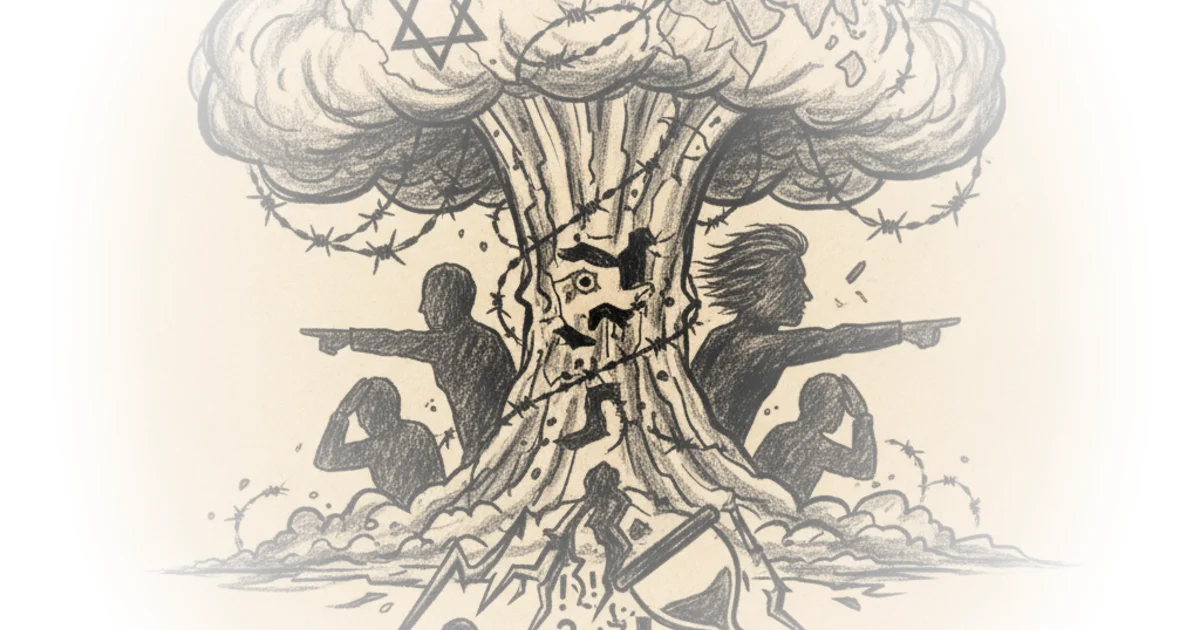
This framing is effective because it strips away the myth of Israeli invincibility. By focusing on the logistics of missile defense rather than the rhetoric of deterrence, the author reveals a fragile reality. Critics might argue that Israel's intelligence capabilities and second-strike capacity make a first strike unlikely, but the article correctly points out that the "Samson option" was never about winning a war—it was about ensuring total annihilation if the state faced extinction. The historical weight of this doctrine, popularized by Seymour Hersh in 1991, adds a chilling layer to Sacks' warning. It suggests that for Israel, losing a conventional war is not an option, and the cost of that loss might be the end of the nuclear taboo itself.
"Israel is a one bomb country. It's geographically really small and its population is quite concentrated. It cannot withstand more than a single nuclear strike."
The Cost of Breaking the Taboo
The commentary then pivots to the geopolitical fallout, arguing that the nuclear taboo remains the strongest deterrent, even for a state acting with impunity in Gaza. Novara Media notes that while Israel has faced little consequence for its actions in the Palestinian territories, breaking the 1945 nuclear silence would be different. "If if they were the first country to use a nuclear bomb since 1945, that would affect everyone very clearly," the author argues, suggesting that even self-interested global powers would be forced to isolate Israel. The article points out that Israel's economy and security rely entirely on Western cooperation, which would evaporate instantly.
This section is particularly strong because it challenges the notion that Israel is an irrational actor. Instead, the author posits that Netanyahu's government is "reckless" but not "irrational," calculating that the benefits of weakening Iran outweigh the risks of escalation—until now. The author suggests that the "red line" for Israel has always been about regional stability for its allies, not the lives of Palestinians. "No one like the red line for Israel and Gaza was never about the Palestinians. it was about how what they did to the Palestinians might have a broader regional impact," the text explains. This distinction is crucial: it implies that Israel might still be deterred by the threat of losing its American and Gulf State support, even if it ignores human rights concerns.
The Trump Paradox
Finally, the piece examines the confusing signal from the Trump administration. While Sacks urges a "declare victory and get out" strategy to avoid catastrophic escalation, Donald Trump himself dismisses the nuclear threat. "Israel would never do that," Trump stated, seemingly confident in his ability to manage the situation. Novara Media captures the dissonance perfectly: "He wants an easy win and to be like, 'Yep, I'm done,'" yet the article notes that Iran has spent years preparing for this exact conflict since Trump withdrew from the nuclear deal. The author questions whether a negotiated settlement is even possible when trust has been "completely destroyed" by both Netanyahu and Trump.
This part of the argument highlights a dangerous gap between the adviser's strategic foresight and the president's transactional worldview. While Sacks sees a "dead man's switch" over the Gulf States' economic fate, Trump seems to view the conflict as a simple ledger of wins and losses. The article rightly points out that Iran's preparation makes a quick exit impossible, rendering the "declare victory" slogan more of a political slogan than a viable strategy. The author warns that without a credible off-ramp, the path to escalation remains wide open.
Bottom Line
The strongest part of this coverage is its refusal to dismiss the nuclear warning as mere alarmism, grounding it instead in the tangible reality of depleted missile stocks and the historical precedent of the Samson option. Its biggest vulnerability lies in the uncertainty of Trump's actual decision-making power; while Sacks offers a rational exit strategy, the President's dismissal of the threat suggests the US may not be the stabilizing force the author hopes for. Readers should watch whether the US interceptors actually arrive in time to prevent the attrition that could trigger this nightmare scenario.