Most analyses of the semiconductor war focus on the geopolitical chess moves, but this piece from Asianometry shifts the lens to the engineering reality of a company that nearly caught the global leader. The most striking revelation isn't just that HiSilicon is Huawei's chip arm, but that its rise was a deliberate, decades-long strategy to wean a telecommunications giant off American dependency, culminating in a 5-nanometer chip that rivaled Apple's best work just before the supply chain was severed.
The Long Game of Independence
Asianometry traces the company's origins not to a sudden surge of nationalism, but to a pragmatic business decision following a 2003 lawsuit by Cisco. The author notes that Huawei CEO Ren Zhengfei "resolved to establish his chip design division so to wean his company off american design chips." This framing is crucial; it positions HiSilicon not as a state weapon, but as a corporate survival mechanism. The early years were brutal. Asianometry details how the company's first major attempt, a 3G SIM card chip, failed because the market price collapsed from 10 RMB to just one RMB before the product even launched. Yet, the pivot to video surveillance chips for Hikvision and Dahua provided the cash flow needed to stay alive.
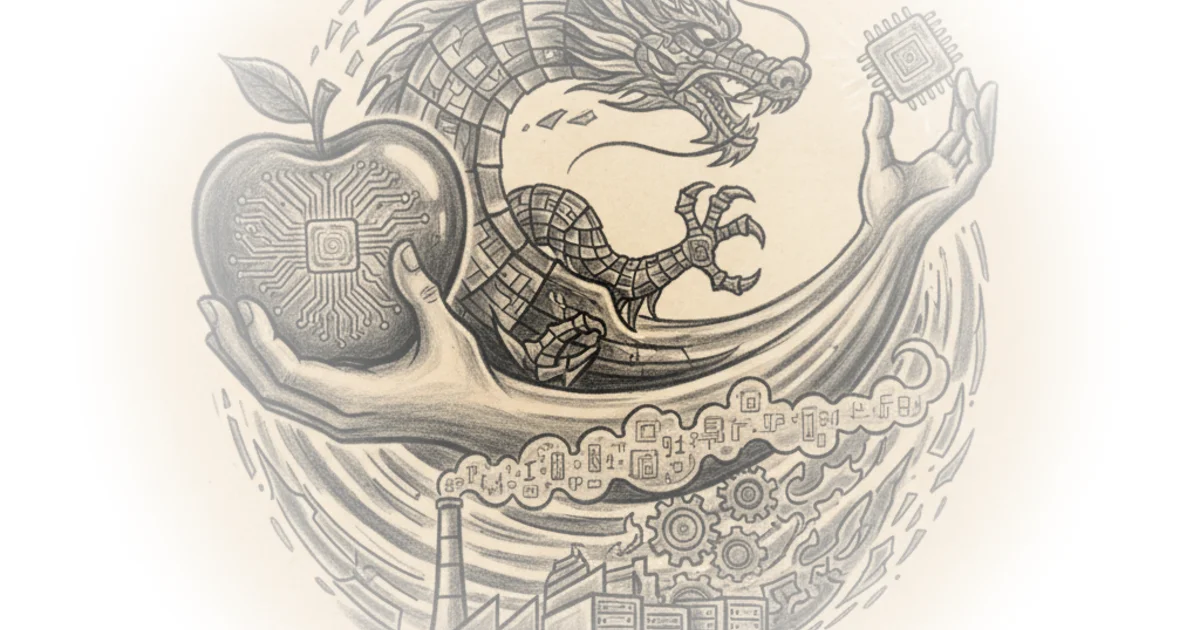
The narrative gains traction when discussing the mobile processor era. Asianometry writes, "Huawei announced that they would be putting the k3v2 a second year product into their new flagship mobile phone... by choosing to go with internal high silicon designs... Huawei sought differentiation in the same way apple did." This comparison to Apple's vertical integration is the piece's most compelling argument. It suggests that HiSilicon's struggle was a necessary growing pain, similar to Apple's early mobile chips, rather than a sign of inferiority. The author acknowledges the early failures, noting that users nicknamed the overheating devices "the warm baby," but emphasizes that the company was "determined to stay in the mobile phone business" regardless of short-term losses.
"HiSilicon is a lot like Apple moving away from Intel, but unlike with Apple, this move is less tied to the desire for more in-house control of the product and more about splitting from American technology IP."
The Pinnacle and the Cut-Off
The commentary reaches its climax with the Kirin 9000, a chip that Asianometry describes as the "pinnacle of HiSilicon or TSMC's handiwork." The author highlights the sheer scale of this achievement: a chip with over 15.3 billion transistors, fabricated on TSMC's most advanced 5-nanometer process. The text notes that while Huawei marketing claimed this was "30 more transistors than the Apple A14," the reality was a larger die size, yet the performance remained world-class. This section effectively humanizes the abstract concept of "semiconductor sovereignty" by showing the tangible result of years of engineering labor.
However, the narrative takes a sharp turn with the September 2020 deadline. Asianometry explains that TSMC would have to apply for licenses to continue supplying HiSilicon, a move that was "unlikely to come" due to the company's ties to Huawei. The author argues that the sanctions were designed not to destroy the company immediately, but to "genuinely cut HiSilicon off from the benefits of western technology." This distinction is vital for understanding the current stalemate. The piece suggests that the administration's goal was to break the cycle of learning and improvement that HiSilicon had relied upon, which depended on access to ARM architecture and TSMC manufacturing.
Critics might note that the piece slightly underestimates the potential for domestic substitution. While Asianometry mentions the possibility of SMIC's "N+1" process node as a candidate for future production, it treats this as a distant hope rather than a viable immediate alternative. Given the rapid advancements in domestic lithography reported in other industry circles, the timeline for a fully independent supply chain may be shorter than the author implies.
Beyond Mobile: The Server and AI Frontier
The coverage broadens to show that HiSilicon's ambitions extended well beyond smartphones. The author points out the launch of the Ascend series for AI and the Kunpeng series for servers. Asianometry writes, "The Kunpeng 920 powers the 2000 Huawei Taishan servers running Beijing city's e-government system." This detail underscores the dual-use nature of the technology: it powers both consumer devices and critical national infrastructure. The comparison to Apple's transition from Intel is revisited here, but with a different motivation. The author argues that while Apple moved to in-house silicon for performance and cost, HiSilicon's move to Kunpeng was a strategic necessity to avoid American choke points in the data center market.
The piece concludes by reflecting on the resilience of the company. Asianometry observes that Huawei's founding story "continually emphasizes struggle or doing the idea of fighting and struggling for survival despite overwhelming odds." The author posits that the executive branch likely underestimated this cultural factor, assuming that cutting off technology would lead to collapse rather than a desperate, state-backed pivot to domestic alternatives.
Bottom Line
Asianometry provides a necessary corrective to the narrative that HiSilicon is merely a political pawn; it was a sophisticated engineering entity that successfully bridged the gap between Chinese ambition and global semiconductor standards before being forcibly disconnected. The piece's greatest strength is its detailed chronicle of the company's iterative failures and successes, proving that the Kirin 9000 was not an accident but the result of a deliberate, decades-long strategy. The biggest vulnerability in the analysis is the uncertainty surrounding the speed of China's domestic manufacturing capabilities, which could render the current blockade less effective over time than the author anticipates.