Louisiana Channel doesn’t just profile France-Lise McGurn—they hand her a microphone and step back as she dismantles painting’s ivory tower. Her most radical claim? That painting’s power lies not in its permanence, but in its thrilling, messy immediacy—a revelation that feels urgently relevant in our age of over-curated digital lives.
The Immediacy Rebellion
Louisiana Channel captures McGurn’s core mission: to strip painting of its "preciousness" and forge direct human connection. "Putting paint on the canvas to me is... having a direct line to other people," she insists, framing line work as both lifeline and intimate gesture. This isn’t theory—it’s paint-splattered pragmatism. McGurn reveals how her graduate show pinned sketchbook pages to walls, a practice she calls "a more sophisticated way to be immediate." The Channel wisely highlights her comparison to Wildstyle graffiti’s urgent 1971 NYC subway tunnel origins, where artists had to work fast to evade authorities—echoing her own need for speed as a working mother. "It’s like being now: go, like what are you going to say?" she challenges. This lands because it reframes artistic "mastery" as performative vulnerability, not technical perfection.
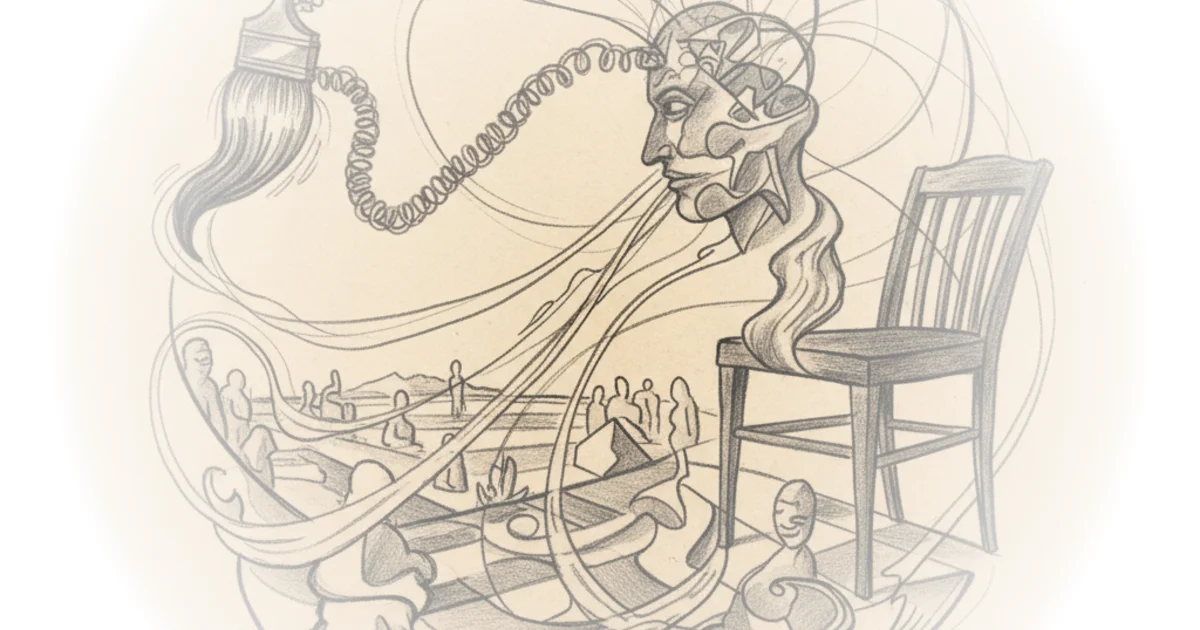
Critics might note that equating speed with authenticity risks romanticizing haste, yet McGurn’s argument holds weight: sketching offers "nothing to hide behind," forcing raw honesty. Louisiana Channel effectively shows how her marker-pen foundations bleed through layers—"imbue a canvas with history"—like Scat singing’s improvised 1926 Armstrong breakthroughs, where spontaneity was the message. "Painting is the wild bit," McGurn declares, comparing creation to "the walk of shame" after a night of uninhibited dancing.
Painting is the wild bit. Painting is the bit where you just do whatever you want and then you have to kind of think how is somebody going to view that?
Nudes, Nostalgia, and Media Saturation
The Channel avoids reducing McGurn’s female figures to feminist tropes, letting her dissect media’s role: "I see it in media... it’s a shorthand way for me to do that." She rejects the "reversal of the male gaze" reading—her nudes reflect actual visual culture, where "half naked women" dominate billboards. "If the world was filled with half naked men, there’d be a lot more men in my paintings," she states plainly. This cuts through academic jargon, grounding her work in lived reality. Louisiana Channel smartly probes her pastel palette’s duality—it evokes "80s Disney" yet feels "sensual and... feminine in a way to mess with you." McGurn’s admission that "sometimes I think I’m almost an abstract painter" reveals color’s emotional weight beyond figuration.
A counterargument worth considering: Does treating the female body as ubiquitous media shorthand inadvertently normalize its commodification? McGurn sidesteps this, focusing instead on how layering—"letting stuff come through" like "dirty edges of the canvas"—mirrors memory’s fluidity. Her nod to nostalgia’s origins ("a term... for sailors being physically homesick") subtly defends its emotional validity.
Glasgow’s Grit, Not Gloss
Louisiana Channel wisely contextualizes McGurn’s roots without boxing her into "Glasgow School" mythology. She clarifies she didn’t study at the famed art school, yet absorbs the city’s "postindustrial," "neglected" energy—a crucial distinction. This avoids the trap of reducing artists to regional movements, honoring her autonomy while acknowledging place. McGurn’s closing thought—that painting should exist "not of life, but as though it were life"—resonates deeply here, reflecting Glasgow’s unpretentious creative spirit.
Bottom Line
Louisiana Channel’s triumph is letting McGurn’s voice redefine painting as relational, urgent, and defiantly un-precious—a vital antidote to art-world elitism. Its vulnerability? Under-exploring whether speed and media saturation might dilute deeper political critique. Watch how McGurn’s "reactive" approach evolves as digital imagery accelerates beyond even her wildest canvases.