Jon Y resurrects a forgotten Cold War scandal to expose a timeless flaw in global technology controls: the tension between national security and corporate profit is not a new problem, but a recurring structural failure. By dissecting the Toshiba-Kongsberg Incident, the piece argues that the very mechanisms designed to contain adversaries are often undermined by the allies they seek to protect, a lesson that resonates sharply as modern export bans face similar pressures. This is not merely history; it is a blueprint for understanding why the West struggles to keep advanced tools from falling into hostile hands today.
The Illusion of Control
Y begins by tracing the origins of modern export controls to the post-WWII era, noting how the United States rapidly shifted from wartime restrictions to free trade before realizing the strategic cost. He writes, "The United States and the West have long encountered these same fractures and sentiments during its long engagement with the Soviet Union." This historical framing is effective because it strips away the novelty of current geopolitical tensions, revealing that the friction between economic interests and security is a permanent feature of the international order.
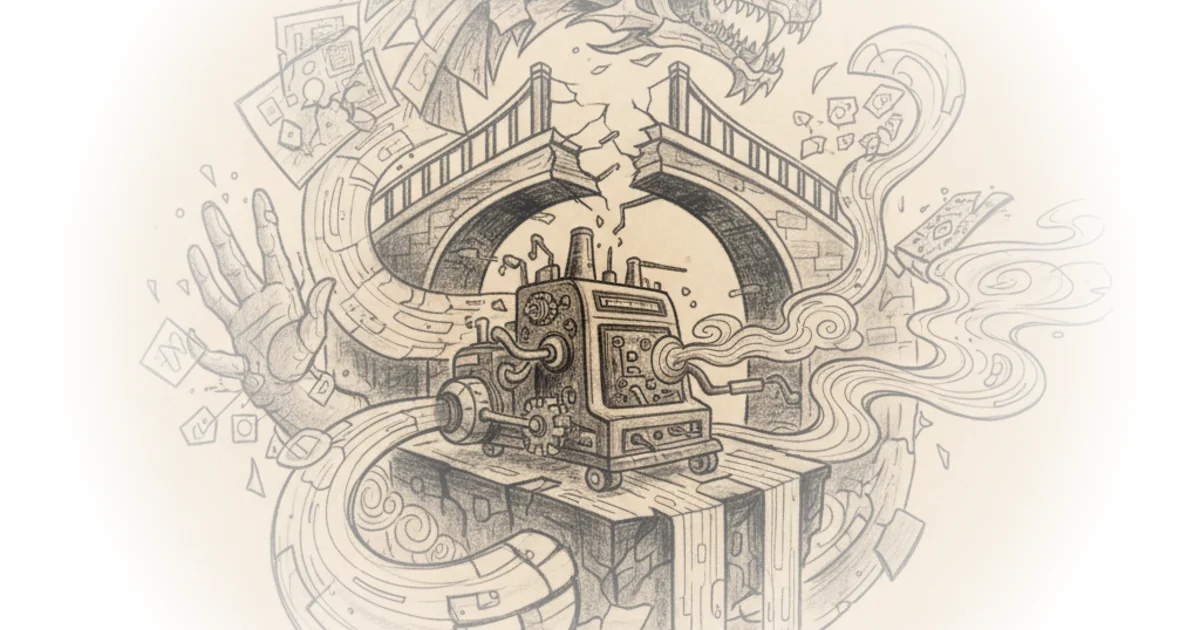
The author details the formation of the Coordinating Committee for Multilateral Export Controls (COCOM), an informal group where Western allies agreed to restrict technology sales to the Soviet bloc. However, Y points out the inherent weakness of this arrangement: "Unlike NATO, there was no formal treaty for COCOM and it was all voluntary. As in there was no enforcement mechanism. So as you might expect, the whole thing was like herding cats." This observation is crucial. It suggests that without binding legal teeth, export regimes rely entirely on the goodwill of member states, which often evaporates when profit margins are at stake.
Managing export controls is a balancing act. People love exports, and serious differences can develop between allies over it. Excessive restrictions can lead to cynicism and laxity in enforcement.
Critics might argue that Y underestimates the diplomatic pressure the US could exert on allies, but the historical record of COCOM's struggles supports his skepticism. The system was only as strong as its weakest link, and that link was often a nation eager to sell machinery to a lucrative market.
The Toshiba-Kongsberg Scheme
The narrative pivots to the 1980s, where the theoretical weaknesses of COCOM became a practical disaster. Y explains how the Soviet Union, desperate to quiet their noisy submarines to avoid detection by US sonar, sought a specific type of nine-axis propeller milling machine. The author notes that Toshiba, a Japanese giant, was initially hesitant but eventually decided to bypass regulations. "Toshiba and the Soviets also reached out to a second trading company in Norway - Kongsberg Vapenfabrikk - so to purchase computer technology. They wanted to combine the Norwegian computers with the Japanese milling machines. This was all banned for export by COCOM."
The motivation for this illegal sale was rooted in a sense of unfair competition. Y writes, "Toshiba then later learned that the Soviets managed to acquire ten such multi-axis milling machines anyway from a French company called Forest Line. France, if you recall is also subject to CoCom restrictions. Toshiba eventually determined that these export controls were being more rigorously enforced in Japan than they were in France." This detail is vital. It illustrates how inconsistent enforcement breeds resentment, pushing compliant companies toward illicit channels to level the playing field. The administration's failure to ensure uniform global adherence created a perverse incentive for Japanese firms to break the rules.
The execution of the scheme was brazen. Y describes how Toshiba's leadership explicitly authorized the deception: "The sales manager told him that in order to close this sale, Toshiba might have to violate COCOM regulations in Japan. The president told him to 'do what had to be done to get the business'." This quote captures the moral hazard at the heart of the scandal. When corporate survival is pitted against national security, the former often wins, especially when the violation is hidden behind layers of bureaucracy.
"When we received these charges before, it was found that we were innocent. All exports receive the approval of MITI. There was no violation of COCOM. Why are they bringing this up now?"
Y highlights the initial denial from Toshiba and the Japanese Ministry of International Trade and Industry (MITI), which claimed the exports were legal. This defense crumbled only after a whistleblower revealed the truth and the US Navy noticed the sudden improvement in Soviet submarine stealth. The incident underscores a critical vulnerability: intelligence agencies often discover these breaches only after the strategic damage is done, leaving little time for remediation.
The Human and Strategic Cost
While the article focuses on machinery and policy, the stakes were undeniably human. The quieting of Soviet submarines meant that US and allied anti-submarine forces lost their primary advantage, increasing the risk of naval conflict and potentially extending the duration of the Cold War standoff. Y notes that the Soviets employed nearly 2,000 agents to acquire such technology, driven by the belief that "The imperialists are so hungry for profits that they will sell us the rope with which to hang themselves." This Leninist quote, used by Y to describe the Soviet mindset, serves as a stark reminder that adversaries are actively exploiting Western commercial greed.
The scandal forced a reckoning. The US government responded with severe sanctions, including a ban on Toshiba's exports to the US for three years. Y observes that this was a "titanic victory for the Americans" in terms of COCOM's formation, but the Toshiba incident proved that the system was fragile. The author argues that the scandal revealed a deep-seated belief among Japanese businessmen that "you couldn't help violate COCOM if you wanted to do business in the Soviet Union." This sentiment remains relevant today, as modern tech giants face similar pressures when navigating restrictions on sales to China.
"Western Europe sold out their trade principles for good American cash."
This quote, attributed to an official at the time, cuts to the core of the geopolitical dynamic. It suggests that export controls are often viewed as a transactional burden rather than a strategic imperative, a mindset that continues to plague international cooperation on technology transfer.
Bottom Line
Jon Y's analysis of the Toshiba-Kongsberg Incident is a masterclass in connecting historical precedent to contemporary policy failures. The piece's greatest strength is its demonstration that inconsistent enforcement and the profit motive will almost always erode even the most robust export control regimes. However, the argument could be strengthened by exploring how modern digital technologies and supply chain complexity make these controls even harder to enforce than in the 1980s. As the executive branch grapples with new restrictions on advanced chips and lithography machines, the lesson from Toshiba is clear: without unified global commitment and rigorous oversight, the rope will always be sold to the enemy.