A stunning new study confirms what many suspected: nearly ninety percent of alternative media voices are right-wing. That's not an accident. It's a deliberate strategy built on one principle—be edgier, be louder, get more eyeballs.
Kyle Kulinski spent years as a progressive voice on YouTube. He hosted the Kyle Kulinski Show and watched in real-time as the entire political conversation shifted toward the culture war. His assessment is stark: the left has been too polite while the right learned how to weaponize outrage.
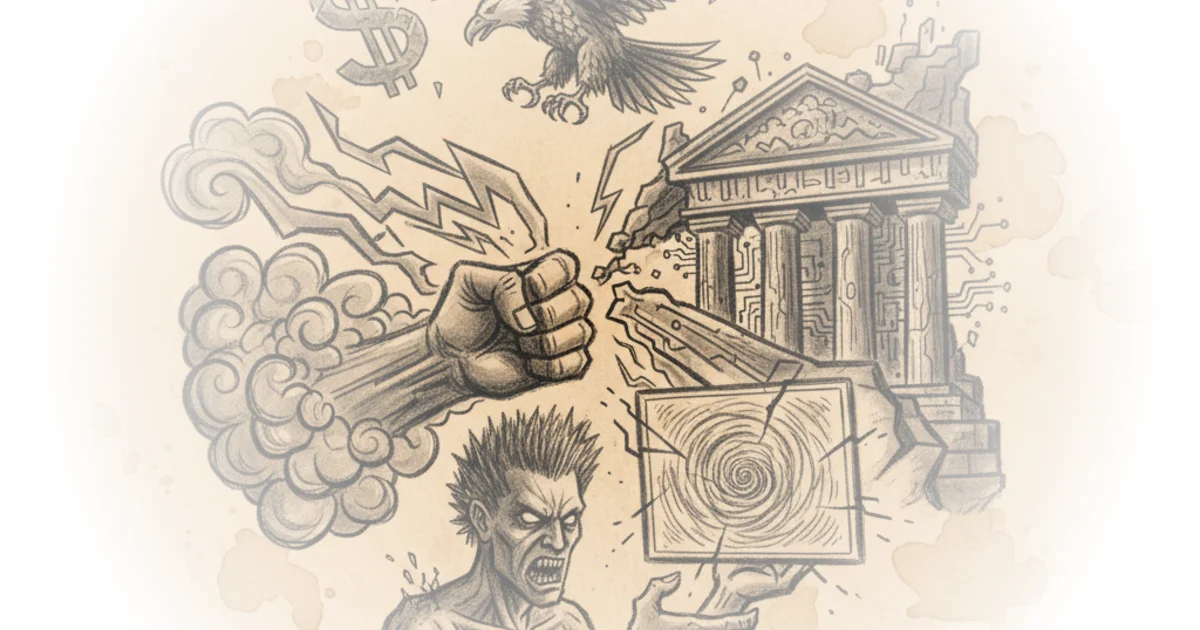
The Rise of the Brosphere
What started as independent podcasting—Joe Rogan claiming to be apolitical, above the fray—quickly became a gateway drug into politics. Within eight years, Rogan was hammering away at culture war issues while pretending he wasn't interested in them. That opened a door that Andrew Schultz and countless others walked through.
The pattern is consistent across verticals: comedy, music, sports—all drive toward politics now. It's become inevitable.
Liberals have failed to produce their own successful populist podcast format. Kulinski argues his show might actually fit that category, with about fifty percent of his audience self-describing as liberal. But the numbers reveal something troubling.
Why Young Men Moved Right
The data is stark: fifteen points for young men, eleven points for young women. The gap exists because Gen Z lacks historical memory. They never experienced the transition from labor-based Democratic politics to what Kulinski calls the corporatist party.
When millennials were young, Republicans were insane—evangelical fundamentalism, opposition to gay marriage, social authoritarianism combined with economic madness that promised tax cuts for the rich and destruction of the social safety net. The choice seemed obvious.
The Bush era crystallized everything. The Iraq war wasn't based on anything—Saddam Hussein didn't attack us, had nothing to do with Al-Qaeda, and the weapons of mass justification was pure fabrication. That era drove a political awakening built on one simple slogan: anything but this.
Then Trump happened. And now young people look at what he's doing in the White House and ask whether their elders were right all along about the establishment not knowing how to fight.
The Death of Legacy Media
The trust problem isn't temporary—it's structural. Nobody really trusts mainstream media anymore. That's both a blessing and a curse: a blessing because it pushes audiences toward independent media, but a curse because so much of that new media becomes a cesspool.
But the real death nail is Gaza. In a world that made sense, that genocide would be on loop twenty-four hours a day, people accurately calling Benjamin Netanyahu a war criminal who should be arrested. These aren't opinions—they're objective facts. And mainstream media doesn't do that. The younger generation's burning hatred for legacy media isn't going to cool off—it's only getting worse.
The advertiser money keeps them propped up regardless of ratings. They'll stay on air into an age demographic like speaking into an old age home from now until the end of time.
Why the Right Dominates Alt-Media
The 2025 Media Matters study documents what Kulinski calls a ghost town: ninety percent of alternative media is right-wing voices. The reason isn't mysterious—they're willing to post, be edgy, push boundaries naturally and organically. They start with something interesting that gets eyeballs, then become political.
Leftists have an aversion to being actually edgy, actually pushing boundaries, actually doing something crazy to get attention. That cost them everything.
"Embrace that poster energy. They don't care about you, what you think, what you feel. And you need to fight fire with fire."
The recent election radicalized Kulinski in a way he didn't anticipate. The best predictor of future action is past action—Trump already tried to steal the 2020 election. Four years from now he'll want to experience it and use it.
The Case for Aggressive Politics
What he's learned from watching the right: they're relentless bullies, unhinged and freaky, and get rewarded for it. People reward strength more than anything else. So he's copying their tactics.
Look at the gerrymandering fight—you have Democrats in Texas getting five seats, then Gavin Newsome wipes that out with five more in California. Then corporate Democrats start saying whatever the right does, they'll do the same thing. That energy—embrace it.
Liberals and leftists are finally waking up to what Bernie Sanders was saying all along—that the establishment doesn't know how to fight at all. Zoron Mandani winning in New York despite being smeared as an anti-semite shows what's possible.
The author calls himself a leftist populist, but he's willing to call out enemies: billionaires and fascists, not trans people or immigrants. That's where he aims twenty-four hours a day.
Counterpoints
Critics might note that framing the political conflict purely as a media strategy problem misses the actual policy disagreements between parties. The aggressive approach risks alienating moderate voters who want substantive debate rather than performative outrage.
A counterargument worth considering: simply being louder doesn't equal persuasion. The right's dominance in alternative media isn't just about edginess—it's about addressing economic anxiety and cultural displacement that the left has failed to articulate for working-class voters, regardless of age or gender. Young men moved toward the right partly because someone finally explained their frustrations in language they understood.
Bottom Line
This piece's strongest argument is its diagnosis of why progressive voices lost the alternative media landscape: ninety percent dominance by the right isn't about ideology—it's about willingness to be loud and edgy. The biggest vulnerability is strategic: simply fighting fire with fire might win eyeballs but won't necessarily win converts. The next wave of political conversation will test whether aggression alone can rebuild a movement or whether voters ultimately want substance over spectacle.