Chris Chappell reframes a tragic Hong Kong fire not as an isolated accident, but as the inevitable result of a systemic culture where profit consistently overrides safety. While mainstream narratives often seek a singular scapegoat, Chappell argues that the disaster was manufactured by a chain of corruption, from flammable construction materials to inspectors who looked the other way.
The Scapegoat Narrative
Chappell immediately dismantles the convenient story that the tragedy was solely the fault of traditional building methods. "Right after the fire, mainstream media outlets rushed to blame bamboo scaffolding," he writes, noting that this theory served a specific political purpose. By pinning the blame on a traditional material, the narrative could suggest that Hong Kong simply needed to adopt mainland China's 2022 ban on such structures, rather than admitting to a broader failure of governance. Chappell points out that this framing was a "nice, clean, simple scapegoat" designed to deflect from the actual rot within the system.
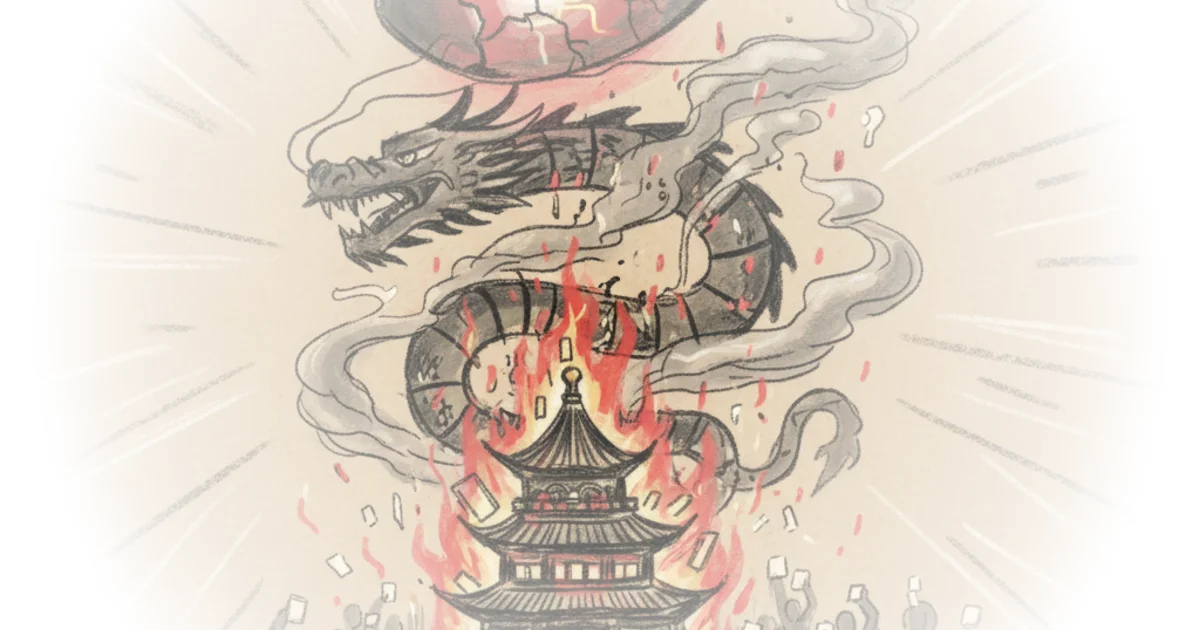
This argument is compelling because it shifts the focus from a specific tool to the regulatory environment that allowed it to be misused. However, critics might note that bamboo scaffolding does present unique fire challenges compared to modern steel, even if the narrative was exaggerated for political gain. Chappell counters this by highlighting that the real issue was not the material itself, but the "structural rot that made this tragedy possible."
A figurative dumpster fire led to an actual fire.
The author connects this specific incident to a broader pattern of negligence, citing residents who had warned officials about flammable polystyrene foam panels a year prior. He argues that the corruption was not limited to a single contractor but was embedded in the inspection process itself. "Official records show that authorities conducted at least 16 inspections of the site between mid 2024 and late 2025... and yet the inspectors ultimately chose not to report any fire hazards," Chappell observes. This suggests a deliberate failure of oversight rather than a simple oversight.
A Culture of Corner-Cutting
The commentary expands beyond Hong Kong to illustrate how this safety deficit is a feature of the wider construction landscape. Chappell draws a parallel to the use of "sandwich panels" across China, which became ubiquitous during the property boom despite their flammability. He notes that similar materials were implicated in a 2025 nursing home fire and a 2021 martial arts school blaze. "In communism, like roast beef that tastes like wet smoke at an Arby's, this isn't a bug, it's a feature," he quips, arguing that the drive for rapid, cheap development inherently compromises safety standards.
This analogy, while colorful, effectively captures the economic incentives at play. The author emphasizes that the problem is compounded by electrical hazards, pointing to the prevalence of cheap power strips and sockets that fail under load. He cites a 2012 report stating that Chinese power strips often have "internal metal components that quickly loosen with use," creating a constant risk of short circuits. This detail adds a layer of technical specificity to the argument, moving it beyond general accusations of corruption to tangible engineering failures.
Critics might argue that focusing on specific product failures ignores the broader economic pressures that drive consumers to buy cheaper goods. Yet, Chappell's point remains that the regulatory framework fails to protect citizens from these known risks, as evidenced by the fact that the most common cause of home fires in China is attributed to sockets.
The Infrastructure Gap
Perhaps the most alarming section of the piece addresses the inability of the fire service to respond to these growing threats. Chappell highlights a stark disconnect between the rapid construction of high-rise buildings and the development of firefighting technology. "More than 80 fire trucks struggled to put out the 2010 Shanghai fire in the upper floors," he writes, illustrating that the equipment simply cannot reach the danger zones. The data supports his concern: high-rise fires in China surged by 276% in 2022 alone, reaching 17,000 incidents.
The human cost of this infrastructure gap is severe. Chappell notes that Chinese firefighters were nearly four times as likely to be killed on the job in 2015 compared to their US counterparts. He attributes this not just to the scale of the fires, but to "lackluster protections" and rampant corruption within the force itself. "So think twice before you buy a firefighter calendar from a Chinese station," he jokes, before revealing that many officials were fired for accepting bribes to tamper with safety inspections.
The most shredded thing about them is their code of ethics.
This section effectively ties the physical danger to the institutional decay, suggesting that the tragedy is cyclical. The corruption that allows dangerous buildings to be constructed is the same corruption that prevents effective emergency response.
Bottom Line
Chappell's strongest contribution is his refusal to accept the official narrative of isolated accidents, instead weaving a consistent thread of corruption and negligence through construction, inspection, and emergency response. His biggest vulnerability is a tone that occasionally veers into satire, which may distract from the gravity of the human toll. Readers should watch for how the administration responds to the recent nationwide safety inspections and whether the reported firings of corrupt officials lead to tangible changes in building codes or if they remain a performative gesture.