Cory Doctorow presents a startlingly specific political prophecy: that the path to restoring American democracy lies not in compromise, but in a radical, pre-emptive legal reckoning he terms the "Democratic Nuremberg Caucus." In a piece that reads less like a standard political column and more like a strategic blueprint for post-authoritarian transition, Doctorow argues that the only way to energize a weary electorate is to promise concrete consequences for the architects of recent authoritarian overreach, rather than vague hopes for a return to the status quo.
The Anatomy of a Political Reckoning
Doctorow's central thesis is provocative. He suggests that the current political moment requires a shift from defensive maneuvering to an offensive strategy of accountability. "Every fascist power defeated in WWII relied on the backing of their national monopolists to take, hold and wield power," he writes, drawing a direct line between the economic structures of the past and the present. This historical grounding is not merely decorative; it provides the moral and practical weight for his argument that antitrust enforcement is a national security imperative.
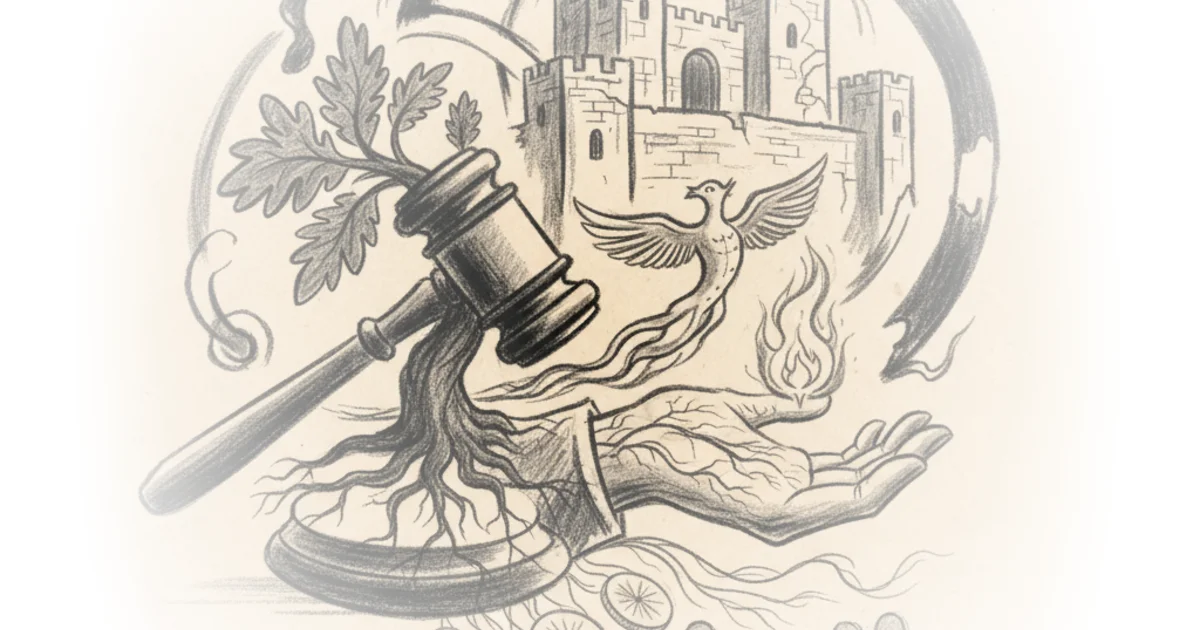
He points to the recent legislative efforts of Senator Cory Booker, specifically the "CLEAN Mergers Act," as a potential spark for this movement. Under this proposal, any merger worth over $10 billion that was "politically influenced" would be subject to unwinding. Doctorow notes that this legislation, cosponsored by figures like Elizabeth Warren and Martin Heinrich, serves a dual purpose: it promises to break up the monopolies that have stifled competition, and it sends a chilling message to investors that profits derived from corrupt political deals will be confiscated.
"Fascism and monopolies go hand in hand, and smashing monopolies is key to the program of fighting fascism."
This framing is powerful because it reframes antitrust from a dry regulatory issue into a fight for the soul of the republic. Doctorow argues that the Marshall Plan technocrats understood this in the 1950s, embedding US antitrust laws into the statutes of Germany, Japan, and South Korea to prevent the resurgence of the industrialists who fueled fascism. He suggests that the current administration's wave of corporate consolidation mirrors the pre-war consolidation that enabled authoritarianism. Critics might argue that such aggressive breakup plans could destabilize markets or face insurmountable legal hurdles, but Doctorow counters that the alternative—allowing these monopolies to entrench themselves further—is a far greater risk to democratic stability.
Beyond the Courtroom: Restructuring the Judiciary
The commentary moves from corporate power to the judiciary, where Doctorow's proposal becomes even more radical. He argues that the Supreme Court's legitimacy has been "burned to the ground," citing recent rulings that gutted the Voting Rights Act. Rather than simply advocating for court-packing, which he calls "table stakes," he delves into the constitutional mechanisms Congress could use to strip the Court of its power.
Doctorow highlights Article 3, Section 2 of the Constitution, which allows Congress to limit the Court's jurisdiction. "Congress can pass a law taking voting rights and racial discrimination away from the Supreme Court's jurisdiction," he writes. He envisions a future where the Court is moved from its marble temple back to the basement of Congress, stripped of its ability to select its own clerks or decide which cases it hears. This is a direct response to the erosion of checks and balances, suggesting that the Court's current structure is incompatible with a functioning democracy.
"We can have democracy and self-government in this country or we can have the Supreme Court as it exists, but we cannot have both."
This quote, attributed to Jamelle Bouie but championed by Doctorow, captures the urgency of the situation. The argument is that the Court has become an obstacle to self-government, and the "Nuremberg Caucus" must be willing to dismantle its power to save the republic. While this approach risks a constitutional crisis, Doctorow suggests that the current trajectory of the Court makes such a crisis inevitable unless the balance of power is forcibly reset.
The Ultimate Deterrent: Whistleblower Bounties
Perhaps the most controversial element of Doctorow's plan is his proposal to offer million-dollar bounties for Immigration and Customs Enforcement (ICE) officers who expose human rights violations within their own ranks. He argues that the current incentives for these officers are misaligned, with small bonuses failing to counteract the pressure to comply with illegal orders.
"The Nuremberg Caucus could announce a Crimestoppers-style program with $1m bounties for any ICE officer who... provides evidence leading to the conviction of another ICE officer for committing human rights violations," he writes. This is not just a policy suggestion; it is a psychological operation designed to fracture the loyalty of the enforcement apparatus. Doctorow acknowledges that critics will say this forces officials to steal the next election to avoid consequences, but he argues that the alternative is a continued erosion of civil liberties.
"The only path to fair elections – and saving America – lies through mobilizing and energizing hundreds of millions of Americans."
Doctorow's logic is that a promise of accountability is the only thing that can restore faith in the electoral process. If voters believe that their vote will lead to the prosecution of those who violated the law, they will turn out in unprecedented numbers. This is a high-stakes gamble, relying on the assumption that the threat of prosecution is a stronger motivator than the fear of retribution. It is a strategy that prioritizes the moral clarity of the cause over the comfort of political expediency.
Bottom Line
Cory Doctorow's "Democratic Nuremberg Caucus" is a bold, unapologetic call for a fundamental restructuring of American power, blending historical lessons from the post-WWII era with radical legislative proposals. Its greatest strength lies in its refusal to accept the status quo as a viable option, offering a clear, if controversial, roadmap for accountability. However, its biggest vulnerability is the assumption that the political will exists to execute such a sweeping transformation without triggering a constitutional collapse. The reader must watch to see if this rhetoric translates into actionable policy or remains a theoretical exercise in political theater.