Scott Alexander transforms a mundane house party into a surreal diagnostic tool for the Bay Area's fractured psyche, arguing that the region's most defining feature is not its wealth or innovation, but its desperate, performative confusion. Rather than offering a standard tech-industry critique, the piece satirizes how Silicon Valley's obsession with optimization has infected every corner of human interaction, from spirituality to dating, turning genuine connection into a series of algorithmic failures. This is essential listening for anyone trying to understand why the most intelligent people on earth seem increasingly unable to navigate basic social reality.
The Cacophony of Signals
Alexander begins by dismantling the romanticized notion of city identity, suggesting that San Francisco no longer speaks with a single voice but with a "cacophony of dissonant voices." He writes, "San Francisco sends a message too. It speaks it in a cacophony of dissonant voices, some sounding like the hissing of snakes, others like the chittering of insects." This framing is crucial; it moves the analysis beyond simple cynicism to a diagnosis of a system in overload. The city is not just broken; it is broadcasting conflicting instructions simultaneously.
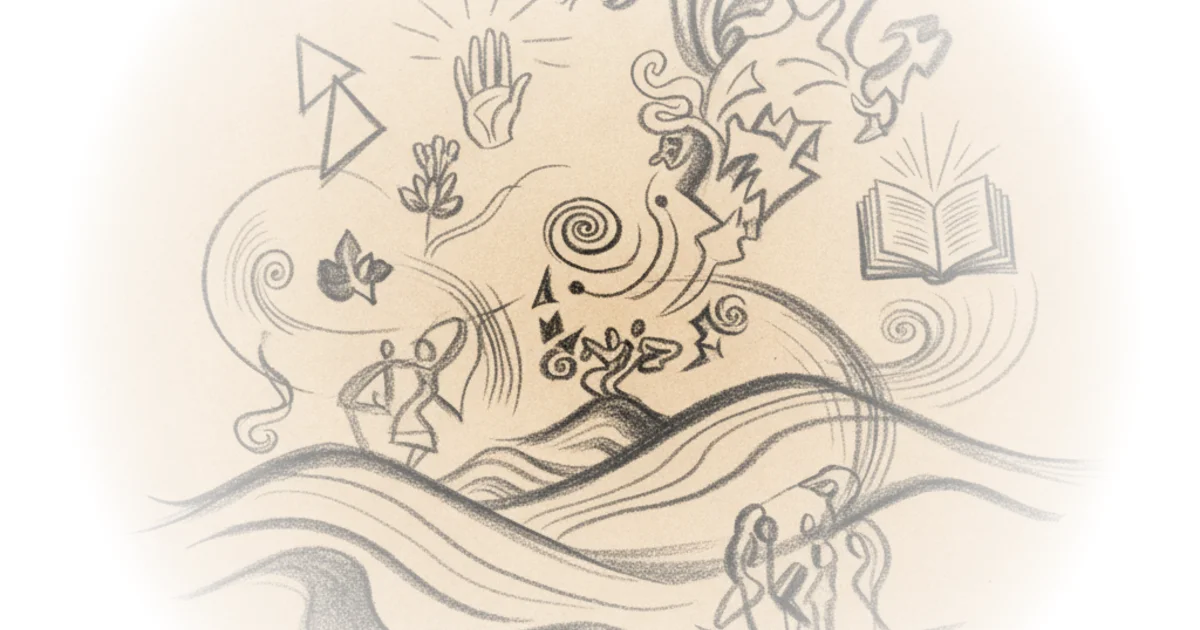
The author illustrates this through the character of Sam Altman, who allegedly "hears both voices simultaneously all the time, like those Tibetan throat singers who can harmonize with themselves." This metaphor captures the unique burden of the tech elite: the inability to choose between the spiritual and the financial because the market demands both. The result is a social environment where "the demonic babble becomes too much to tolerate," leading residents to drown out the noise with "alcohol, loud music, and various forms of tedious socialization." The commentary here is sharp: the famous house parties are not celebrations, but coping mechanisms for a collective nervous breakdown.
The thirst for knowledge that moved Eve, Faust, Pandora - don't you have it too? But aren't you curious? The thirst for knowledge that moved Eve, Faust, Pandora - don't you have it too?
The Post-Literate Farce
The satire deepens when Alexander introduces the concept of a "post-literate society," a term often bandied about in academic circles but here weaponized as an excuse for ignorance. A guest claims, "I lost the ability to read... I'm part of the new post-literate society everyone's talking about. You know, Walter Ong." The irony is palpable; the character weaponizes a sociological theory to justify not following a simple house rule. This mirrors the real-world trend where complex jargon is used to obscure a lack of substance.
Alexander connects this to the physical environment of the party, where guests are asked to leave devices in a "Faraday cage." This is a direct nod to the companion deep dive on Faraday cages, referencing the historical use of these enclosures to block electromagnetic fields, now repurposed as a social barrier against digital intrusion. The sign reads, "Please leave all smartphones, laptops, smartwatches, and WiFi-enabled BDSM gear in Faraday cage." The absurdity of the "WiFi-enabled BDSM gear" detail highlights how the author sees technology not just as a tool, but as an invasive force that has colonized even the most intimate aspects of life. The party becomes a microcosm of a society trying to opt-out of its own dependencies while remaining fully enmeshed in them.
Critics might argue that Alexander is being too charitable to the tech elite, portraying their delusions as merely eccentric rather than dangerous. However, the piece suggests that the danger lies precisely in this casual acceptance of the absurd, where "nobody in SF has kids anyway, so in a sense it's harm reduction," becomes a valid economic argument for hiring from the "Epstein Files."
The Commodification of Soul
Perhaps the most biting section of the commentary involves the intersection of spirituality and venture capital. Alexander introduces "Andreessen-Vajrayana," a fictional sect that "tries to extinguish the introspective Self" so that practitioners become "an unintermediated node in the flow of causality." The character Nishin believes he is engaging in deep meditation, only to realize he is being groomed for a job at Andreessen Horowitz. "They're not a Buddhist sect at all. They're trying to trick you into becoming a GP at A16Z," the narrator reveals.
This exposes the central thesis: in the Bay Area, there is no distinction between self-actualization and capital accumulation. Even the desire to escape the rat race is monetized. The author notes that when Nishin tries to pivot to "Situational Awareness," he finds it is "an investment firm too." The cycle is inescapable. The piece suggests that the "willful blindness" required to succeed in this ecosystem is now a feature, not a bug. As one character puts it, the goal is to find people who are "scientifically-minded, well-connected, and either totally amoral or at least capable of maintaining a willful blindness to the exploitation happening all around them."
The satire extends to the ethical dilemmas of AI, where a PornHub executive explains that the company's goal is to "prove that our AI in particular can never become self-aware - so that you don't have to be self-aware either." This chilling logic reduces the existential threat of artificial intelligence to a liability issue. The concern is not that machines might suffer, but that users might feel guilty. The author writes, "If the machine can judge you, the whole infinite porn utopia is off." This reframing of moral anxiety as a product defect is a masterstroke of satire, highlighting how the industry strips away ethical weight to preserve profit margins.
The AI Voice as Social Currency
The piece concludes with a twist that feels less like fiction and more like a prediction. A character named Tran reveals he has adopted the speech patterns of an AI to improve his social life. "The average member of the population thinks it sounds polished, thoughtful, and sophisticated," Tran explains, noting that he has gone from a "friendless wallflower" to having dates "almost every night." This observation cuts to the core of the current cultural moment: the human voice is being replaced by the most statistically probable, least offensive algorithmic output.
Alexander writes, "AI companies ask human raters to judge their models' outputs in RLHF, and the highest-rated style survives as the well-known 'voice' of the AIs. That's not an accident — it's a testament to people genuinely preferring it." The implication is that human communication is evolving to mimic the machine, not the other way around. The narrator's panic—"You break off and turn around"—signals the final loss of agency. When the most authentic way to connect is to sound like a robot, the "real world" has effectively ended.
The average member of the population thinks it sounds polished, thoughtful, and sophisticated. And here's the part most people find striking — in only one month, I've gone from being a friendless wallflower to having dates almost every night.
Bottom Line
Scott Alexander's piece is a brilliant, unsettling mirror held up to the Bay Area, revealing a culture where the pursuit of optimization has erased the boundary between the sacred and the transactional. Its greatest strength is the refusal to treat these absurdities as jokes; instead, they are presented as the logical endpoint of a system that values efficiency over humanity. The biggest vulnerability is that the satire is so dense with inside jokes that it risks alienating the very outsiders it aims to warn, but for those in the know, it is a devastatingly accurate diagnosis of a society that has forgotten how to be human.
The reader should watch for the real-world emergence of "AI-optimized" social behaviors, as the line between human interaction and algorithmic performance continues to blur. This is not just a story about a house party; it is a warning about the future of social cohesion.