George Saunders dismantles the romantic myth of the prodigy with a radical redefinition: the artist isn't born early, but is rather anyone who refuses to stop asking questions about the world. In this piece for Story Club, he argues that the "natural-born" label is often a barrier that prevents people from recognizing their own creative potential until it's too late. For busy professionals navigating high-pressure careers, Saunders offers a counter-intuitive truth: the years spent feeling like an outsider or a fraud aren't wasted time; they are the essential incubation period for genuine work.
The Myth of the Prodigy
Saunders begins by addressing a reader who believes they missed their window because they didn't start writing in childhood, citing figures like Mozart or Picasso as the standard. He immediately reframes this anxiety. "I think of it like this: any person has an innate curiosity about life, and an energy toward it, that may manifest itself in all kinds of ways throughout the course of their life," he writes. This is a crucial distinction. Saunders suggests that the artistic impulse isn't a specific skill set acquired at age ten, but a fundamental human drive to make sense of chaos.
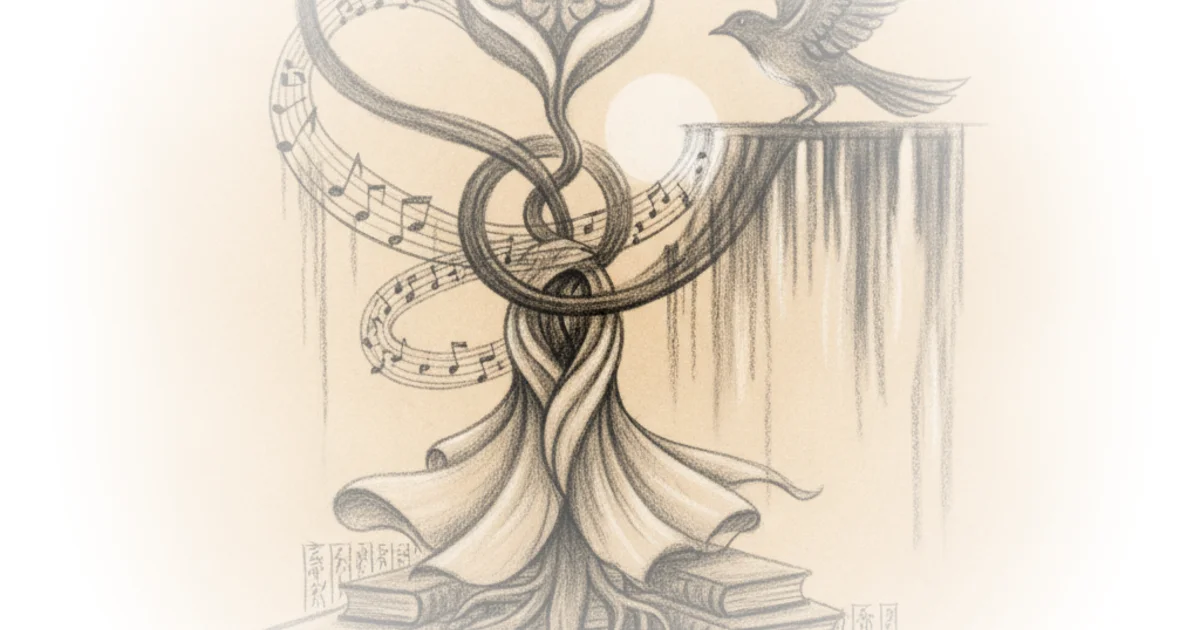
He draws on his own biography to illustrate this point, noting that he didn't attempt serious writing until his thirties and spent his youth in engineering school. "I was 'treasuring them up in my heart,' quietly, because I didn't know where to start," Saunders admits. This resonates with the concept of the late bloomer, a phenomenon often studied in developmental psychology where mastery arrives after a long period of non-linear growth. Unlike the Dunning-Kruger effect, which suggests overconfidence in early incompetence, Saunders argues that early hesitation is often a sign of deep respect for the craft, not a lack of talent.
"Was I an artist all those years? Well, I think so. My mind was behaving like the mind of an artist – observing, categorizing, dreaming, preferring this to that, trying to understand everything by making a story out of it."
The strength of Saunders' argument lies in his refusal to separate "life" from "art." He posits that the messy, unstructured years of living are not distractions but the raw material itself. A counterargument worth considering is that without early discipline, many potential artists might never develop the technical skills necessary to execute their vision. However, Saunders implies that the urge precedes the technique, and that forcing the technique before the urge is ready often leads to sterile work.
The Mantra of Uncertainty
The core of Saunders' advice revolves around a slogan from the New York State Lotto: "Hey, you never know." He elevates this phrase from a gambling catchphrase to a philosophical stance on creativity. "As someone who's taught writing for many years, I don't know a better mantra for anyone involved in the arts," he asserts. The logic is that certainty kills possibility; if we know exactly how our work should look before we start, we are merely replicating what already exists rather than discovering something new.
He applies this to the internal critic, suggesting that the feeling of being an imposter might actually be a sign that one is pushing against the boundaries of conventional forms. "All that waiting might have felt, in real-time, like the result of some core inadequacy... But in fact, the conventional form wasn't sufficient," Saunders explains. This aligns with research on practice, which distinguishes between repetitive drilling and deliberate, often uncomfortable, experimentation where failure is a necessary data point.
"Someone might have to live a long time before the thing they were born to say becomes fully formed and accessible to them."
This perspective shifts the burden of proof from the artist's past to their future potential. It suggests that the "wasted" years are actually a form of deep practice, even if it didn't look like traditional productivity. Critics might argue that this view risks romanticizing inaction or lack of direction as "incubation," potentially excusing a failure to engage with the hard work of skill acquisition. Yet, Saunders' point is not about passivity, but about trusting the subconscious process over rigid planning.
The Detective and the Assistant
To make this abstract concept actionable, Saunders introduces a metaphor of internal roles: the "detective" (the intuitive, messy creator) and the "assistant" (the critical editor). He argues that we must coach the assistant to be kinder so it can support rather than stifle the detective. "I try to go easy on my artistic self, treat it as a friend, not judge it too harshly," he writes. This internal dialogue is often the difference between finishing a project and abandoning it at the first sign of difficulty.
He visualizes this relationship as a trust exercise in a vast food court, where one must let a hungry friend wander until they find exactly what they need. "You are showing trust in the food court... and in your friend," Saunders says. The implication is that the creative self knows its own path even when the conscious mind cannot see it. This reframes the struggle of creation not as a battle against one's limitations, but as a collaboration with them.
"What if whatever approach you're taking is exactly right? What if your subconscious is incredibly bright, and is leading you – has always been leading you – in the right direction?"
The power here is in the permission to be wrong. In a professional world obsessed with efficiency metrics and immediate ROI, Saunders offers a radical alternative: that errors are not deviations but part of the trajectory. This challenges the modern obsession with "optimizing" one's life path, suggesting instead that the most valuable insights often come from the unoptimized detours.
Bottom Line
Saunders' strongest argument is his reclamation of the "late start" as a feature rather than a bug, offering a profound sense of relief to those who feel they have missed their moment. The piece's only vulnerability is its reliance on the reader's ability to tolerate ambiguity without immediate results, which can be difficult in a culture demanding instant validation. Ultimately, this is a call to trust the messy, non-linear process of becoming, reminding us that the most compelling art often comes from those who took the long way around.