Sabine Hossenfelder cuts through the noise of pandemic fatigue to reveal a quiet, enduring crisis: for millions, the virus never truly left. While public discourse has moved on, the data suggests a biological aftermath that is reshaping lives, challenging medical systems, and defying easy categorization. This is not just a health update; it is a stark reminder that the pandemic's timeline is not defined by policy announcements, but by the lingering physiology of the infected.
The Anatomy of a Mystery
Hossenfelder begins by dismantling the misconception that "long covid" is a single, monolithic disease. Instead, she frames it as a complex constellation of over 200 symptoms, ranging from cognitive impairment to cardiovascular distress. She notes that the World Health Organization defines it as the continuation or development of new symptoms three months after the initial infection, lasting at least two months with no other explanation. This precise definition is crucial because it separates the condition from general post-illness weakness. As Hossenfelder puts it, "Long covid isn't a single disease it's a collection of symptoms... basically the aftermath of covid."
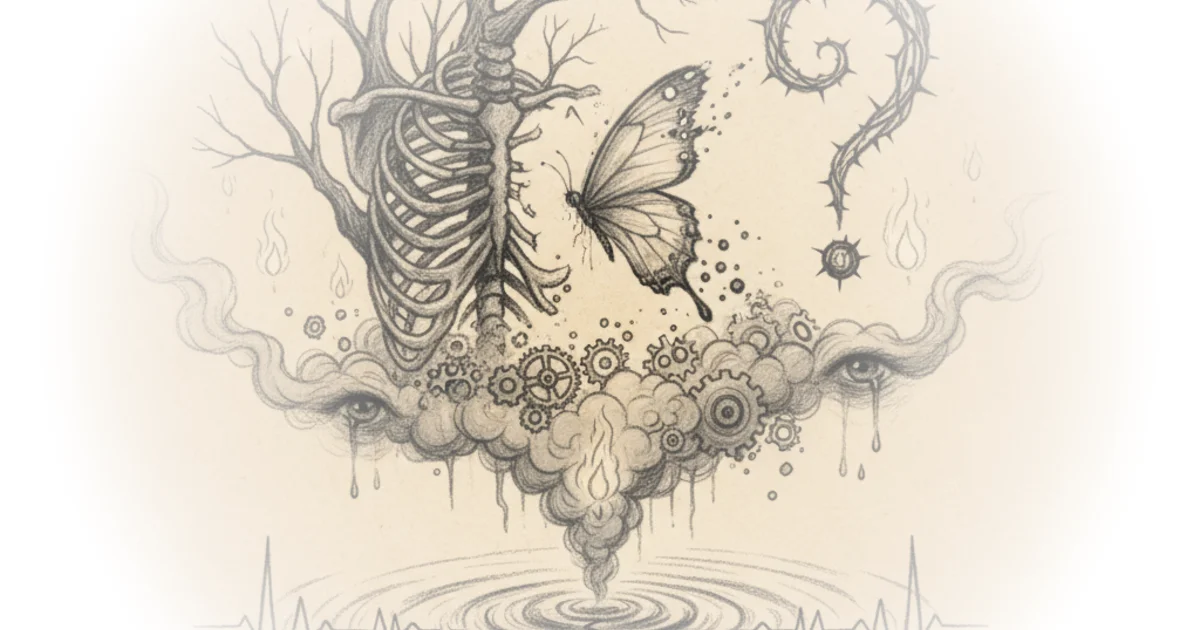
The author's strength lies in her ability to translate dense medical findings into tangible human experiences. She highlights that the most common symptom is "brain fog," describing it as a state where the brain "wafted slowly through the forest." This metaphor effectively conveys the cognitive slowing that patients describe, moving beyond clinical jargon to something visceral. The physical toll is equally severe, with patients experiencing "crashes after which they might be barely able to move or think for days or weeks." This distinction between everyday tiredness and the energy collapse of chronic fatigue syndrome is vital; it underscores that the condition is a physiological failure of energy production, not a lack of willpower.
"Patients who suffer from it literally seem to not produce enough energy to stay alert and mobile if they move too much or do anything really."
Hossenfelder points to emerging research suggesting mitochondrial dysfunction as a root cause. Citing autopsy studies, she explains that while lung function recovered in some deceased patients, mitochondrial impairment persisted in the heart, kidneys, and liver. This finding shifts the narrative from a respiratory virus to a systemic metabolic crisis. However, critics might note that while mitochondrial damage is a compelling hypothesis, the exact mechanism remains unproven, with other theories ranging from viral reservoirs to immune dysregulation. The author acknowledges this uncertainty, listing multiple contributing factors without forcing a premature consensus.
The Battle for Validation
Perhaps the most poignant section of the commentary addresses the social and medical friction long covid patients face. Hossenfelder draws a sharp parallel between long covid and pre-existing conditions like chronic fatigue syndrome and fibromyalgia, which have historically suffered from "medical gaslighting." She defines this term as doctors dismissing or downplaying symptoms, often attributing them to psychological issues or stress. The historical context she provides—referencing the 1944 film Gaslight—grounds the modern struggle in a long history of patient dismissal.
The data she presents is damning: a 2022 study found that 79% of long covid patients reported negative interactions with medical professionals, with 34% having their problems dismissed. Hossenfelder writes, "There's even a name for it medical gaslighting... a 2006 article by scientists at MIT aptly called these conditions illnesses you have to fight to get because health insurance is have an interest in denying the reality of chronic illnesses." This framing is powerful because it identifies a structural incentive for denial, suggesting that the medical establishment's skepticism is not merely ignorance but a systemic feature of how chronic, invisible illnesses are treated.
"Medical gaslighting happens when doctors dismiss or downplay symptoms of patients... it's something you can't have because there's no box to check in these cases."
Yet, the author also introduces a necessary counterpoint regarding the prevalence of the condition. While some estimates suggest 15% of adults have long covid, Hossenfelder highlights a critique from the British Medical Journal arguing that the diagnosis is overly broad. She notes that nearly 90% of existing studies lacked control groups, making it difficult to distinguish long covid symptoms from the general population's baseline health issues. If one looks at a list of 200 symptoms, random chance dictates that many people will match some of them. Consequently, some researchers argue the true figure for severe, persistent cases is closer to 1% rather than 6%. This nuance is essential; it prevents the narrative from becoming a panic-inducing statistic while still validating the suffering of the millions who are undeniably affected.
Demographics and the Path Forward
The piece then pivots to the demographics of risk, revealing that long covid does not strike randomly. Hossenfelder points out that middle-aged women are disproportionately affected, with rates as high as 23% in some groups. She connects this to a broader pattern where women are more prone to autoimmune problems and chronic fatigue syndrome. Furthermore, she notes that Black communities in the U.S. are affected twice as often as Asian-Americans, a disparity she attributes not to the virus itself but to socioeconomic factors like stress, lack of access to healthcare, and living conditions.
"It's probably not that covid viruses particularly like black or people but rather that being a member of those demographic groups is correlated with other factors such as living in big cities or in difficult economic circumstances."
On the topic of prevention and treatment, Hossenfelder offers a sobering reality: the best defense is avoiding infection, and vaccination significantly reduces the risk of long-term complications. She cites a meta-review showing that three vaccinations reduce the risk of long covid by roughly 69%. However, she warns that the risk is cumulative; even if one avoids long covid initially, reinfection can still trigger it. The treatment landscape remains fragmented, requiring a tailored approach that addresses specific symptoms—whether immune modulation, blood thinners, or neurological support—rather than a "one-size-fits-all" cure.
Despite the grim outlook, Hossenfelder highlights a silver lining: the attention long covid has received has finally forced the medical community to take chronic fatigue syndrome seriously. The U.S. National Institute of Health has invested over $1 billion into research, though she notes that only a fraction has gone to clinical trials. This critique suggests that while the money is there, the execution is lagging, leaving patients in a limbo of theoretical research and practical neglect.
Bottom Line
Sabine Hossenfelder's analysis succeeds in reframing long covid not as a temporary inconvenience but as a profound, systemic failure of the body that demands a new medical paradigm. Her strongest argument lies in connecting the biological mystery of mitochondrial dysfunction with the social reality of medical gaslighting, creating a holistic picture of a crisis that is both physiological and institutional. The piece's vulnerability is the inherent uncertainty of the science; without a definitive diagnostic test or a single known cause, the debate over prevalence and treatment will likely continue to rage. Readers should watch for how the medical community responds to the call for better diagnostic criteria and whether the billions in research funding translate into tangible therapies for the millions currently suffering.