Freddie deBoer delivers a stinging rebuke to the idea that pop music remains an underdog, arguing that the cultural landscape has shifted so drastically that defending it as a marginalized art form is now a fantasy. He contends that the real battle isn't between rock and pop, but between honest criticism and a digital mob that treats dissent as a moral failing. This piece matters because it exposes how the very institutions meant to curate culture have surrendered to the logic of the algorithm, turning music criticism into a performance of deference rather than analysis.
The Economics of Clicks
DeBoer begins by dismantling the romanticized view of the internet's impact on media, noting that the promise of democratization has been replaced by a ruthless attention economy. He writes, "Like pretty much everyone else's hopes about the internet, ours have come back to bite us in the ass." This observation sets the stage for his critique of how financial incentives have warped the conversation. The author argues that publications now chase the shrinking pool of money by focusing on a handful of massive names, leaving little room for genuine discovery.
He points out that the debate over poptimism often ignores the material reality of the industry. As deBoer puts it, "Matt Yglesias made this point ably, recently, that the poptimism debate makes ideas seem like currency when in fact only currency is currency." The argument here is that the shift toward covering artists like Post Malone over niche acts isn't a philosophical evolution but a survival tactic. This reframing is crucial because it moves the discussion away from abstract taste and toward the structural forces that dictate what gets heard.
"Base determines superstructure; music coverage chased the shrinking pool of money in cultural commentary, and that meant covering Post Malone instead of Pigs Pigs Pigs Pigs Pigs Pigs Pigs."
Critics might argue that this economic determinism overlooks the genuine enthusiasm critics have for pop music, but deBoer suggests that the financial pressure makes it impossible to maintain a balanced perspective. The result is a media environment where the only way to get views is to validate the most popular acts, regardless of their artistic merit.
The Digital Thickets and the Strawman
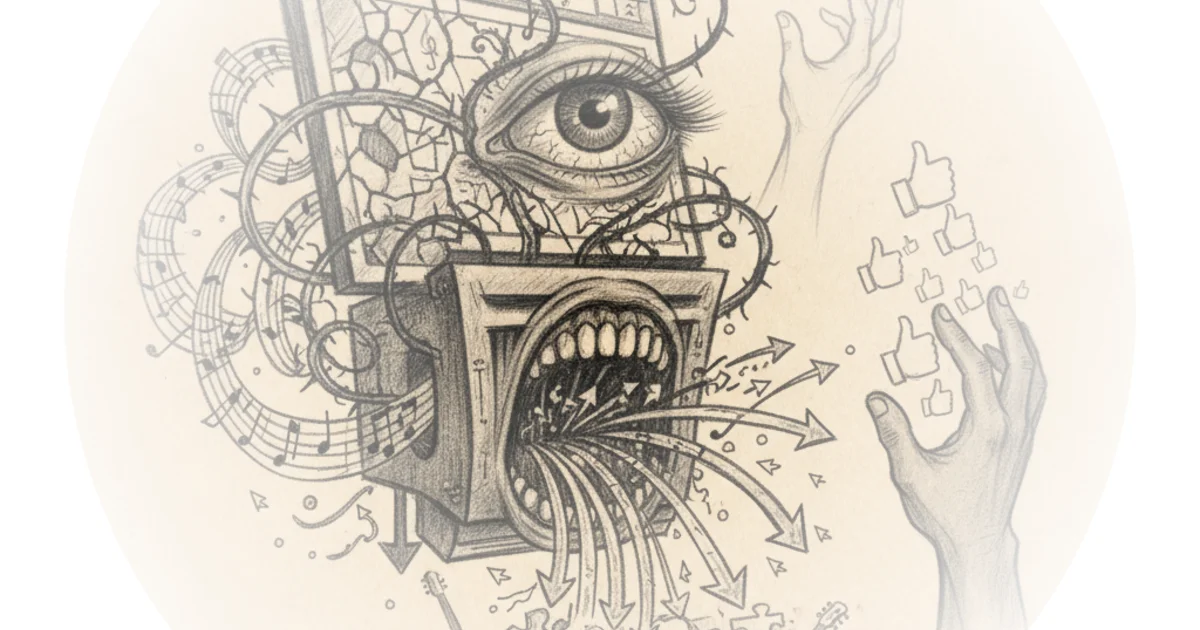
The core of deBoer's objection to Carl Wilson's recent essay is the claim that the aggressive, intolerant version of poptimism is a "strawman" that doesn't exist in reality. DeBoer insists that this figure is not only real but dominant in the online sphere. He writes, "argument is ambient now... our ideas about politics and culture and everything else are dictated not by individual longform arguments but by tweets, TikToks, YouTube comments, group text diatribes."
He describes this environment as "the digital thickets," where the real action takes place. In these spaces, deBoer argues, critics of pop music are routinely accused of racism or sexism, and their careers are threatened for expressing unpopular opinions. He notes, "There are many, many very loud voices in the digital thickets who act in exactly the way I've complained about in the past - aggressively rejecting any criticism of any pop acts for any reason."
This is where the piece connects to the historical context of the rockism vs. poptimism debate. While the original poptimist movement sought to elevate pop music to the same critical status as rock, deBoer argues it has mutated into a hierarchy where pop is not just equal to, but superior to, all other genres. He writes, "in practice, as a lived philosophy, this is precisely what poptimism has become, a hierarchy of taste with pop on top." This shift is significant because it transforms a movement for inclusion into one of exclusion, silencing any dissenting voice.
"If you spend a lot of time on BlueSky, you'll hear it. A lot of people sincerely believe - after years of pop artist dominating year-end Best of lists... that pop just can't get any respect. And that, folks, is insane."
DeBoer's frustration is palpable as he describes the absurdity of claiming that pop music is marginalized in an era where it dominates every aspect of culture. He points to the treatment of artists like Taylor Swift and the behavior of fan bases that engage in doxxing and harassment as evidence of this toxic dynamic. The author argues that Wilson's refusal to acknowledge this reality makes his essay feel disconnected from the actual world.
The Death of Rockism and the Rise of the Stasi
DeBoer challenges the notion that the "rockist" tradition is still a viable framework for criticism. He argues that rockism is now a "dead letter," and that the basic assumptions of poptimism have become the "basic philosophical architecture of modern music criticism." He writes, "We live on Planet Populist now, in the arts, the world of Marvel Cinematic Universe domination and chin-stroking coverage of Zelda games in The New Yorker."
He uses the example of Rolling Stone to illustrate this shift. Once the bastion of rockist criticism, the magazine has transformed into a "relentless celebration of non-philosopher music." DeBoer writes, "That picture at the top isn't a collage! It was the actual front page of Rolling Stone on the day of the release of Taylor Swift's The Life of a Showgirl, an execrable album from a bored billionaire who lives a life of utter luxury and celebration and yet spends all her time burning with rage at perceived slights against her."
This transformation is not just about taste but about the magazine's attempt to court a younger, more socially conscious audience. DeBoer notes that they have moved from a "groovier and less-confrontational middle aged liberalism to more explicit social justice messaging." The result is a publication that feels like it is trying too hard to be relevant, often at the expense of critical integrity.
"All of us are living every day in the shadow of the threat of absolutely batshit insane stan armies who will move to crush whatever mild dissent they encounter. Is that really not worth talking about?"
DeBoer's argument is that the fear of these "stan armies" has created a culture of self-censorship among critics. He suggests that the refusal to acknowledge the power of these fan bases has left the media landscape vulnerable to manipulation and groupthink. The author's call for honesty is a plea for a return to critical independence, even if it means risking the wrath of the digital mob.
Bottom Line
Freddie deBoer's most compelling argument is that the poptimist movement has lost its way, transforming from a defense of pop music into a weaponized ideology that silences criticism. His biggest vulnerability is his reliance on anecdotal evidence of online harassment, which, while powerful, may not represent the entire spectrum of music criticism. However, his diagnosis of the economic and cultural forces driving this shift is sharp and necessary. Readers should watch for how legacy media continues to navigate the tension between commercial survival and critical integrity in an era dominated by the digital thickets.