This piece from Wayfare does something rare for scriptural analysis: it refuses to let the reader rest comfortably in the triumph of a military victory. Instead of celebrating the tactical brilliance of the 300, the editors pivot sharply to the moral rot that follows, arguing that the true drama of the Book of Judges lies not in the deliverance, but in the unanswered questions that linger long after the battle is won.
The Illusion of Clarity
Wayfare opens by dismantling the assumption that the Book of Judges is a simple morality tale. The piece notes that while the text seems to promise a clear cycle of sin and redemption, the reality is far messier. "Judges was not meant to be a subtle book," the editors observe, yet they immediately contradict this by highlighting the "ambivalences, unanswered questions, narrative elements that don't neatly fit the book's stated aims." This is a crucial distinction for the busy reader: the text invites us to look past the surface-level heroism to find the human complexity underneath.
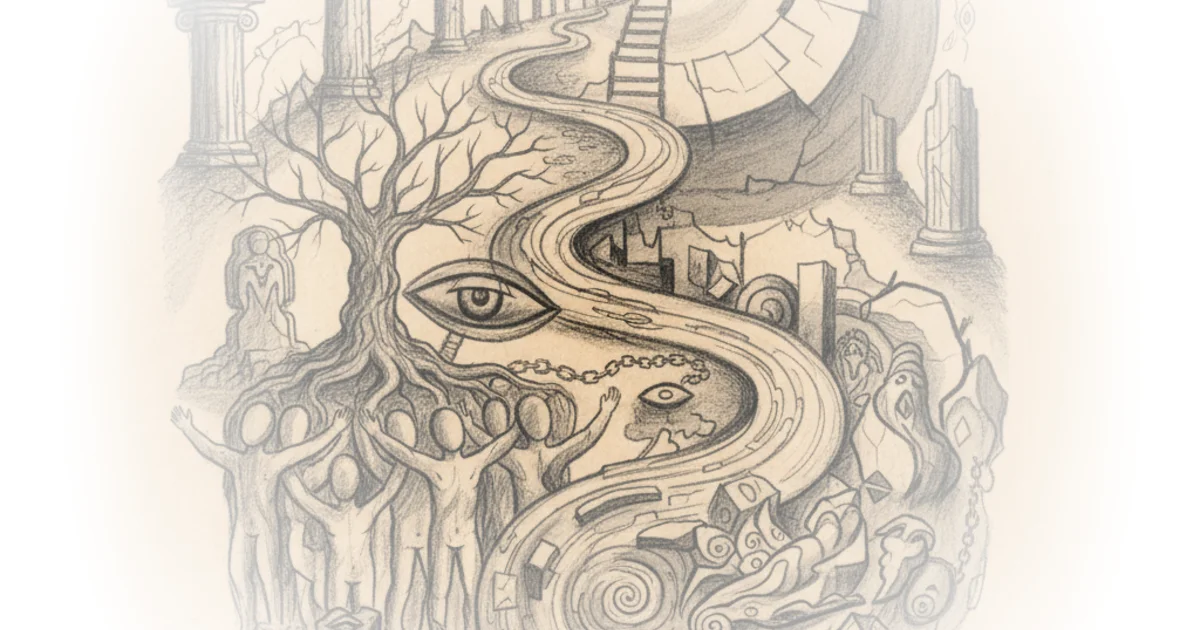
The article uses the story of Gideon to illustrate this shift from glory to ambiguity. Initially, the narrative is gripping. The strategy of reducing an army from 32,000 to 300 ensures that the victory is unmistakably divine. The editors describe the scene vividly: "The brilliance of the strategy to use those 300 soldiers to incite panic in their encamped and sleeping enemies with a sudden bursting forth of light from 300 torches and sound from 300 trumpet blasts in the middle of the night never gets old in the retelling." This moment of divine intervention is clear and satisfying, much like the historical memory of the Egyptian forces caught by collapsing sea walls or the sudden flash flood that routed Sisera.
"But for all that seeming straightforwardness, there are subtleties to be found here—ambivalences, unanswered questions, narrative elements that don't neatly fit the book's stated aims."
The Cost of Revenge
However, the commentary takes a sharp turn as it moves into Judges 8, where the divine guidance seems to vanish. The piece argues that the story becomes "morally ambiguous" the moment Gideon turns his attention to retribution rather than peace. The editors point out the disturbing nature of Gideon's actions against the towns of Succoth and Penuel. After these towns refused to feed his weary men, Gideon returned to "trample the people of Succoth and destroy Penuel's tower and then kill the men of that city." The article forces the reader to confront the justification: "Would that justify Gideon's return-for-revenge mission?" The answer implied is a resounding no, especially when contrasted with the earlier, divinely sanctioned victory.
The human cost of this vengeance is further illuminated by the execution of the Midianite kings, Zebah and Zalmunna. Wayfare highlights the trauma of the moment, noting that Gideon ordered his own son to kill the prisoners, but when the boy "shrank back, and Gideon finished the deed himself." The editors ask a piercing question about the intergenerational impact: "How might this have affected his son? Others in his family who saw this unfold?" This is not just a historical footnote; it is a meditation on how violence begets violence, a theme that echoes through the subsequent tragedy of Abimelech, who kills his own brothers to seize power.
Critics might argue that applying modern moral standards to ancient texts risks missing the cultural context of tribal warfare. Yet, the piece anticipates this by noting that the text itself seems to offer no defense for Gideon's later actions. "Astute commentators have noticed that the Lord—as agent, as driver, as commander—is absent in Judges 8," the editors write. The silence of the divine voice in the face of such brutality is a powerful rhetorical device that leaves the reader with a sense of unease rather than resolution.
The Danger of Self-Commission
The commentary then explores the psychological danger of Gideon's overconfidence. After his initial success, Gideon begins to act unilaterally, assuming his will is synonymous with divine will. The piece quotes Gideon's threat to the princes of Succoth: "When the Lord hath delivered Zebah and Zalmunna into mine hand, then I will tear your flesh with the thorns of the wilderness and with briers." The editors warn against this conflation of personal desire with divine command: "Is there a danger when we are called to do one thing of becoming over-confident that the Lord justifies our going further than he wants us to go?"
This section connects the ancient narrative to a broader spiritual warning about authority. The article suggests that Gideon's creation of an ephod from looted earrings—a "snare unto Gideon, and to his house"—was the inevitable result of blurring the lines between faith and idolatry. The editors note the irony that the man who started by tearing down a shrine to false gods ended up creating one himself. This pattern of self-deception is presented as a timeless trap: "Could this be why many are called but few are chosen? Is this an example of getting a little authority and then covering a multitude of sins due to a false or inflated sense of divine commission?"
"Is there a danger when we are called to do one thing of becoming over-confident that the Lord justifies our going further than he wants us to go?"
The Longing for a Better Way
Ultimately, Wayfare argues that the value of these difficult stories lies in their ability to provoke introspection rather than provide easy answers. The piece contrasts the violent, ambiguous resolution of Judges with the radical teachings of Jesus, specifically the command to "Love your enemies, bless them that curse you." The editors suggest that the discomfort we feel reading about Gideon's revenge is actually a signal that we are ready for a higher standard. "The subtleties and ambivalences and unanswered questions of Judges can leave us longing for just such a better way," they conclude.
This framing transforms the text from a historical record of ancient warfare into a mirror for modern moral struggle. The editors do not shy away from the graphic nature of the violence, nor do they gloss over the family tragedies that followed Gideon's victory. Instead, they use these harsh realities to underscore the necessity of the "better way" offered by the teachings of Christ. The piece leaves the reader with the realization that the cycle of violence in Judges is hard to break, and that true deliverance requires more than just military triumph.
Bottom Line
Wayfare's analysis is strongest in its refusal to sanitize the moral failures of biblical heroes, forcing readers to grapple with the human cost of vengeance and the danger of self-commissioned authority. Its biggest vulnerability is the reliance on a specific theological framework that may not resonate with secular readers, though the ethical questions it raises about power and retribution remain universally relevant. The piece succeeds not by solving the ambiguities of the text, but by compelling the reader to sit with them.