More Perfect Union exposes a brutal paradox at the heart of the crypto boom: while politicians and corporations celebrate Bitcoin as the future of finance, the residents living next to massive mining facilities describe a present-day nightmare of noise, sickness, and economic displacement. This isn't just a story about technology; it is a forensic look at how deregulation in Texas has allowed billion-dollar corporations to externalize their costs onto vulnerable, rural communities. The evidence presented is visceral, moving beyond abstract energy statistics to the trembling hands and sleepless nights of people who feel their lives are being erased by an invisible force.
The Human Cost of a Virtual Currency
The piece anchors its argument in the suffering of the Browning family in Granberry, Texas, where a Marathon Digital Holdings mine operates just 500 feet from their home. More Perfect Union writes, "Somebody has to die to get somebody's attention." This desperate plea from a resident sets the tone for a report that refuses to treat the situation as a mere zoning dispute. The author details how the constant, low-frequency hum of tens of thousands of computers has driven residents to the brink of physical and mental collapse, with headaches, vertigo, and hospitalizations becoming the norm. The coverage effectively humanizes the abstract concept of "hash rate," showing that for the Brownings, the blockchain is a source of daily agony.
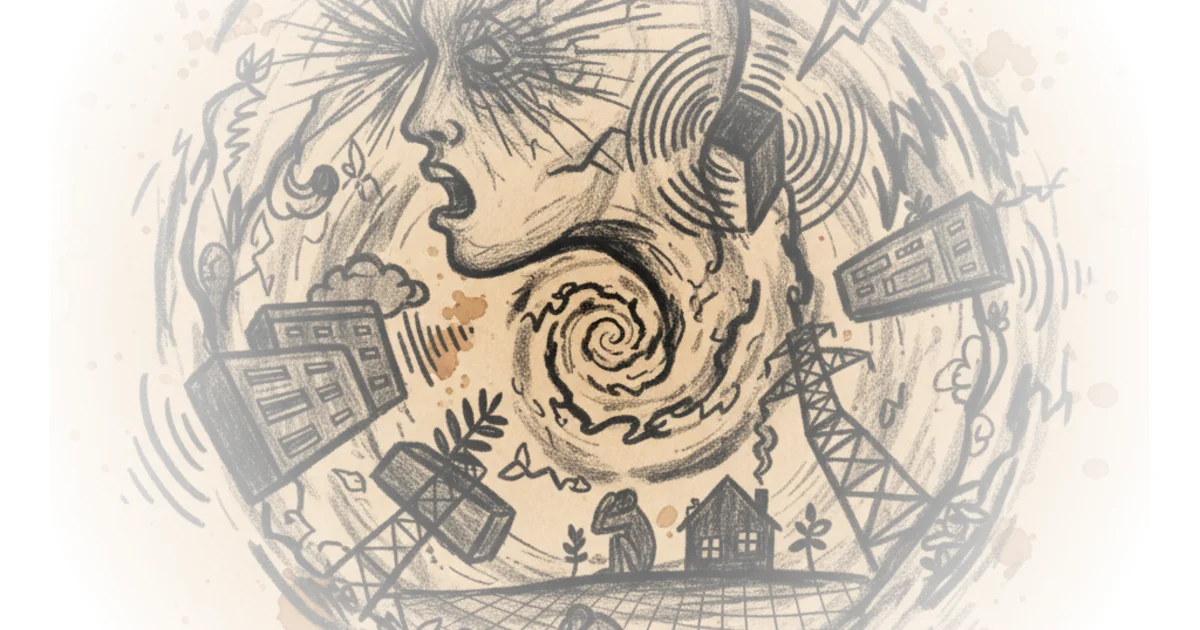
The reporting highlights a disturbing disconnect between the legal reality and the lived experience. While Texas law sets a noise limit of 85 decibels—a level considered industrial and requiring hearing protection—residents report readings in the hundreds inside their own homes. As More Perfect Union puts it, "That would mean that you would have to wear hearing protection all the time at your home." This framing is powerful because it forces the reader to visualize the absurdity of a residential zone functioning as an industrial plant. The author notes that even the sound-suppressive walls installed by the mining company are riddled with gaps, rendering them useless. A counterargument worth considering is that industrial noise is often a byproduct of economic growth, but the piece dismantles this by showing that the growth here yields no local jobs or tangible products, only pollution.
The idea that these billion-dollar companies that are profiting off the backs of poor working people... is disgusting. It's cowardly. It's disgusting. There's a certain amount of cruelty to that.
The Energy and Water Drain
The commentary shifts to the broader resource implications, arguing that the industry's appetite for electricity and water is straining the very infrastructure meant to serve the public. More Perfect Union explains that Bitcoin mining in Texas consumes roughly 300 megawatts in a single facility, a load comparable to a city the size of Austin. The author connects this to real-world consequences for everyday Texans, citing instances where mining operations hoarded electricity during winter storms and sold it back at a profit while residents suffered. "Every hundred million that a company extracts from the energy market is paid by me and all the other Texans," one resident tells the reporter, a sentiment the author uses to illustrate the regressive nature of these subsidies.
Water scarcity is another critical pillar of the argument. In Corsicana, the report details how Riot Platforms' planned mine could consume an eighth of the city's daily water supply. The author paraphrases the fears of residents like Teresa, who worry that the drying of local lakes will leave their community without a vital resource. The piece effectively contrasts the virtual nature of the product with the very real depletion of physical resources. "I know I can survive without electricity. I do know that I can't survive without water," a resident states, driving home the stakes. Critics might argue that mining companies invest in water recycling technologies, yet the report's on-the-ground observations of dried-up lakes and stressed livestock suggest these measures are insufficient or non-existent in practice.
The Political Machine Behind the Mine
Perhaps the most damning section of the coverage is its examination of the political machinery protecting the industry. More Perfect Union traces a direct line from corporate donations to legislative inaction, noting that crypto corporations provided nearly half of the corporate money influencing federal elections in 2024. The author highlights the hypocrisy of politicians who once criticized Bitcoin but pivoted once campaign checks started arriving. "If crypto is going to define the future, I want to be mined, minted, and made in the USA," the piece quotes from a politician who previously called it a scam. This reversal is presented not as a change of heart, but as a transaction.
The report argues that the industry has successfully bought a regulatory vacuum. "Efforts to regulate crypto at the state and federal level have been largely unsuccessful," the author notes, pointing to legislation that would have limited mining's participation in demand-response programs which simply failed to pass. The narrative suggests that the "all-in" approach of Texas leadership is less about economic strategy and more about serving a specific, wealthy donor class. The piece effectively uses the contrast between the Governor's praise for Texas as a "crypto oasis" and the residents' description of their lives as "hell" to expose the class divide inherent in this policy.
Bottom Line
More Perfect Union's strongest asset is its refusal to let the reader look away from the human toll of the crypto industry, grounding high-level economic debates in the immediate, physical suffering of rural Texans. The argument's greatest vulnerability lies in its lack of a clear path forward; while it thoroughly documents the failure of the current system, it offers little insight into how these communities might win against such entrenched political and corporate power. Readers should watch for the outcome of the ongoing litigation mentioned, as it may be the only remaining check on an industry that has successfully insulated itself from regulation. The piece serves as a stark warning: when a state becomes the "crypto capital," the cost is often paid in the health and stability of its most vulnerable citizens.