Tim Mak's latest reporting strips away the cinematic mystique surrounding Vladimir Putin, replacing the "reserved strategist" archetype with the chilling reality of a man who views democracy as a transaction and his neighbors as barbarians. By anchoring the narrative in the personal testimony of Oleh Rybachuk—a former Soviet customs officer turned Ukrainian activist—the piece exposes the raw, unfiltered psychology of the Kremlin's inner circle, offering a stark counter-narrative to the polished image projected in the new film The Wizard of the Kremlin.
The Illusion of the "Nice Bloke"
Mak constructs his argument around a pivotal, forgotten encounter from 2005, where the gap between Russian propaganda and operational reality became terrifyingly clear. He writes, "On leisurely strolls and over hearty dinners, these people tried their best to impress Oleh and erase any idea of President Putin being 'a monster and a KGBist.'" This framing is crucial; it highlights how the Russian security apparatus, or siloviki, has long relied on a performative softness to mask their true intentions. The author effectively uses Rybachuk's background—his time as a student among the nomenklatura and his later role in the Orange Revolution—to show that the Kremlin's attempts at charm are not genuine diplomacy but calculated psychological operations.
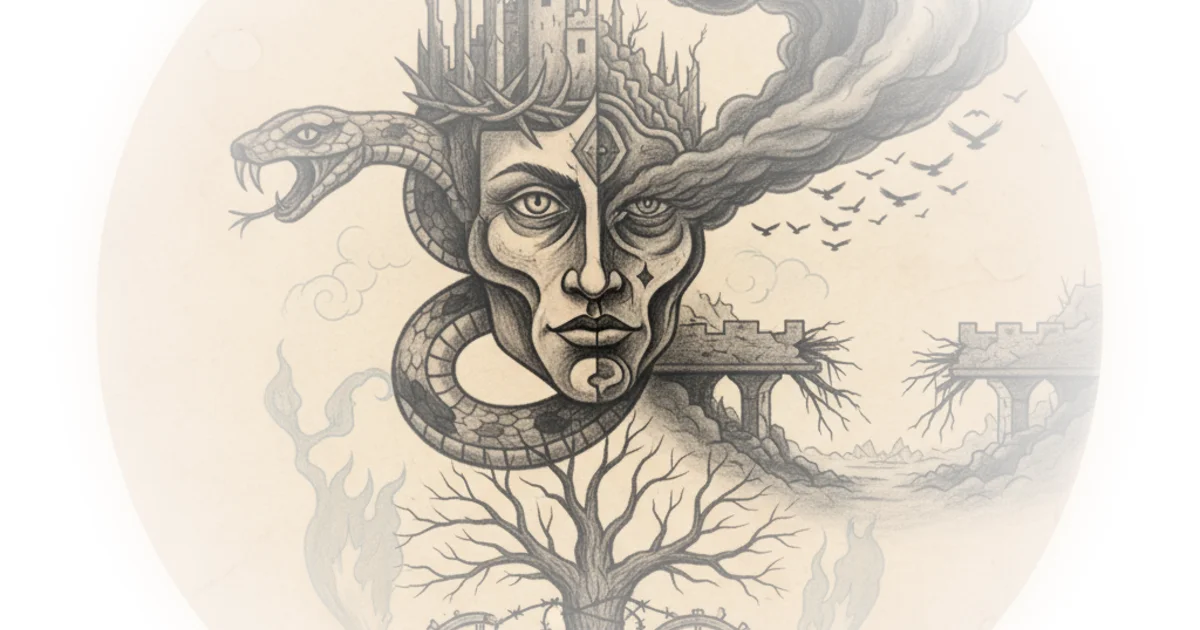
The piece details a specific meeting in the Kremlin's "tea room," a space that once belonged to Joseph Stalin, where the facade dropped instantly. Mak quotes Rybachuk describing the moment Putin shifted from a relaxed host to an aggressor: "As soon as I began telling [Putin] the truth, his facial expression changed completely. He grabbed my arm… and said, 'Oleh, stop it, I can see you're a smart lad. I know who was funding it all, where the money was coming from, how much, and who Soros and Americans paid. That's it!'" This anecdote is the article's beating heart. It demonstrates that the current invasion is not a sudden geopolitical miscalculation but the culmination of a decades-long refusal to accept that Ukraine's sovereignty is anything other than a conspiracy funded by foreign powers.
He can't grasp — he hates — and he is afraid of what today's Ukraine is.
Critics might argue that focusing on a single meeting from two decades ago risks oversimplifying a complex geopolitical landscape. However, Mak's choice to center this specific interaction is deliberate; it reveals the consistent, unchanging core of the executive branch's worldview. The author argues that Putin's inability to comprehend the Orange Revolution—a moment where the siloviki failed to buy or bully a pro-Western outcome—laid the groundwork for the brutal escalation seen today. As Mak notes, "His decisions to occupy Crimea in 2014, invade Donbas, and launch a full-scale war in 2022 stem from his expectations that guns always win and democracy can be bought and sold."
The Architecture of Fear
The commentary extends beyond the personal to the institutional, warning readers against the comforting belief that the removal of one leader will dismantle the system. Mak draws a sharp distinction between the man and the machine he built. He paraphrases Rybachuk's sobering assessment: "We mustn't deceive ourselves into believing that after Putin's death, Russia will change... 70 percent of Russian officials have close ties to the KGB, FSB, and oligarchs. This is not democratic state material." This is a vital correction to the Western tendency to personalize foreign policy. The article suggests that the threat is structural, rooted in a system where 70% of the bureaucracy is inextricably linked to the security services.
The piece also touches on the human cost of this systemic arrogance, referencing the 24 civilians killed in a recent missile strike on Kyiv, which Ukrainian officials claim contained Western components. While the article focuses heavily on the psychological profile of the leadership, it does not let the reader forget the consequences of their actions. The juxtaposition of the "tea room" conversation with the reality of modern warfare—where coordinates for the President's Office are shared with Belarusian counterparts—creates a jarring, necessary contrast. Mak writes, "Russia can only be stopped by force," a conclusion that feels less like a hawkish platitude and more like a grim necessity derived from the evidence presented.
Bottom Line
Tim Mak's most powerful contribution is the dismantling of the "complex villain" narrative, replacing it with a portrait of a leader whose fear of democracy drives his aggression. The piece's greatest strength lies in its use of primary testimony to reveal that the Kremlin's current actions are not strategic brilliance but a desperate, violent reaction to a reality it refuses to accept. The biggest vulnerability for Western policymakers is the persistent hope that the system will soften; this commentary makes it clear that the system is designed to be unyielding, and that understanding the enemy's psychology is the first step toward stopping the violence, not the last. The debris of this regime may be inevitable, but as Rybachuk warns, the West must not mistake the inevitability of collapse for the safety of the aftermath.