A bipartisan bill in the Senate, framed as a shield for children, may actually be the wedge that forces every American adult to surrender their digital anonymity. Reason reports that the GUARD Act, while ostensibly targeting harmful AI content, contains a mechanism that could mandate universal online identity checks for anyone wishing to speak to a chatbot. This isn't just about protecting minors; it is a structural shift that treats the entire internet as a restricted zone requiring government-issued credentials.
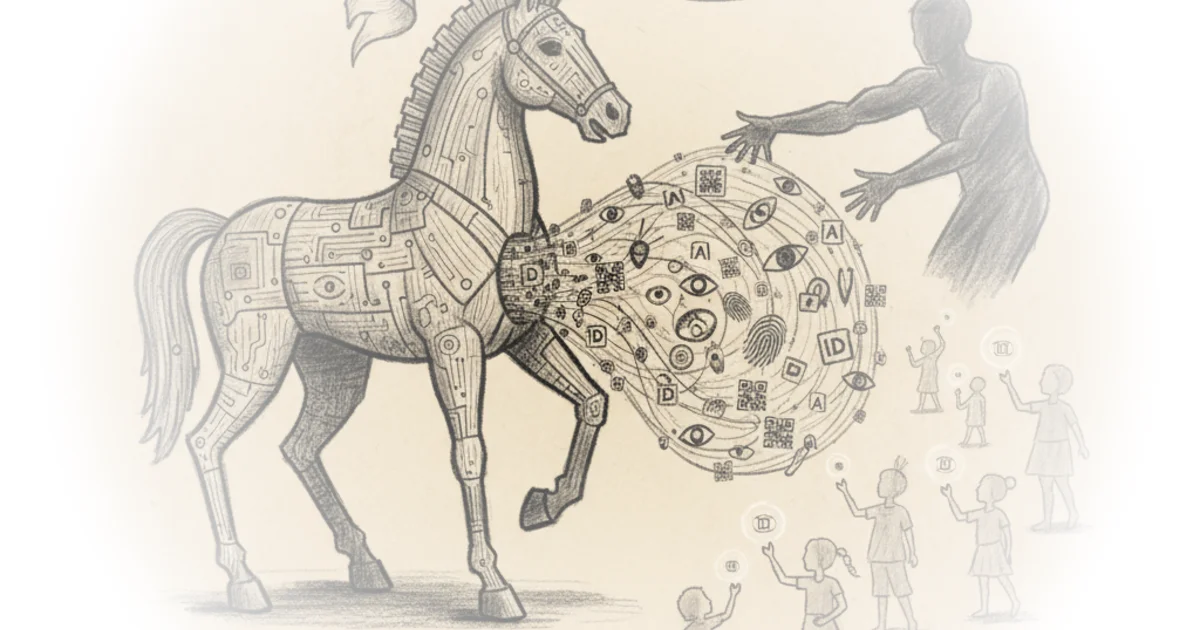
The Trojan Horse of Age Verification
The piece argues that the legislation, advanced by the Senate Judiciary Committee, is far more invasive than its proponents admit. "A Trojan horse for universal online ID checks," is how Jibran Ludwig of Fight for the Future described it. The bill requires anyone using an AI chatbot to provide proof of identity and bans minors from interacting with many sorts of AI chatbots entirely. Unlike previous social media age verification bills, this measure gives parents no right to opt out of the federal rules. The editors note that this removes family autonomy, taking the choice of when to introduce young people to technology out of parents' hands and into the hands of the state.
This framing is critical because it exposes a flaw in the "safety first" narrative: safety is being defined by the state, not the family. The bill's definition of an "AI companion" is so broad it encompasses any system designed to "encourage or facilitate the simulation of interpersonal or emotional interaction." This means a teenager using a bot to practice a foreign language or get help with a math problem could be blocked. As Jennifer Huddleston and Juan Londoño point out, the bill would prevent those under 18 from accessing products that are becoming ubiquitous, from tech support to online tutors. A February 2026 survey by the Pew Research Center found that over half of US teens use chatbots for help with schoolwork; this legislation effectively criminalizes that utility for minors.
Critics might note that the intent to stop minors from accessing sexually explicit material is legitimate, but the mechanism chosen here is a sledgehammer that smashes the entire ecosystem. The bill's requirement for government ID or equivalent verification for all users creates a privacy nightmare. Ashkhen Kazaryan of The Future for Free Speech told The Hill, "By mandating government ID or equivalent age verification for any American who wishes to interact with an AI chatbot, the bill burdens the speech and associational rights of every adult, not just minors."
"The GUARD Act is in fact an online ID check mandate unmatched in scope and highly invasive in methods."
The Chilling Effect on Free Speech
Beyond privacy, the legislation imposes strict content mandates that could fundamentally alter how AI functions. The piece details how chatbots would be compelled to issue government-mandated disclaimers at the start of every conversation and at 30-minute intervals, stating they are not human and do not provide professional advice. Furthermore, the bill bans chatbots from "represent[ing], directly or indirectly, that the chatbot is a licensed professional."
The danger here lies in the vagueness of the term "indirectly." Authorities could argue that simply providing authoritative advice on a topic counts as an indirect representation of professional authority. This creates a massive liability risk for companies, with penalties of $100,000 per offense. To avoid this, tech firms will likely train their bots to shut down any conversation related to sex, health, or finance entirely. The article warns that this could ban AI chatbots from discussing safe sex practices or contraception with minors, as doing so might "pose a risk" of inducing them to talk about intercourse. This is a classic example of how overbroad regulations lead to over-compliance, silencing legitimate discourse to avoid legal peril.
The historical context of digital identity is sobering here. As the piece alludes to the broader trend of age verification, it echoes the failures of past attempts where insecure databases led to massive data leaks. The article notes that implementing this would require users to provide sensitive information to "a sketchy, insecure age verification service, which have already resulted in thousands of people's private information being leaked." The irony is palpable: a bill sold as a safety measure would force millions of people to hand their data to the very systems that have proven most vulnerable to theft.
Bottom Line
The strongest part of Reason's argument is its exposure of the bill's unintended consequences: a federal mandate that effectively ends anonymous speech online and strips parents of their right to manage their children's digital lives. The biggest vulnerability in the legislative approach is its reliance on insecure, centralized identity verification that creates a honeypot for hackers. As the Supreme Court pauses other regulatory overreaches, this bill represents a quiet but profound shift in the architecture of the internet, one that prioritizes state control over individual liberty.
Bottom Line
The GUARD Act's fatal flaw is its assumption that universal ID checks are a viable solution to complex social problems; in reality, they are a gateway to a surveillance infrastructure that harms everyone, not just the minors it claims to protect. The piece makes a compelling case that this legislation is less about safety and more about establishing a precedent for government oversight of all digital interaction. Readers should watch for the next phase of this bill, as its broad definitions and harsh penalties are likely to face immediate constitutional challenges regarding free speech and privacy rights.