The Files That Shouldn't Be Redacted
A Justice Department promise of transparency collided with reality this week when lawmakers reviewing unredacted Epstein files found crucial passages still hidden. The redactions protect six powerful men accused of raping underage girls on Epstein's island — and the department's attempt to defend itself may have accidentally exposed one of them.
The Sultan Email
Prem Thakker writes, "And that's the information that the American people want to know: who are these powerful people who committed these heinous acts? Who were these people who showed up on Epstein's island? And the fact is that they are being protected, and it's disgusting." Representative Ro Khanna's frustration captures the core tension: Congress demanded unredacted files, yet the Justice Department kept key names hidden.
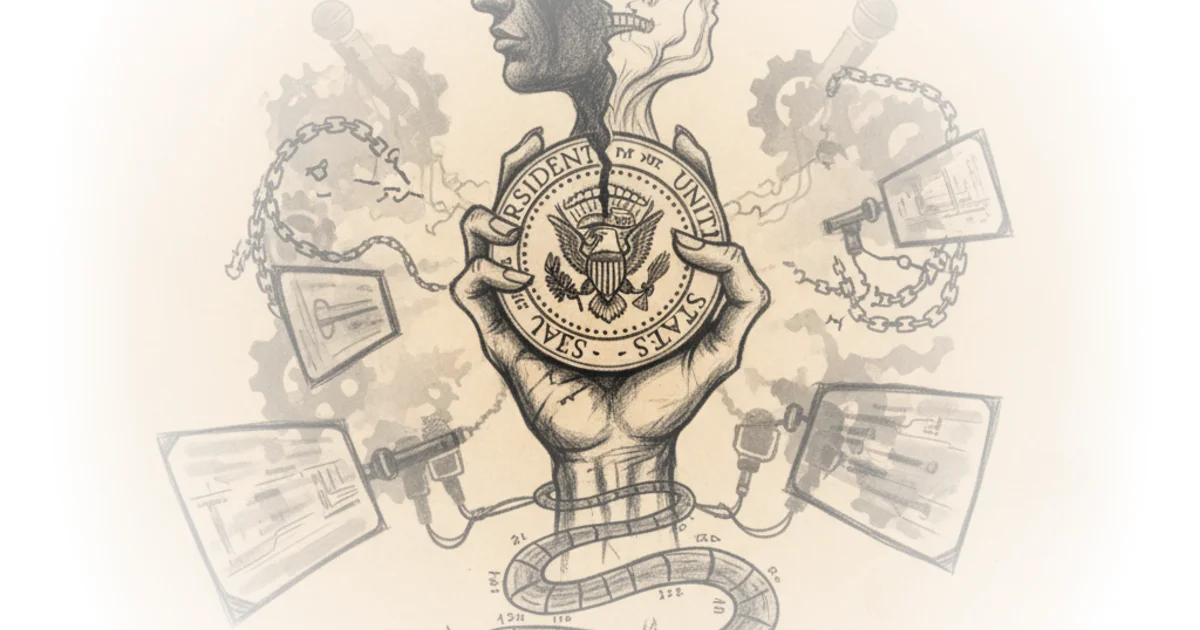
The department's defense backfired. When Representative Thomas Massie tweeted about an email where Epstein wrote "I loved the torture video," Deputy Attorney General Todd Blanche responded that the sender's name was available in document EFTA00666117. That file reveals Sultan Ahmed bin Sulayem, chief of DP World and chairman of Dubai's Ports, Customs & Free Zone Corporation.
"I loved the torture video"
Whether Blanche intended to expose Sulayem or simply wanted to score points against Massie — telling him to "Be honest, and stop grandstanding" — the result was the same: a name that had been protected suddenly became public. Critics might note that accidental transparency isn't transparency at all; it's chaos masquerading as revelation.
Maxwell's Bargaining Chip
Ghislaine Maxwell, Epstein's convicted partner, refused to answer lawmakers' questions in a closed-door deposition. Her lawyer said she would testify only if granted clemency. As Prem Thakker puts it, "Only she can provide the complete account. Some may not like what they hear, but the truth matters."
Maxwell's lawyer claimed both President Clinton and the current president are innocent of wrongdoing, saying "Ms. Maxwell alone can explain why, and the public is entitled to that explanation." Khanna called it blackmail: "She's saying, 'If you give me clemency, I'll spill the beans. I'll tell you who these people were who raped young girls on Epstein's Island.'"
A British Cabinet Minister's Private Words
The Epstein files continue to produce collateral damage. UK Health Secretary Wes Streeting released private messages in which he told the disgraced UK Ambassador Peter Mandelson — whose name appears throughout the Epstein files — that "Israel is committing war crimes before our eyes. Their government talks the language of ethnic cleansing… This is rogue state behaviour. Let them pay the price as pariahs, with sanctions applied to the state, not just a few ministers."
Streeting's comments are the strongest rebuke of Israel's Gaza campaign by a sitting British cabinet minister. Yet he also noted he has "never been a shrinking violet on Israel" and has supported Labour Friends of Israel for over twenty years. Critics might note that releasing private messages to gain political advantage undermines the very transparency Streeting claims to champion.
The Pattern: Transparency as Performance
The administration opened its term with a faux Epstein file release party, complete with binders for right-wing influencers. It oscillated between proclaiming itself the savior of victims and calling the whole thing a hoax. It fought to prevent actual file release, even targeting its own loyalists. And now, with redactions protecting powerful men, it continues covering up whatever it can while tripping over itself online.
As Prem Thakker writes, "Instead of transparency, more than one year in, we're left deciphering tweets. About a torture video."
The human cost extends beyond the files. Representative Jamie Raskin said victims may have been as young as nine. Names of non-victims like billionaire Les Wexner were redacted. The current president's name was redacted "in a number of different places." Whether this is sloppiness, negligence, or deliberate protection remains unclear.
Bottom Line
The Epstein files reveal a Justice Department performing transparency while protecting powerful men accused of raping children. Accidental exposures like the Sultan email don't redeem the pattern — they underscore how chaos and self-interest have replaced genuine accountability. Until redactions are justified by victim safety rather than power preservation, the files remain what they always were: evidence of a system that shields its own.