Brian Merchant's reporting cuts through the Silicon Valley hype to reveal a brutal economic reality: the first wave of generative artificial intelligence isn't automating dangerous factory labor, but systematically dismantling the livelihoods of creative professionals. While tech executives promise efficiency, the piece offers a harrowing catalog of human cost, moving beyond abstract market shifts to the specific, devastating experiences of costume designers, illustrators, and teachers who are watching their careers evaporate overnight.
The "Good Enough" Trap
Merchant reframes the entire narrative of automation, arguing that the threat to artists isn't that machines have surpassed human skill, but that corporations have decided human quality is too expensive. "Creative workers aren't typically worried that AI systems are so good they'll be rendered obsolete as artists... Their fear is that clients, managers, and even consumers will deem AI art 'good enough' as the companies that produce it push down their wages and corrode their ability to earn a living." This distinction is crucial; it shifts the blame from technological inevitability to a calculated business decision to prioritize cost-cutting over quality.
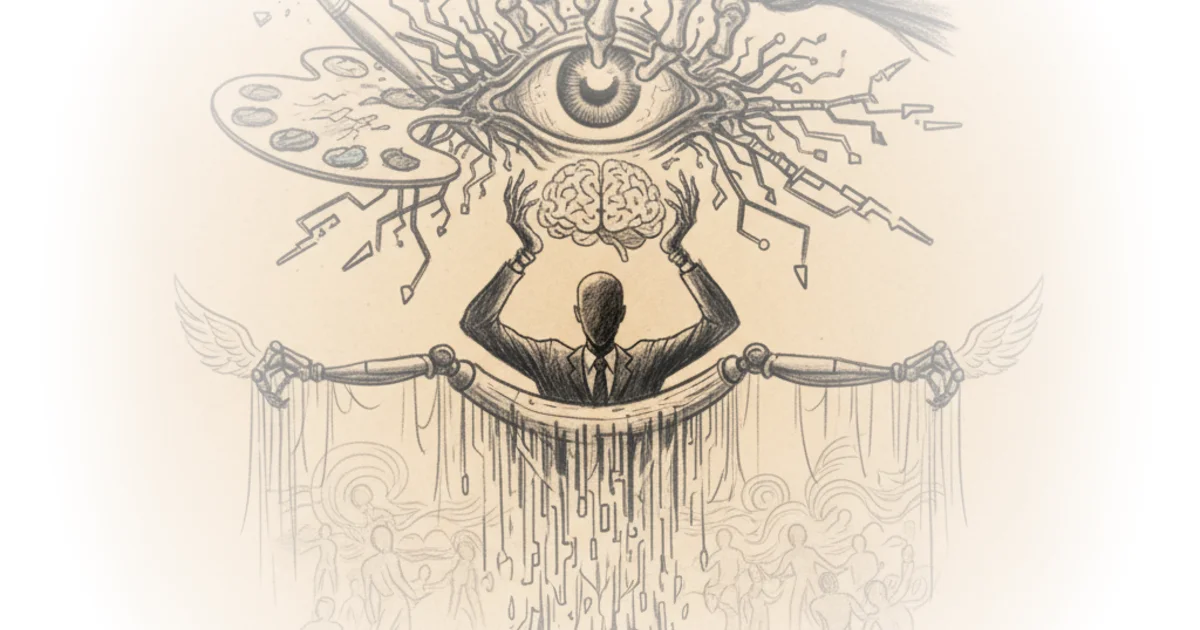
The author draws a sharp historical parallel to the Luddites, noting that skilled workers were never afraid of being out-performed by machines, but rather of being undercut by cheaper, inferior goods. "There is a clear parallel to the Luddites here, who were skilled technicians and clothmakers who weren't worried about technology surpassing their skill, but the way factory owners used it to make cheaper, lower-quality goods that drove down prices." This framing effectively dismantles the common defense that "progress" simply means better tools, revealing instead a mechanism for wage suppression.
"I want AI to do my laundry and dishes so that I can do art and writing, not for AI to do my art and writing so that I can do my laundry and dishes."
The Human Toll of "Slop"
The piece's most powerful element is its reliance on direct testimony from those on the front lines, refusing to treat this as a theoretical economic debate. Merchant curates stories that range from professional frustration to existential despair. One illustrator, who lost their primary income source to advertising agencies, describes the psychological impact of seeing their own style replicated without permission: "It felt like AI slop was mocking me from every corner of the internet, and every big company was promoting their new AI assistant."
The coverage does not shy away from the most severe consequences of this displacement. Merchant includes a content warning for descriptions of suicidal ideation, presenting the raw accounts of artists who have been pushed to the brink. "The worst part of all is that the parents who once supported me fully in being an artist sent me an AI generated picture of a caricature of themselves holding a birthday cake with my name spelled incorrectly." This anecdote highlights a profound loss of dignity and identity, suggesting that the devaluation of art is also a devaluation of the human spirit behind it.
Critics might argue that the narrative focuses too heavily on the most vulnerable workers, potentially overlooking those who have successfully adapted to using AI as a tool. However, the sheer volume of testimony regarding vanished contracts and the specific nature of the "good enough" principle suggests that adaptation is not a viable option for the majority of the industry.
The Erosion of Skill and Training
Beyond direct employment, the article documents the collapse of the educational infrastructure that sustains these professions. Susan Oakes, a graphic artist and teacher, notes that her Photoshop classes have "dropped dead" because students no longer see the value in mastering complex manual techniques when text prompts can generate similar results instantly. "It takes virtually no skill to do this besides the ability to read and write," she observes, pointing to a fundamental de-skilling of the workforce.
The administration's lack of regulatory intervention is a silent but pervasive character in Merchant's analysis. The rapid deployment of these tools has occurred without any guardrails, leaving workers to face "technological changes are happening too rapidly, and are not in any way reined in by the government." One game industry contractor recalls a boss dismissing their concerns with the platitude, "There's always work out there," a statement that rings hollow against the reality of a market that has fundamentally shifted beneath their feet.
"I feel cheated, like if I could go back in time and tell the younger me in high school that all the practice, all the love, and all the hope from your parents and friends for your future gets you is carpal tunnel and poverty, I could have gone into a better job field."
Bottom Line
Merchant's strongest argument is that the current AI boom is not a triumph of innovation but a race to the bottom that sacrifices human creativity for marginal corporate savings. The piece's greatest vulnerability lies in its inability to offer a clear path forward, leaving the reader with a stark diagnosis but no prescription for policy or protection. The most critical takeaway is that without immediate institutional intervention, the "good enough" principle will permanently erode the economic viability of human artistry.
The story of AI in the creative sector is not about the future of machines, but the present destruction of human livelihoods, and it demands a response that goes beyond the hype of the next software update.