Freddie deBoer delivers a scathing, necessary autopsy of a television phenomenon that has lost its way, arguing that the final season of The Bear is less a triumph of storytelling and more a case study in creative indulgence. While fans celebrate the show's intensity, deBoer identifies a fundamental flaw: the series has become a self-referential loop where "more" is mistaken for "better," sacrificing narrative logic for the sake of emotional overload. This is not just a critique of a TV show; it is a warning about the dangers of conflating chaos with depth.
The Architecture of Excess
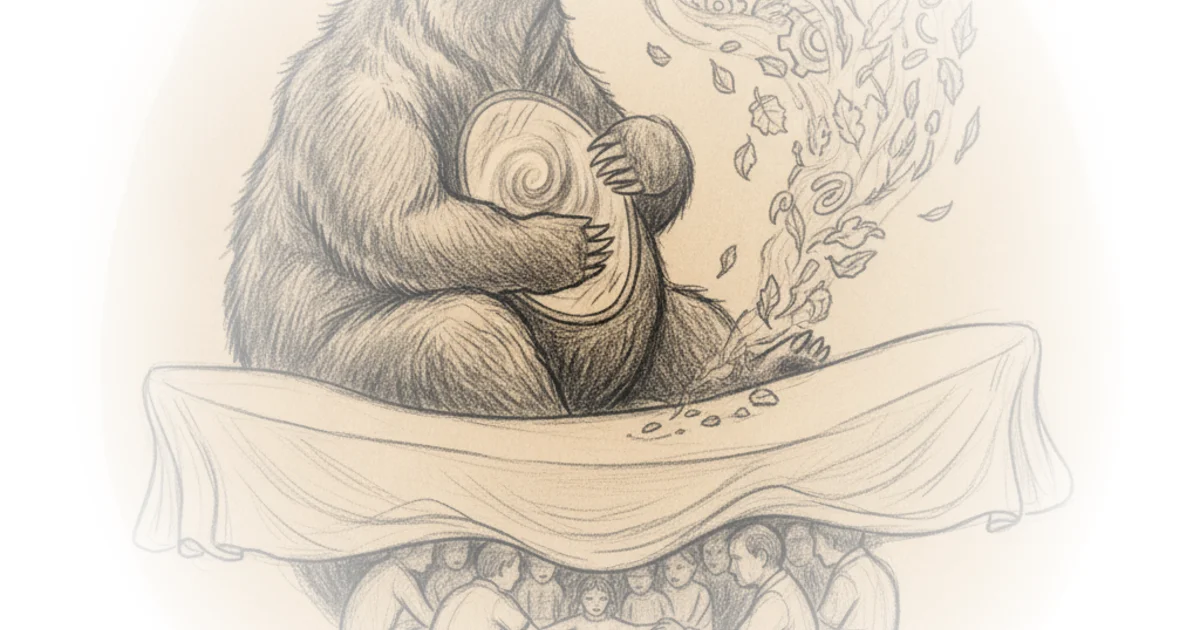
DeBoer begins by dismantling the show's most iconic, yet absurd, imagery. He points to the fourth-season spectacle of the cast seated beneath a massive banquet table, a visual that defies physics and narrative sense. "The fact that they've apparently borrowed tables from Shaq's house is a handy metonym for the broader senselessness," deBoer writes. This observation is sharp because it highlights how the show prioritizes the idea of a grand gesture over the reality of the situation. The table isn't just big; it is a symbol of the show's inability to trust its own story without inflating the stakes to impossible proportions.
This inflation creates a narrative environment where logic is discarded. DeBoer notes that the show treats crises not as isolated events but as a "full Mandelbrot set of ever-complexifying crises." Just as the mathematical set reveals infinite complexity at every scale, the series piles crisis upon crisis until the audience can no longer distinguish between genuine tension and manufactured noise. The result is a story that feels like a "hat on a hat on a hat, each of which has something like STRESS or INTENSITY or BIG FEELINGS printed on it." This relentless escalation is the show's fatal flaw. It assumes that if the characters are screaming loud enough, the audience will feel the weight of the moment, but deBoer argues that this approach actually numbs the viewer to the very emotions the show tries to evoke.
The show was defined by being too much, all the time, its excesses defended by its passionate fans with the criticism-squelching claim 'The Bear is a fantasy.'
Critics might argue that high-stakes drama requires high stakes, but deBoer's point is that the show has crossed the line from drama into farce. When a character hits the ceiling with a broom while pipes burst and sewage floods the kitchen, the show expects us to treat this as a serious occupational hazard. Yet, as deBoer asks, "You wouldn't open the restaurant under the conditions we see in the fifth season. You just wouldn't." The refusal to acknowledge basic realities—like the need to close a kitchen during a sewage backup—breaks the suspension of disbelief that is essential for any fiction to work.
The Loss of Subtraction
The core of deBoer's argument rests on a culinary metaphor that the show itself ironically abandoned. He recalls a flashback where a demanding chef tells the protagonist, "Subtract, chef." DeBoer notes, "That sounds like good advice, to me. A lot of cooking does suffer from the disease of too much." However, he observes that the show never took this advice. Instead of refining its narrative, it kept adding characters, subplots, and celebrity cameos until the story was bloated and unrecognizable.
This bloating is most evident in the treatment of side characters. DeBoer points to the sommelier, Sweeps, who swings wildly from incompetence to godlike ability, and the character Luca, whose decision to stage at a struggling restaurant makes "zero sense" given his impressive resume. "The prime directive of this show is to always, always bring as many of the characters from its massive army together in one place at one time, no matter how little sense that makes," deBoer writes. This prioritization of "found family" over plot coherence leads to characters like Neil Fak, whose portrayal devolves from a goofy but competent worker into a caricature that deBoer describes as "Andy Kaufman in Taxi."
The show's inability to let characters go or evolve naturally stems from a fear of silence. DeBoer contrasts the later seasons with the early ones, which featured quiet, resonant moments like Carmy's Al-Anon meetings. "That was some of the most effective, affecting stuff on the whole show," he notes. By replacing these moments with "endless examples of the Faks doing a Three Stooges routine," the show lost its emotional anchor. The decision to sideline Jeremy Allen White's character in favor of a massive ensemble cast suggests a show that is more interested in its own popularity than in the integrity of its story.
Nothing was ever enough for the show - never enough shouting, never enough Very Special Conversations, never enough food world cameos or celebrity guest stars, never enough needle drops.
A counterargument might suggest that the chaos reflects the reality of a high-pressure kitchen, but deBoer counters that even in chaos, there must be rhythm. The show's refusal to allow for "quiet, exhalation, or introspection" turns every episode into a non-stop assault on the senses. The result is a narrative that feels hollow, where the stakes are declared by characters rather than earned by the plot. As deBoer puts it, "So often in these later seasons the stakes are established by characters saying 'These are the stakes!' No one cares about the Carmy-Claire romance, you guys, in large part because the show so obviously, deeply, existentially doesn't care either."
The One Thing That Worked
Amidst the critique, deBoer finds a glimmer of hope in the special episode "Gary," which served as a bridge between seasons. This episode, focusing on the relationship between Richie and Mikey, offered the very things the main series had abandoned: "sadness, quiet, space, pacing, dramatic rhythm, tolerance for unfilled moments." DeBoer praises the episode for its ability to portray self-destructive hopelessness without resorting to melodrama. It stands as a testament to what the show could have been if it had embraced the principle of subtraction.
The episode's success highlights the failure of the main narrative. Where "Gary" allowed for silence and ambiguity, the rest of the series fills every gap with noise. DeBoer notes that the show's structure has become "short, choppy, painfully over-determined thirty-second conversations because they were designed to be shared on TikTok or Instagram." This shift in focus from storytelling to social media virality has fundamentally altered the show's DNA, turning a character study into a series of viral moments.
The bear fell a little too deeply in love with itself.
Bottom Line
Freddie deBoer's critique is a powerful reminder that intensity without restraint is not art; it is exhaustion. The strongest part of his argument is the identification of the show's refusal to "subtract" as the root of its narrative collapse. His biggest vulnerability is perhaps the sheer frustration that permeates the piece, which might alienate viewers who enjoy the show's chaotic energy. However, his call for a return to quiet, character-driven storytelling is a necessary correction for a series that has lost its way. As the show concludes, the question remains: will the industry learn from this excess, or will it continue to chase the high of the "Situation" without ever asking why it matters?