Bari Weiss delivers a rare, on-the-ground assessment of a European leader who has long been treated as untouchable, revealing that Viktor Orbán's grip on Hungary is slipping not because of liberal idealism, but because of a corruption scandal and a rival who speaks the language of the right. This piece is notable for its refusal to dismiss the opposition as weak or irrelevant, instead presenting a nuanced portrait of how an "illiberal" challenger is outflanking an autocrat on his own turf.
The Storm and the Strategy
Weiss opens with a vivid scene: an Arctic wave battering rural Hungary while the government struggles to respond. In this vacuum, Orbán's chief rival, Péter Magyar, arrives with firewood and volunteers. "Action comes first, words come second," Magyar wrote on his Facebook page, a slogan Weiss notes is a direct riposte to Orbán's own "illiberal democracy." The author argues that while this aid delivery was carefully staged for social media, it signaled a genuine shift in the political winds. "The chance of an opposition victory is the highest in the past 15 years," Weiss reports, citing Zselyke Csaky of the Centre for European Reform.
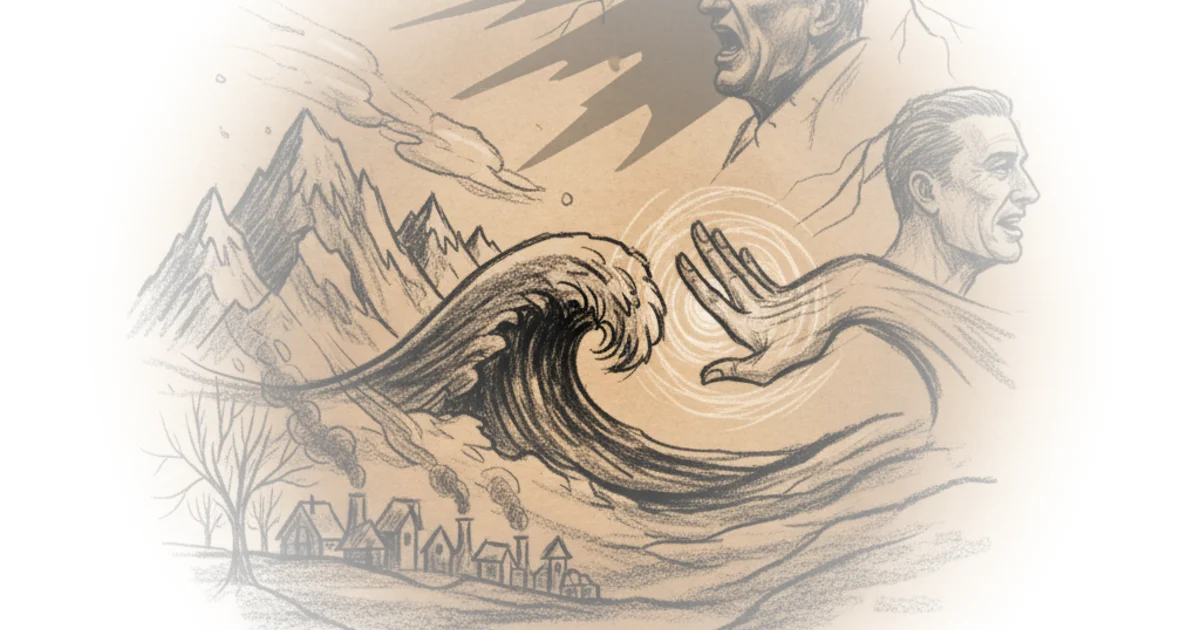
This framing is effective because it moves beyond the usual narrative of "democracy vs. autocracy" to show how populism can evolve. Weiss observes that Magyar is not a liberal reformer but a former insider who defected after a scandal involving the pardon of a sexual abuser. "Magyar is running primarily on an anti-corruption platform," Weiss writes, noting that he "might move Hungary slightly closer to the EU but is unlikely to abandon Orbán's position on migration." This distinction is crucial; it suggests the battle is not about values but about competence and integrity within a shared nationalist framework.
Critics might note that Weiss's reliance on a trip organized by the Hungarian embassy could color her perception of the government's strength, yet her reporting on the ground contradictions—such as the public's frustration with the economy despite recent wage hikes—adds necessary texture. A teacher she interviewed admitted to salary increases but insisted, "In the last 15 years there were so many controversial things that the government said. I believe they stole way more than would be understandable."
After years during which Viktor Orbán has repeatedly made his political opponents look like fools, they had, for once, made a fool out of him.
The Illusion of Invincibility
Weiss then turns to Orbán himself, describing him as a "force to be reckoned with" who remains unflappable during press conferences. Yet, she highlights the cracks in his armor. The prime minister's narrative of protecting Hungary from a "crazy" green energy policy and a "flood of migrants" has been a winning strategy for over a decade. "Hungary's borders are secure," Weiss notes, acknowledging that this success has allowed traditional parties across Europe to shift toward his hardline stance. However, the author points out that this realpolitik comes at a moral cost, particularly regarding Hungary's "apologia for Vladimir Putin."
The piece draws a sharp parallel to the political evolution in Israel, where decades of dominance by Benjamin Netanyahu led to the collapse of traditional progressives and the rise of challengers from within the right. "The dynamic resembles the evolution of politics in Israel," Weiss writes, emphasizing that "there is almost no remaining constituency for liberal or left-wing politics in Hungary." This historical context, touching on Hungary's loss of territory after World War I and its unique identity as a "bulwark of Christendom," deepens the analysis of why Orbán's "connectivity" strategy—playing all sides—has worked for so long.
However, the author admits that Orbán's vulnerability is real. The government's attempt to ban a gay pride march backfired, drawing 100,000 participants, and scandals over missing central bank assets have eroded trust. "Three thousand people live very well because they are close to Orbán's party," a local told Weiss, while the rest struggle. This anecdote underscores the growing disconnect between the elite and the populace, a theme that resonates far beyond Hungary's borders.
The Campaign of Errors
The final section of the piece details how Orbán's campaign has stumbled, most notably with a blunder over a campaign slogan. "A Biztos Választás"—"The Safe Choice"—was the slogan for his kickoff speech, but his staff forgot to register the domain name. "Magyar's team snapped it up and turned BiztosValasztas.hu into an opposition site where you can read about how Fidesz is 'only a safe choice for . . . the corrupt Orbán oligarchs,'" Weiss writes. This moment of irony serves as a microcosm for the broader election: the incumbent is no longer the only safe bet.
Weiss also touches on the international dimension, noting that while the administration in Washington has long supported Orbán as a key ally, the political earthquake of an Orbán defeat would be a significant setback for right-wing populism in the European Union. Yet, even if Magyar wins, the author warns that he faces significant hurdles. "Any Magyar-led government could be more constrained and fragile than the Fidesz-led ones have been," she argues, given his lack of a two-thirds parliamentary majority and his reliance on unconventional tactics like secretly recording conversations with his former wife.
Bottom Line
The strongest part of Weiss's argument is her refusal to categorize the Hungarian opposition as a liberal savior, instead presenting a realistic view of a nationalist challenger who is winning by exposing corruption rather than ideology. The piece's biggest vulnerability lies in its reliance on Orbán's own framing of the election as a choice between war and peace, which may oversimplify the complex economic and social grievances driving the shift. Readers should watch whether Magyar can translate his momentum into a governing coalition capable of dismantling the entrenched power structures that have defined Hungary for the last decade.