Yascha Mounk delivers a rare and necessary corrective to the fatalism surrounding democratic backsliding: the idea that once a nation tilts toward illiberalism, the slide is irreversible. While much of the political commentary focuses on the inevitability of authoritarian consolidation, Mounk points to a stunning reversal in Hungary as proof that even deeply entrenched systems can be undone at the ballot box. This is not just a story about one country; it is a structural analysis of how democracies survive when the rules of the game are rigged against them.
The Anatomy of a Collapse
Mounk begins by dismantling the myth of Viktor Orbán's invincibility. For sixteen years, the Hungarian leader constructed a "huge network of clients whose wealth depended on his goodwill" and positioned himself as the sole protector against shifting enemies, from George Soros to the European Union. The author notes that the strategy relied on a constant state of existential threat, yet the voters eventually demanded a verdict on performance rather than rhetoric. "After many years in office, leaders tend to be judged on their record rather than their rhetoric," Mounk writes, highlighting the stark economic reality where Hungary has fallen from being one of the most affluent Central European nations to the poorest in the European Union.
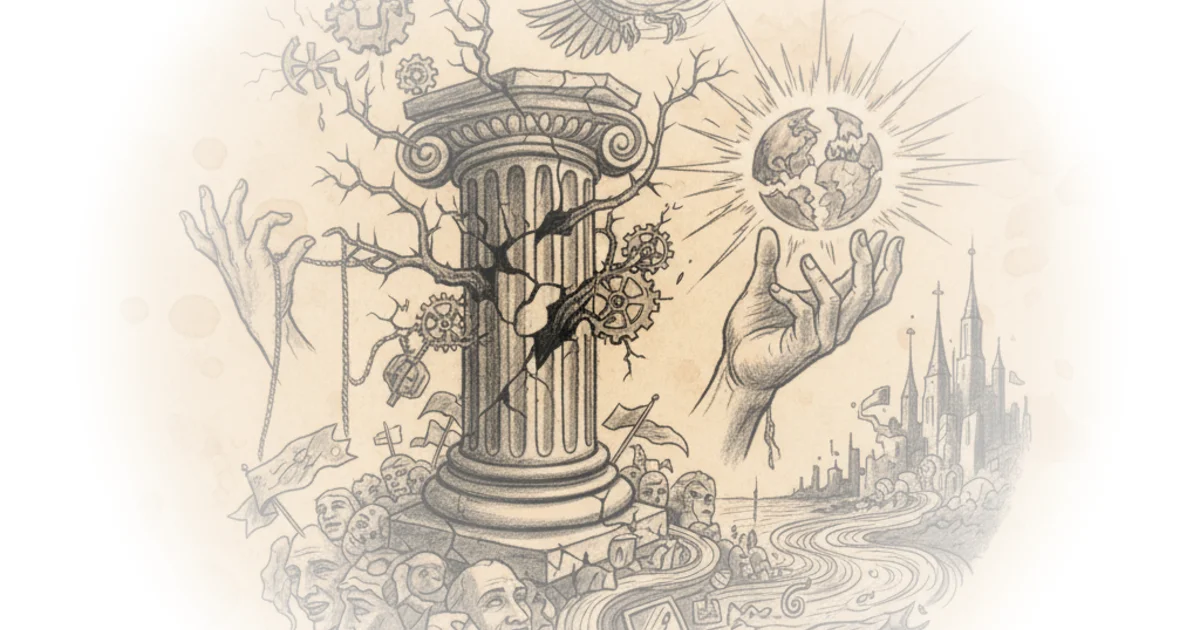
This reframing is crucial. It shifts the narrative from a cultural war to a material one. The corruption was not abstract; it was a daily reality for citizens watching their standard of living fall behind neighbors like Romania and Bulgaria. Mounk effectively argues that the breaking point came when the impunity of the ruling elite began to threaten ordinary lives, specifically citing a presidential pardon for an accomplice in a child sex abuse scandal that triggered a viral backlash. The opposition leader, Péter Magyar, was himself a former loyalist who broke ranks only when the moral rot became undeniable.
"The fight for democracy is a marathon, not a sprint."
Critics might argue that Mounk underestimates the role of chance in this outcome, suggesting that a different scandal or a different economic downturn could have produced a different result. However, the author's focus on the structural fatigue of the regime provides a more durable explanation than mere luck. The victory was not a sudden uprising but the culmination of a slow erosion of the regime's legitimacy, echoing the resilience seen in the 1956 Hungarian Revolution, where the spirit of resistance persisted even after the tanks of the Kremlin crushed the initial reform government.
The Post-Populist Dilemma
The most distinctive contribution of the piece is Mounk's identification of the "post-populist dilemma." Even with a commanding two-thirds majority, the new government faces a paradox. The author explains that Orbán had so thoroughly populated the state with loyalists that the new leadership faces two unpalatable choices: either leave corrupt appointees in place and govern with one hand tied, or purge the administration and risk normalizing the idea that every new leader can fire their predecessor's staff.
"Magyar faces two equally unappetizing choices," Mounk observes, noting that playing by the rules leaves the old guard intact, while breaking them sets a dangerous precedent for future instability. This is a profound insight for observers of American politics, where the fear of a "deep state" purge often paralyzes reformers. The author suggests that the danger is not always a sudden coup, but a gradual entrenchment where the opposition is too divided to effectively govern even after winning.
"Demagogues always try to manipulate political institutions in their own favor. But as Orbán's crushing defeat illustrates, doing so successfully is very hard."
The irony of the electoral system Mounk highlights is particularly sharp. Orbán had rewritten the rules to ensure that the party with the most votes would secure a supermajority of seats. When the voters finally turned, the system backfired spectacularly. Despite winning only about 40 percent of the vote, the opposition secured over two-thirds of the seats, while Orbán's party was reduced to a rump. This serves as a reminder that institutional manipulation is a double-edged sword; "tomorrow's electoral arithmetic turns out to be vastly different from today's."
The Danger of the "Dirty Democracy"
Mounk concludes by warning against binary thinking. The world is not sliding into outright dictatorships overnight, nor are we witnessing a clean return to perfect democracy. Instead, the real risk is the emergence of a "dirty democracy," where incumbents tilt the playing field without completely banning elections. "Most countries are neither perfect democracies nor outright dictatorships; they fall on some point along the messy continuum between the two," he writes.
This framing is essential for a realistic assessment of the current political era. It suggests that the struggle is not about preventing a single catastrophic event, but about managing a long, messy process of institutional decay and repair. The author's call for a "messy model" of democratic rise and fall is a rejection of the simplistic narratives that dominate headlines. It acknowledges that the fate of democracies is determined by choices made over decades, not days.
"Sunday's election was a good day for Hungary and a good day for democracy."
While the outcome in Hungary offers hope, Mounk cautions that the victory is not a final solution. The coalition behind Magyar is diverse and may struggle to agree on governance, and the ideological clarity of the new leader remains to be seen. Yet, the fact that Orbán conceded defeat rather than attempting to rig the election is a significant testament to democratic resilience. It proves that even in a system designed to resist change, the will of the electorate can still prevail.
Bottom Line
Mounk's strongest argument is the rejection of democratic fatalism, proving that even deeply entrenched illiberal regimes can be unseated when economic and moral failures become undeniable. The piece's greatest vulnerability lies in its optimism about the new coalition's ability to navigate the "post-populist dilemma" without destabilizing the very institutions they seek to protect. Readers should watch whether the new Hungarian government can purge the old guard without triggering a constitutional crisis, a test case that will likely define the next decade of democratic resilience globally.