Most economic analysis treats the administration's tariff chaos as a series of random, erratic outbursts. Joeri Schasfoort challenges this view with a provocative claim: the madness is actually a calculated, albeit messy, selection process from competing ideological factions within the executive branch. For busy observers trying to navigate a volatile global market, this shift from viewing policy as 'madness' to viewing it as 'court politics' offers a far more predictive lens on what comes next.
The Flawed Execution of a Grand Plan
Schasfoort begins by admitting a significant error in his previous analysis: he assumed the administration's strategy was a single, coherent "MAGA master plan" driven by key advisers like Scott Bessent and Steven Mnuchin. Instead, he argues the reality is a volatile internal struggle. "My last video about how there was actually a MAGA master plan behind the tariff chaos we've seen so far was wrong because I failed to mention three crucial factors," Schasfoort writes. This admission is crucial; it reframes the narrative from incompetence to a complex, multi-factional power dynamic where the final policy is a hybrid of competing visions.
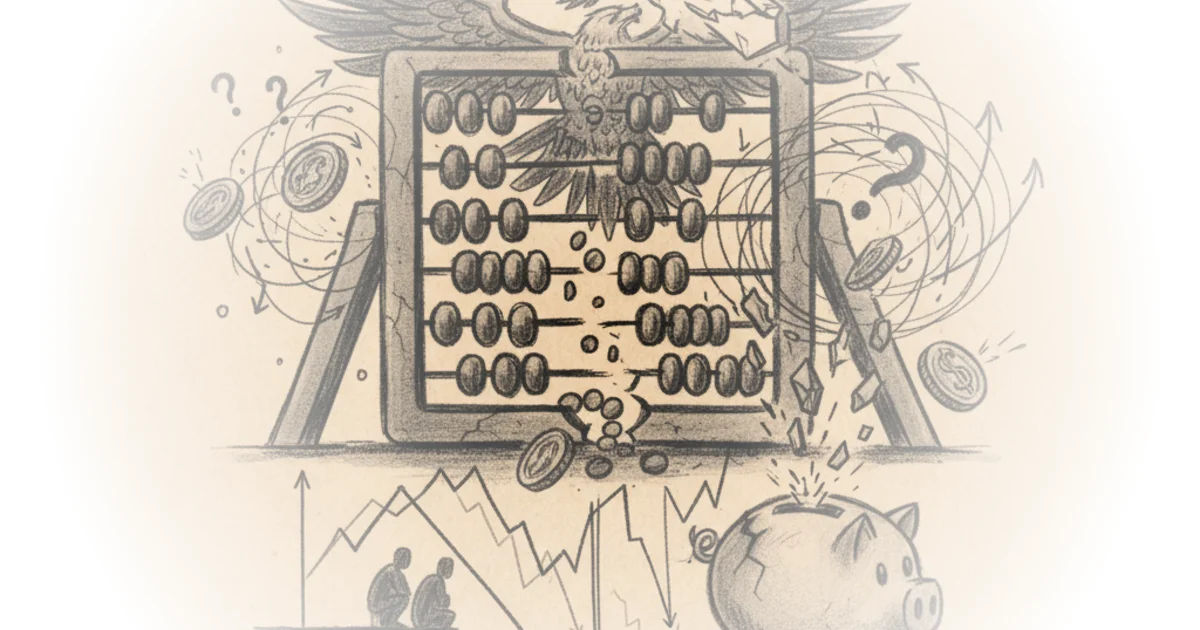
The author points to the bizarre calculation methods used for initial tariffs—such as applying sky-high rates to uninhabited islands—as evidence of poor execution rather than a lack of strategy. "A competent team would have spotted statistical outliers like the uninhabited islands and filtered them out to focus on real trade threats like Vietnam or the European Union," he notes. This distinction is vital for analysts. It suggests that while the intent to re-industrialize is real, the mechanics are being hammered out in real-time, often by advisers with less sophisticated economic models.
"If we want to make sense of Trump's tariff chaos, I think we should not talk about the MAGA master plan, but rather about so what are the MAGA master plans and how do we know which plan is following right now?"
The Four Factions Vying for Influence
The core of Schasfoort's updated framework relies on categorizing the administration's economic advisers into four distinct groups, a taxonomy he derives from journalist Tanner Greer's interviews. He identifies "industrialists" who want full state-led re-industrialization, "technocrats" focused solely on high-tech dominance, "dynamists" who prefer a small state but high-tech focus, and "trade warriors" who favor tariffs as a low-bureaucracy tool. "Advisers from all of these factions have been and still are whispering in Trump's ear," Schasfoort explains. This framing is effective because it moves the discussion away from personality clashes and toward policy substance. It explains why the administration might simultaneously threaten broad tariffs while quietly negotiating specific exemptions.
Critics might note that this model assumes a level of rationality in the selection process that may not exist in a high-pressure political environment. The idea that the president acts as a deliberate "kingmaker" picking the best parts of each plan may overlook the possibility of genuine confusion or contradictory signals. However, Schasfoort counters this by highlighting the president's own admission of strategic unpredictability. "He himself told the Wall Street Journal that he likes to make President Xi think that he is crazy and can do anything," the author writes. This suggests that the apparent chaos is, in part, a deliberate tactic to keep trading partners off-balance.
The Bond Market as the Ultimate Constraint
Perhaps the most significant pivot in Schasfoort's analysis is the introduction of the bond market as the true constraint on policy. While previous analyses focused on manufacturing or stock prices, Schasfoort argues that the administration's retreat from the most extreme tariffs was driven by fear of rising interest rates. "Yippy bond markets meant that the US would need to borrow at an ever-increasing interest rate making government debt unsustainable," he writes. This is a critical insight for investors. It implies that no matter how aggressive the trade rhetoric becomes, the administration's hands are tied by the reality of sovereign debt financing.
This leads to a revised prediction model: the administration will likely shift from pure tariff reliance to a mix of tariffs and subsidies, driven by the influence of the "dynamist" faction which is currently gaining ground. "If this remains the case, we can expect more negotiations and potentially even some alliances forming," Schasfoort concludes. The argument holds weight because it aligns the administration's actions with the hard constraints of global capital markets, a factor that often trumps political ideology.
Bottom Line
Schasfoort's strongest contribution is reframing the administration's trade policy not as a singular, erratic impulse, but as the result of a dynamic competition between four distinct economic schools of thought. However, the argument's biggest vulnerability lies in its assumption that the president consistently selects the most economically sound elements from these plans, rather than the most politically convenient ones. Readers should watch the bond market closely; if yields remain stable, the administration will likely double down on tariffs, but a spike in borrowing costs will force a pivot toward the more nuanced, subsidy-based approach favored by the dynamists.