This isn't just a legal victory for a fringe media outfit; it's a rare, high-stakes clarification of where the First Amendment draws the line between aggressive journalism and tortious fraud. In a landscape where undercover sting operations often blur ethical lines, the D.C. Circuit's decision to set aside a multi-million dollar damages award offers a crucial, if narrow, shield for publishers who rely on truthful information—even when that information was gathered through deception. Reason reports that the court ultimately ruled the "damages award cannot stand" because the plaintiff failed to prove that the unlawful conduct, rather than the protected speech, was the sole cause of his financial ruin.
The Distinction Between Deception and Trespass
The piece dissects a complex 2016 saga involving Project Veritas, where reporters infiltrated political consulting firms using elaborate false identities. The court's logic hinges on a critical distinction: while entering a private office under false pretenses is fraud, standing in a public bar and recording a conversation is not. Reason notes that the court agreed with the plaintiff, Bob Creamer, that "Maass obtained that footage by subterfuge and the jury found that her conduct amounted to fraud." Consequently, the court acknowledged that the First Amendment does not protect the specific segments of the video showing the reporter inside Democracy Partners.
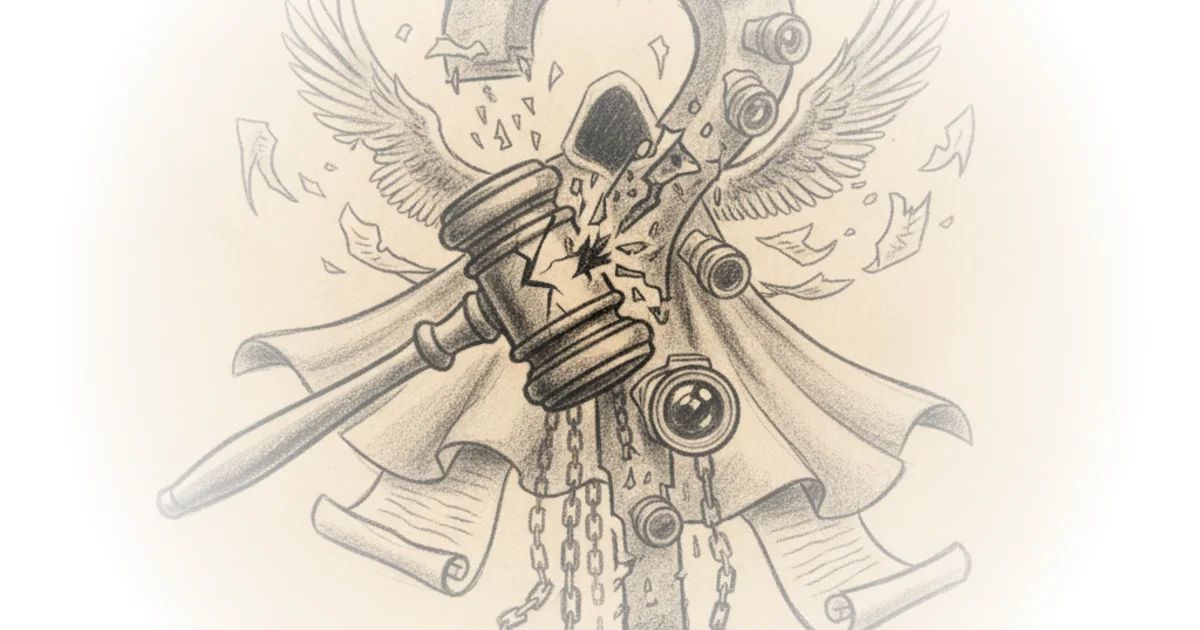
However, the argument takes a sharp turn when addressing the bulk of the footage. The piece highlights that most of the damaging content came from public interactions with another consultant, Scott Foval. "There was no eavesdropping on a private conversation; the [Project Veritas reporters] recorded their own conversations with [Foval]," the court found. This distinction is vital because it separates the method of gathering news from the act of publishing it. The court reasoned that even if the reporters lied to get the meeting, the public nature of the bar meant no established rights were invaded during those specific recordings.
The First Amendment does not require a journalist "to wear kid gloves," but a press badge is not a license to break the law.
This framing effectively isolates the legal liability. By admitting the fraud in the office infiltration while protecting the public bar conversations, the court avoids a broad ruling that would either criminalize undercover reporting or grant immunity to all journalistic misconduct. Critics might argue that this creates a confusing precedent where the legality of a broadcast depends on the specific location of a recording, potentially chilling investigative work that requires access to private spaces. Yet, the court's refusal to let the fraud taint the entire publication suggests a robust defense of the public's right to know, provided the core information wasn't stolen.
The Causation Problem
The most striking part of the coverage is how the court dismantled the link between the fraud and the damages. The plaintiff, Creamer, lost major contracts with the American Federation of State, County and Municipal Employees (AFSCME) and Americans United for Change (AUFC) after the video went viral. Reason reports that the court found the "video in itself" was the "critical factor" driving these cancellations, not the specific footage of the reporter inside the office.
AFSCME's government affairs director testified that the "optics of the video" and the timing just before a presidential election created a "sense of scandal" that the union could not ignore. The court applied a strict standard from NAACP v. Claiborne Hardware Co. (1982), requiring the plaintiff to prove that the unprotected conduct was the "sole, pervasive, or dominant force" behind the harm. The piece argues that since the scandalous narrative was driven largely by the public bar recordings, the fraud was merely a "contributing factor," not the proximate cause.
Because the vast share of the video's contents was lawfully obtained—and any injury caused by this content was to Creamer's reputation—the First Amendment prohibited Creamer from recovering damages "caused by [its] publication."
This is a profound limitation on tort law in the age of viral media. It suggests that if a story is newsworthy and mostly truthful, a plaintiff cannot recover damages simply because a small, illegal part of the reporting process was included. The court essentially ruled that the "scandalizing news story" was protected speech, and the financial fallout was a consequence of that speech, not the fraud. A counterargument worth considering is whether this incentivizes media organizations to include minor illegal acts in their reporting, banking on the fact that the public will focus on the sensational narrative rather than the technical illegality of the acquisition.
The Dissent and the Path Forward
The coverage also highlights a nuanced partial dissent by Judge Robert Wilkins, who argued that while the damages should be reduced, the liability for fraud should remain. Wilkins suggested remitting the award to a nominal amount rather than setting it aside entirely, a move that would have affirmed the tortious nature of the infiltration without fully shielding the publisher from the consequences of their actions. Reason notes that the majority rejected this, prioritizing the First Amendment's protection of the publication over the strict application of state tort law.
This decision echoes the historical context of Project Veritas's operations, which have long relied on the tension between the public's right to know and the privacy rights of the subjects. As the piece observes, the court's ruling ensures that "no matter how newsworthy the story, published information must always 'have been lawfully acquired,'" but it simultaneously clarifies that the definition of "lawfully acquired" is far more forgiving for public interactions than for private intrusions.
The cleanest way for AFSCME to separate itself from the story unfolding around the video was to fire Creamer.
Bottom Line
The strongest part of this argument is its refusal to let a technical violation of trespass or fraud nullify the public interest value of a largely truthful investigation. The biggest vulnerability lies in the difficulty of separating the "fruit of the poisonous tree" in a viral media environment where context is often lost. Readers should watch for how lower courts apply this "sole cause" standard in future cases where illegal gathering methods are inextricably linked to the public's reaction to the story.