Brad DeLong does something rare in financial journalism: he treats obscure market jargon not as a barrier to entry, but as a diagnostic tool for understanding global instability. While most coverage of the current oil shock focuses on geopolitical headlines, DeLong argues that the real story is hidden in the shape of the futures curve itself. He posits that the market is screaming a specific message about scarcity that standard economic models often miss: "Today's oil curve is screaming 'shortage now, maybe relief later' the intertemporal price system and debt interest textbook forces are still there, but layered under a very specific, very acute scarcity in one crucial input." This distinction is vital for busy readers trying to separate noise from signal in a volatile economy.
The Anatomy of a Price Spike
DeLong begins by dismantling the mystique surrounding terms like "contango" and "backwardation," which he notes sound like "Hogwarts houses" to the uninitiated. In reality, these are precise descriptions of how the market values goods over time. He explains that in a stable, growing economy, the default state is "mild contango," where future prices are higher than current prices to account for the cost of storage and interest. "In a tranquil, growing economy with normal storage, you'd expect mild contango: futures above spot, reflecting interest and carry costs."
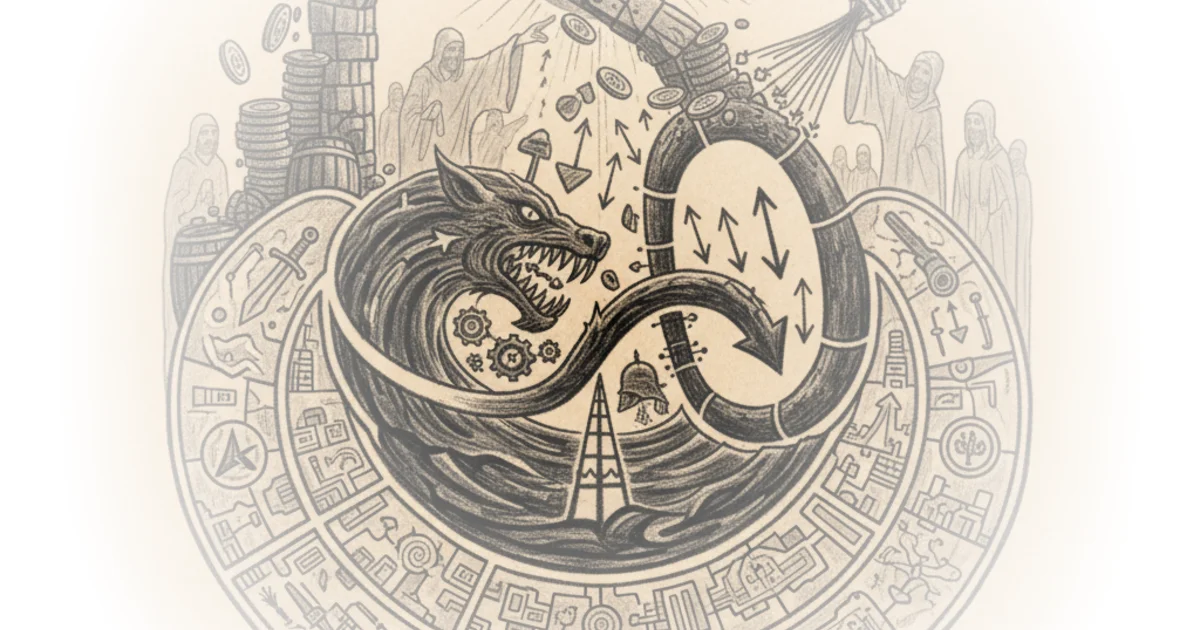
However, the current situation has flipped this script. The author points out that the "convenience yield"—the premium paid for having physical barrels immediately rather than waiting—has exploded due to war and infrastructure damage. "The 'convenience yield' on physical barrels right now—amid war and damaged infrastructure—has exploded." This is where the argument gains its teeth. DeLong suggests that when this yield exceeds the cost of carrying inventory, the curve inverts into backwardation. This isn't just a trading anomaly; it is a market-wide admission that the immediate utility of oil is vastly higher than its future utility.
The immediate benefit of owning the physical commodity ('I really need barrels in my tanks now') is so large that it overwhelms interest and storage.
Critics might argue that focusing on the futures curve ignores the broader macroeconomic policy responses that could dampen demand, but DeLong's point is that the physical constraint is so severe that policy levers may be too slow to react. The market is pricing in a reality where supply cannot be easily restored, regardless of interest rate adjustments.
Historical Context and the Layers of Price
To ground this analysis, DeLong weaves in a fascinating historical thread, tracing "contango" back to a 19th-century London Stock Exchange fee for carrying positions forward. He notes that the term "began life as a jokey 19th-century fee on the London Stock Exchange; now it's half of the core vocabulary for thinking about commodity futures." This etymological deep dive serves a practical purpose: it reminds readers that these market mechanics are human constructs, evolved to manage risk, not immutable laws of nature.
He structures the economy as three stacked layers: the baseline of growth and interest rates, the layer of debt and discounting, and finally, the commodity futures layer where backwardation and contango reside. "Think of three stacked layers: The pure intertemporal price system... Debt and discounting... Commodity futures... sitting on top, with storage and 'convenience yield.'" This framework helps the reader understand why a spike in oil prices doesn't necessarily mean the entire economy is collapsing, but rather that a specific input is facing a transitory but intense shock. The "backwardation" is a localized violation of the rule that future goods should be cheaper, driven by the fear that the supply chain is broken right now.
The Disconnect Between Debt and Commodities
A crucial part of DeLong's commentary is the distinction between the general cost of money and the specific cost of oil. He argues that debt markets price claims on broad consumption baskets, while oil futures price a specific physical good. "Debt markets are pricing claims on broad consumption baskets, not barrels of Brent in Cushing or Rotterdam." This separation explains why interest rates might be rising or falling based on general growth expectations, while oil prices skyrocket due to a "convenience yield" spike.
He clarifies that even in a high-interest-rate environment, which usually encourages contango (because holding inventory is expensive), the market can still be in deep backwardation if the fear of shortage is high enough. "Even deep backwardation only says that for this particular storable good, the short-run scarcity premium dwarfs the standard carry terms implied by interest rates and storage." This nuance is often lost in headlines that conflate inflation with interest rate hikes. The current "freaking-out" in the oil market is a signal that the physical world is out of sync with the financial world's expectations of smooth delivery.
Backwardation is a localized violation of the 'future is cheaper' rule, for a specific slice of the consumption bundle, driven by a transitory but intense scarcity shock.
Bottom Line
Brad DeLong's strongest contribution here is reframing the oil crisis not as a simple supply-demand imbalance, but as a structural breakdown in the "convenience yield" that usually keeps markets stable. The argument is robust because it relies on the mathematical reality of futures curves rather than speculative political narratives. However, the analysis assumes that the scarcity is purely physical and temporary; if the damage to infrastructure proves permanent, the market may not simply revert to contango, but settle into a new, permanently higher price equilibrium. Readers should watch whether the "prompt spread" remains elevated, as that will indicate if the scarcity is a fleeting shock or a new normal.