Most analyses of Iran focus on the geopolitical chessboard, but Economics Explained flips the script to reveal a tragic domestic irony: the world's third-largest oil holder cannot keep its own lights on. The author argues that Iran's economic collapse isn't just a punishment from the outside world, but a self-inflicted wound of policy choices that prioritize regime survival over citizen welfare. For the busy listener trying to understand why a superpower in resources remains a pariah in prosperity, this piece cuts through the noise of nuclear headlines to expose the rotting infrastructure beneath.
The Paradox of Plenty
Economics Explained begins by dismantling the assumption that resource wealth guarantees success. "Iran is simultaneously one of the most powerful and vulnerable economies in the world," the author notes, highlighting the disconnect between its strategic location and its economic reality. The piece points out that while neighbors like the UAE and Saudi Arabia leverage their oil for massive GDP growth, Iran sits in the shadow of its own potential. "With an average GDP per capita 10 times higher than Iran's, they at least have the wealth to pretend those problems don't exist," the author writes, a sharp observation that underscores the human cost of Iran's stagnation.
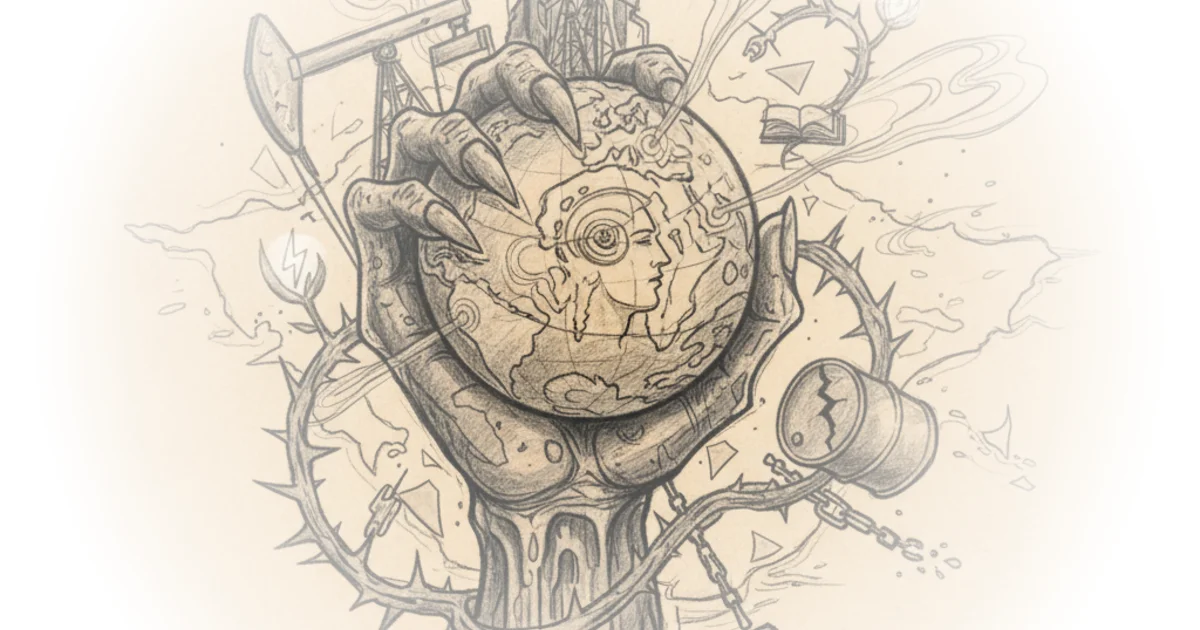
The commentary here is effective because it refuses to treat sanctions as the sole villain. Instead, it frames the situation as a "real shame because the country has immense potential to not only massively improve the lives of its citizens, but also the rest of the world." This reframing forces the reader to consider that Iran's leaders are trapped in a cycle where economic reform threatens their political grip. Critics might argue that this downplays the suffocating nature of forty-five years of sanctions, which effectively blacklist a nation from global finance regardless of its internal policies. However, the author's distinction between external pressure and internal mismanagement provides a necessary nuance often missing from mainstream coverage.
The Energy Trap
The core of the argument shifts to the absurdity of an energy-rich nation suffering from blackouts. "Iran is arguably the most energy abundant country on the planet," Economics Explained states, citing its massive reserves of oil and natural gas. Yet, the author reveals a grim reality: "The country may have the greatest energy potentials on the planet, but as any disappointed parent will say, potentials aren't always lived up to." The text explains that while the grid is aging and infrastructure is mishandled, the government's solution—subsidizing energy to near-zero costs—has created a perverse incentive structure.
The author illustrates this inefficiency with a striking data point: "Iran uses more energy per capita than Denmark, but yet produces about a fifth of the output." This correlation, or lack thereof, is the piece's smoking gun. It suggests that cheap energy has not fueled industry but has instead fueled waste and a booming black market. "One of the biggest cottage industries to develop in Iran has been the previously mentioned cryptocurrency mining," the author explains, noting how unofficial operators exploit subsidized power to bypass sanctions. This section is particularly compelling because it connects abstract economic policy to tangible, daily frustrations like rolling blackouts and air pollution from poor-quality gasoline.
When something is almost free, people don't value it as much, which means there has historically been few incentives to make energy usage more efficient.
The author also tackles the currency distortion that makes Iran's subsidized gasoline seem cheap on paper but expensive in reality. "The true price of gasoline within Iran is more like 5 cents per liter or 17 cents per gallon," the author calculates after adjusting for the massive gap between official and black-market exchange rates. This leads to a bizarre outcome where "potentially the most lucrative and effective oil business in the most energy rich country on Earth is the people trucking the stuff over the border in 44 gallon drums." The imagery of citizens smuggling fuel to neighbors who can't afford it is a powerful indictment of a system that prioritizes political optics over economic logic.
The Sanctions Web
Finally, the piece addresses the external constraints that make fixing these internal problems nearly impossible. Economics Explained writes, "Trading directly with a country outside of very narrow exceptions is enough to get individuals, companies, and even entire national economies blacklisted from global trade and finance." The author acknowledges that while the US "still largely calls the shots when it comes to who gets to play in the global economy," the situation is a complex web of incentives rather than a simple blockade.
The argument suggests that even if sanctions were lifted, the internal machinery of the Iranian economy is too corroded to instantly recover. "It can't improve its economy without radically rethinking the way it operates, and its leaders can't change the way that it operates without potentially losing their failing grip on power." This creates a deadlock where the status quo, however painful, is the only option that keeps the current leadership in place. While the author admits that "nobody can predict" the future following recent military escalations, the economic analysis remains grounded in the long-term structural failures that predate any single conflict.
Bottom Line
Economics Explained delivers a sobering verdict: Iran's economic dilemma is a self-reinforcing loop where political survival necessitates economic inefficiency. The piece's strongest asset is its ability to humanize macroeconomic data, showing how subsidies and sanctions translate into blackouts and smuggling rings. Its biggest vulnerability is the difficulty of imagining a path forward, as the author admits that the leadership has no incentive to break the cycle. Readers should watch for how Iran's internal energy crisis might eventually force a reckoning that external pressure alone cannot achieve.