Spencer Nitkey - Writer doesn't just imagine a future of augmented vision; they expose the terrifying fragility of human memory when forced into a machine. In a genre often obsessed with the hardware of superpowers, this piece pivots sharply to the software of grief, arguing that the hardest engineering challenge isn't seeing the dead, but ensuring the living don't lose themselves in the reconstruction. It is a rare narrative that treats neural interfaces not as tools of productivity, but as vessels for our most dangerous emotional vulnerabilities.
The Architecture of Grief
The story opens with a narrator who builds eyes for commercial divers and geologists, capable of filtering silt or visualizing magnetic fields. Yet, when a client named April asks to "see the dead," the narrator stumbles, admitting, "I-I'm sorry. I think that's out of my area of expertise." This admission sets the stage for a profound distinction: while we have mastered the translation of physical phenomena into light, we have not mastered the translation of loss into vision. Spencer Nitkey - Writer writes, "If Newton couldn't crack the afterlife, neither can I," grounding the sci-fi premise in a historical humility that feels surprisingly grounded.
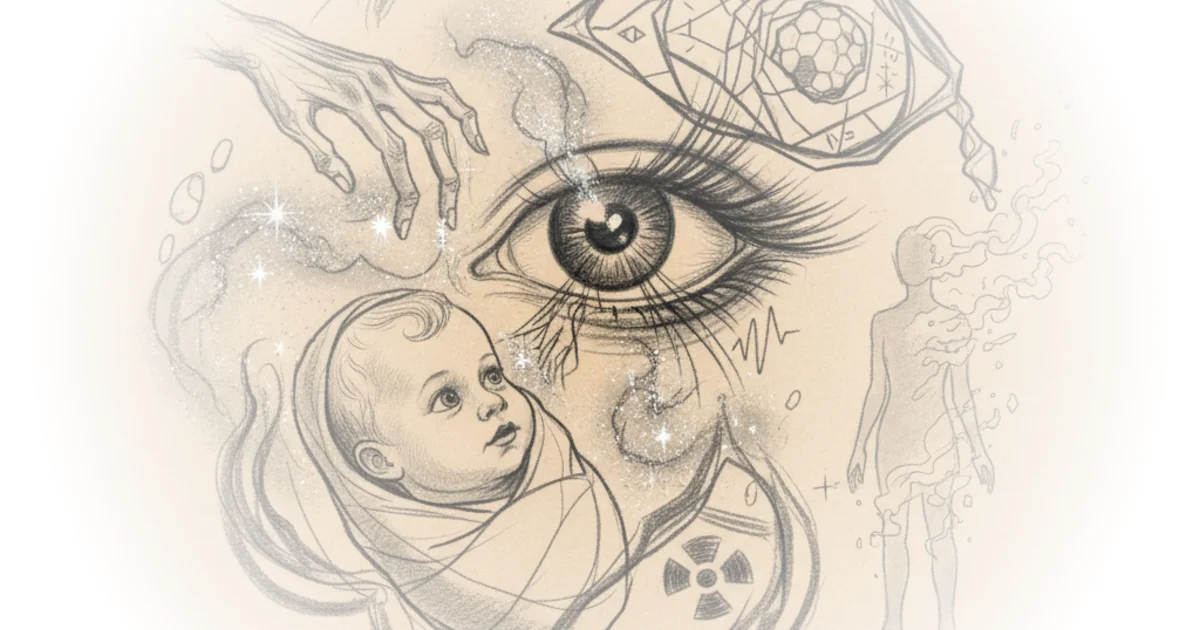
The narrative acknowledges that natural human photoreception is limited to a narrow 380-750 nanometer range. The author contrasts this biological constraint with the potential of modern implants, noting that fifty years ago, the best visual-cortical devices could only produce "about two or three hundred phosphenes, those little squiggles of light that come when you rub your eyes." Today, the technology has leaped forward, yet the emotional requirement remains the bottleneck. The narrator explains that April's request involves more than just a retinal implant; it requires a system to "translate her memories of him into visual information, integrate that with her real-time optical field, and project that seamlessly back to her brain." This reframes the technology from a simple upgrade to a complex psychological intervention.
"People don't want to see their loved ones as they actually were; they want to see them as they prefer to remember them. There's a surprisingly high delta between those two things."
This observation by the character Aux, a specialist in "imagination tech," is the piece's intellectual anchor. It suggests that the failure of early digital resurrection projects in the 2030s wasn't technical, but philosophical. They were "overfitted to physical reality, rather than people's emotional one," turning what should have been memorials into "another type of deepfake." The author uses this to critique a broader trend in AI development: the assumption that accuracy equals value. In the realm of grief, accuracy might be the enemy of comfort.
The Danger of Affective Tagging
The technical process described is meticulous, involving "biodegradable neural motes" that record neuron-level activity without invasive surgery. The team uses sensory triggers—like the smell of apricot marmalade—to unlock richer data, a technique that mirrors real-world memory research where sensory cues often bypass the brain's logical filters. However, the story takes a dark turn when the system is tested. The narrator describes a "phantom cortex" simulation where the reconstructed image of April's husband, Cline, begins to degrade.
Spencer Nitkey - Writer writes, "Her husband's face smeared into a Dali, suddenly donning her grandmother's glasses. Dozens of screaming mouths popped into view, then out again." This moment of failure is not a glitch in the code, but a glitch in the human psyche. The system, designed to retrieve memories tied to a "spike of loss," inadvertently pulls in traumatic associations that the conscious mind has suppressed. As Aux grimly notes, "This is an issue with the affective tagging," revealing that the machine cannot distinguish between the memory of a loved one and the memory of the pain caused by their absence.
Critics might note that the story glosses over the ethical implications of implanting such a device in a vulnerable, grieving person, treating the potential for psychological harm as a mere engineering hurdle to be solved. Yet, the narrative's refusal to offer a clean resolution is its greatest strength. It refuses to let the technology solve the human problem it was meant to address.
The historical context of the visible spectrum and retinal implants adds a layer of depth here. Just as early retinal implants struggled to move beyond simple light detection to complex image formation, this story suggests that our ability to "see" the past is equally primitive. The concept of the phosphene—the artificial light generated by electrical stimulation—becomes a metaphor for the fleeting, often distorted nature of memory itself.
"The illusion that these digital ghosts were workable replacements for their loved ones quickly evaporated."
This line serves as a warning against the seduction of technological solutions to existential problems. The author argues that while we can build the hardware to project an image, we cannot build the software to manage the emotional weight of that projection. The system's failure to separate the "fuzzy haze of remembrance" from the raw data of trauma highlights a fundamental limitation: the brain is not a hard drive; it is a dynamic, often unreliable, interpreter of experience.
Bottom Line
Spencer Nitkey - Writer delivers a haunting critique of the "solve everything" mentality in tech, proving that the most complex algorithms cannot fix the broken logic of human grief. The piece's greatest vulnerability is its reliance on a fictional technology that may never exist, yet its emotional truth is undeniable: we are not ready to see the dead because we are not ready to face the complexity of our own memories. The strongest takeaway is a cautionary one—that in our rush to augment our senses, we may inadvertently amplify our deepest wounds.