Devin Stone cuts through the sensationalism of the "Tiger King" phenomenon to expose a stark legal reality: while the documentary frames a battle of personalities, the federal justice system has already rendered a verdict based on concrete evidence. Stone argues that the true story isn't about who is the "worst person" in the room, but rather who successfully navigated the narrow path between civil disputes and federal felonies. This analysis is essential for busy readers who want to understand the mechanics of the law beneath the pop-culture noise, distinguishing between narrative convenience and prosecutorial strategy.
The Limits of the Narrative
Stone immediately addresses the elephant in the room: the murder allegations surrounding Carol Baskin. He refuses to speculate on her guilt, noting that the documentary is inherently flawed for legal analysis because it lacks opposing counsel. "I don't know that anyone can really opine on this," Stone writes, emphasizing that the film is "a one-sided documentary with an agenda" designed to create a binary of good and bad guys rather than a factual record. He points out that the film omits critical context regarding Joe Exotic's medical history and the complex conservatorship battles that preceded the events shown.
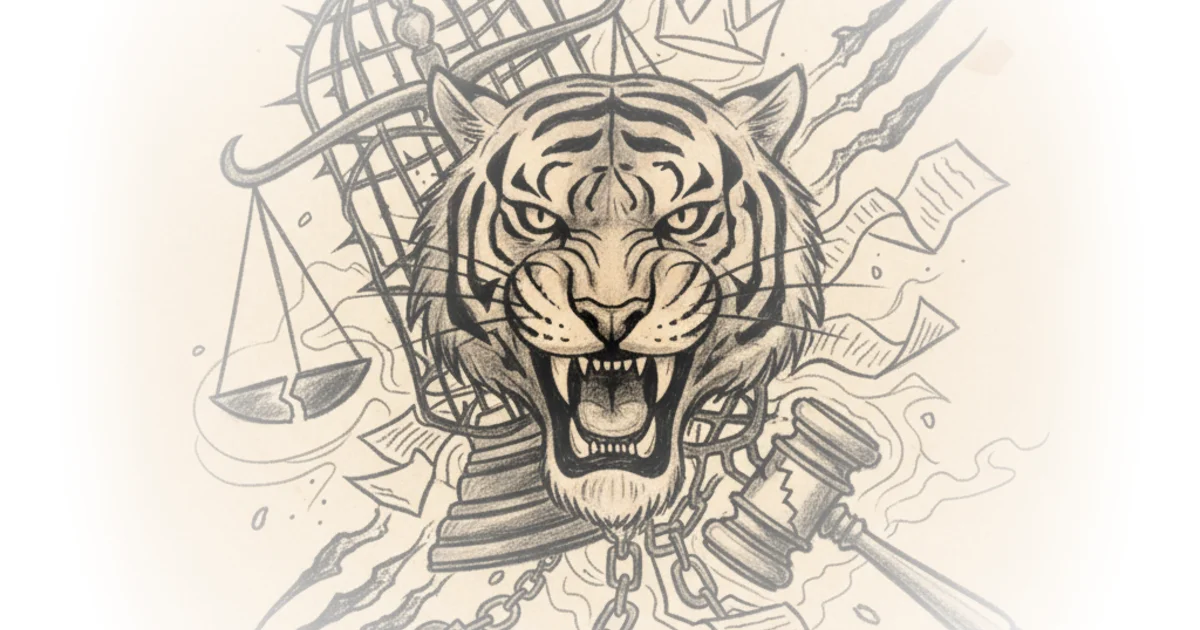
This refusal to play the armchair detective is the piece's most disciplined move. By highlighting that the documentary "needs to have equal parties opposing each other for narrative purposes," Stone exposes the structural dishonesty of the source material. Critics might argue that the sheer volume of public information allows for reasonable inference, but Stone correctly identifies that without access to the full discovery file, any judgment on Baskin is legally premature. He directs readers to Baskin's own rebuttal on her website, urging them to "judge for yourself" rather than accepting the film's curated reality.
"Between Joe and Carol Baskin only one of those people is in federal prison and with a potentially life sentence to serve out so you know take that as you will and you decide who deserves the benefit of the doubt."
The Fatal Error of Recording Counsel
The commentary shifts to a critical procedural failure that likely sealed Joe Exotic's fate: the decision to record his attorney. Stone treats this not as a dramatic plot point, but as a catastrophic legal error. "Do not record your lawyer without permission I cannot emphasize that highly enough," he states, explaining that such an act waives attorney-client privilege. By introducing a third party (the recording device) into a confidential conversation, the protection of those discussions evaporates, allowing prosecutors to access private strategic planning.
Stone goes further, noting that if the lawyer was indeed suggesting arson, the conversation falls outside privilege entirely. "There is no attorney-client privilege is going to attach when you actively suggest to a client that they go out and commit a crime," he argues. This distinction is vital; it transforms the footage from a protected legal consultation into potential evidence of conspiracy. The documentary presents this as a moment of tension, but Stone frames it as the moment the defense collapsed. The implication that the lawyer suggested arson is damning, yet Stone wisely notes that the footage is "pretty chopped up," meaning the full context of the conversation remains ambiguous.
Arson and the Illusion of Ownership
The analysis of the arson charges reveals the danger of assuming one owns their own property rights absolutely. Stone clarifies that burning down one's own building is still a crime if it endangers others. "If one sets fire to their own property intentionally that still qualifies as arson so you can't just go around torching your own stuff," he explains, citing the risk of "negative externalities" like spreading fire to neighboring enclosures. This reframes the act from a desperate business decision to a public safety violation.
Stone's point here is that the law does not care about the owner's intent to destroy their own asset; it cares about the collateral damage. The documentary portrays the fire as a mystery, but Stone points to the "definite motives" and the clear physical evidence of a set fire. This section effectively dismantles the idea that the fire was an accident or a victimless crime, grounding the federal charges in tangible harm rather than just the chaos of the zoo's management.
Harassment, Threats, and the First Amendment
Turning to the allegations against Dr. Bhagavan Antal, Stone dissects the potential for sexual harassment claims, distinguishing between quid pro quo and hostile work environment. He notes that pressuring employees for plastic surgery or controlling their diet could constitute a hostile environment. "If you are pressuring women to have plastic surgery that could certainly give rise to a hostile work environment," Stone writes, connecting the cult-like behavior to specific legal theories.
The commentary also tackles the limits of the First Amendment regarding threats. When discussing Dawn's attempt to get a restraining order against Joe, Stone clarifies that free speech does not protect "true threats." "We punish speech after the fact instead of getting restraining orders ahead of time... it's very half right," he corrects, explaining that in Florida, a credible threat of violence is sufficient for an injunction without an actual act of physical abuse. This nuance is often lost in public discourse, where people assume that unless someone has been hit, they cannot be restrained. Stone's clarification that a "true threat" is not protected speech provides a necessary legal framework for understanding why certain behaviors, even if verbal, carry criminal weight.
Fraudulent Transfers and the Vegas Gamble
Finally, Stone examines the financial maneuvers of Jeff Lowe, questioning whether his investment was a legitimate business move or a fraudulent transfer to hide assets. While the transfer to Joe's mother was an admitted fraud, Stone suggests Lowe's investment might be "more bonafide" because he actually made a material investment and ran the zoo. "It's not impossible to invest in distressed assets like this without it being a fraudulent transfer," he notes, offering a more charitable reading of Lowe's initial actions.
However, the veneer of legitimacy crumbles when looking at Lowe's Vegas operations. Stone highlights that Lowe faced charges for doing business without a license and failing to obtain permits for wild animals. "I can't imagine why adding big cats to a shuttle service for drunk Vegas tourists wouldn't work out," he quips, but the underlying point is serious: the operation was rife with regulatory violations. Furthermore, Stone notes that Lowe pleaded guilty to mail and wire fraud, cementing the pattern of illegal financial behavior. This section serves as a reminder that in the world of exotic animal ownership, the business model is often as criminal as the animal trafficking itself.
"The documentary needs to have equal parties opposing each other for narrative purposes... you need to have a good guy and a bad guy or a bad guy and another bad guy of relatively equal power."
Bottom Line
Devin Stone's analysis succeeds by stripping away the reality TV gloss to reveal the rigid, unforgiving architecture of federal law. His strongest argument is the distinction between the documentary's narrative needs and the evidentiary standards required for conviction, particularly regarding the waiver of privilege through unauthorized recording. The piece's biggest vulnerability is its reliance on the incomplete public record, but Stone navigates this by consistently deferring judgment where facts are missing. For the reader, the takeaway is clear: in the legal world, the most dangerous thing you can do is trust the narrative over the statute.