Matt Stoller exposes a scandal where corporate greed didn't just bend the rules—it shattered them with a laugh. While economists dismissed soaring egg prices as an inevitable "act of God," the evidence reveals a coordinated effort by industry titans to rig the market, turning a public health crisis into a private windfall.
The Alibi of Supply and Demand
Stoller begins by dismantling the prevailing narrative that dominated elite discourse during the 2022-2025 period. He notes that while consumers watched prices skyrocket, industry executives and prominent economists insisted there was no conspiracy, only a natural supply shock from avian flu. "Economists chortled at the notion of a conspiracy," Stoller writes, highlighting how figures like Jason Furman argued that price gouging policies would actually harm the economy by discouraging new market entrants.
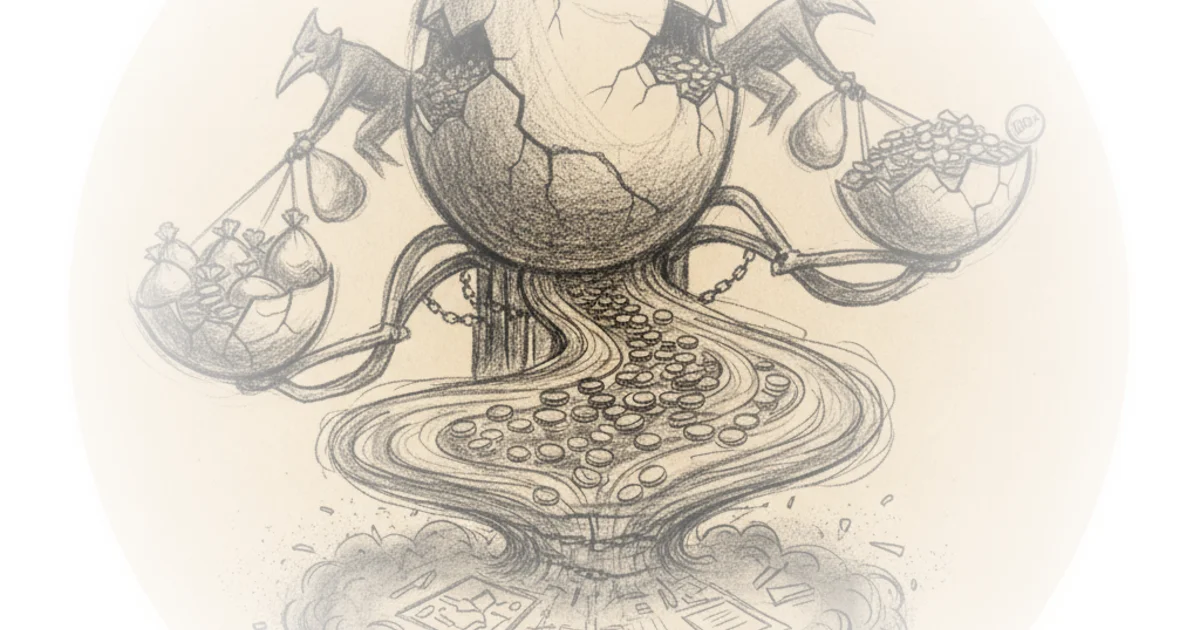
This framing is crucial because it shows how powerful institutions can weaponize economic theory to dismiss legitimate public anger. The argument relies on the assumption that markets are self-correcting and transparent, yet Stoller reveals a system designed to be opaque. He points out that when prices finally dropped in 2025, pundits declared victory for free-market forces, calling theories of manipulation "slopulism." But as Stoller notes, this confidence was misplaced: "Price action seemed to confirm Furman's view... And these price declines suggested that supply and demand were doing their magical work."
The reality, however, was far more cynical. The drop in prices wasn't a natural correction; it was a direct response to the threat of legal exposure. When the Department of Justice began investigating, the alleged collusion stopped immediately. Stoller observes, "To understand what they were doing, we have to start with how egg prices are set," explaining that the entire industry relies on a tiny, manipulable benchmark known as Urner Barry pricing.
Rigging the Benchmark
The mechanics of the alleged scam are where Stoller's reporting shines. He details how three major producers—Cal-Maine, Versova, and Hickman's Egg Ranch—colluded to inflate prices on a small electronic exchange called the Egg Clearinghouse. This tiny market sets the price for billions of dollars in wholesale contracts. By flooding this small market with fake bids, they tricked the pricing index into reporting artificially high prices.
Stoller highlights the brazenness of the communication between executives. He quotes a text message from one CEO to another: "[a]s a group we need to bid like they vote in Chicago, early and often." This line is particularly striking because it reveals not just criminal intent, but a casual, almost festive attitude toward breaking the law. It suggests that for these executives, rigging the market was a game.
The evidence includes specific instructions to "light up the northwest bids please .02 over," followed by immediate deletion of those bids once they served their purpose of inflating the index. Stoller writes, "What I like about that quote isn't just that it's evidence of collusion, it's actually a joke premised on rigging the market the way machine politicians rig elections." This comparison effectively bridges the gap between corporate crime and political corruption, suggesting a shared playbook of manipulation.
The scale of this operation was massive. Stoller notes that Cal-Maine alone saw profits triple in 2023 and reach $1.8 billion in 2024. He cites his colleague Basel Musharbash to emphasize the absurdity: "All of this extra profit is coming from higher selling prices, which have been earning Cal-Maine unprecedented 70-145 percent margins over farm production costs per dozen." This context connects to broader discussions on market concentration; just as the LIBOR scandal showed how banks could rig global interest rates, this case shows how a few firms can rig a staple food commodity.
Crime pays: The egg bandits made a thousand times the fine they just paid for price fixing.
Critics might argue that without criminal charges, it is impossible to prove intent beyond a reasonable doubt. However, Stoller counters that the sheer volume of internal communications—emails and texts explicitly discussing how to manipulate the index—makes the denial of wrongdoing legally convenient but factually thin. The settlement allows these companies to admit no guilt, effectively shielding them from future civil suits by victims.
A Settlement That Rewards Crime
The conclusion Stoller draws regarding the legal outcome is scathing. The three producers agreed to pay a total of $3 million in penalties and donate 53 million eggs to food banks. While donating eggs sounds generous, Stoller points out the math: Cal-Maine made over $1 billion in extra profit due to this scheme. "That means they are out $3 million, for a scheme that netted them more than $3 billion," he writes. "That's a thousand-fold return."
This is the core of Stoller's argument: the current antitrust enforcement framework treats massive corporate fraud as a minor administrative fee. By accepting a "no-admit/no-deny" settlement, the DOJ and state attorneys general have essentially validated the cost-benefit analysis of the conspirators. As Stoller puts it, "Restaurants and consumers who paid for eggs are out of luck. And the alleged conspirators are released from all claims."
He also touches on the political dynamics, noting that while the Trump administration's broader record on consolidation is poor, this specific case shows that antitrust tools can still work when threatened with exposure. "Even so, when egg producers were threatened with legal consequences and exposure, they lowered prices," Stoller observes. Yet he laments that the response was too weak to deter future crimes. The settlement serves as a reminder that without criminal liability or meaningful civil damages, price-fixing remains a highly profitable business strategy.
Bottom Line
Matt Stoller delivers a damning indictment of both corporate malfeasance and regulatory failure, proving that the "invisible hand" can be manually manipulated by those with enough market power. The strongest part of his argument is the irrefutable evidence of collusion hidden in plain sight within executive communications. However, the piece's most troubling takeaway is the settlement itself: it confirms that for today's corporate giants, breaking antitrust laws is simply a line item on the balance sheet, not a deterrent.