Economics Explained strips away the moral panic surrounding climate change to ask a brutally pragmatic question: even if we ignore the polar bears and the wildfires, does saving the planet actually make financial sense? The answer, buried under layers of geopolitical tension and short-term thinking, is a resounding yes—but only if we stop treating energy security, abundance, and green transition as a zero-sum game.
The Energy Trilemma
The piece opens by identifying a fundamental tension that defines modern economics. "Economies have always and will always run on energy," the author notes, establishing that prosperity is inextricably linked to cheap, secure, and increasingly green power. The problem is that most nations are failing to achieve even one of these goals, let alone all three. The global price of energy has nearly tripled since 2000, and the attempt to balance these opposing objectives has created tangible economic pain.
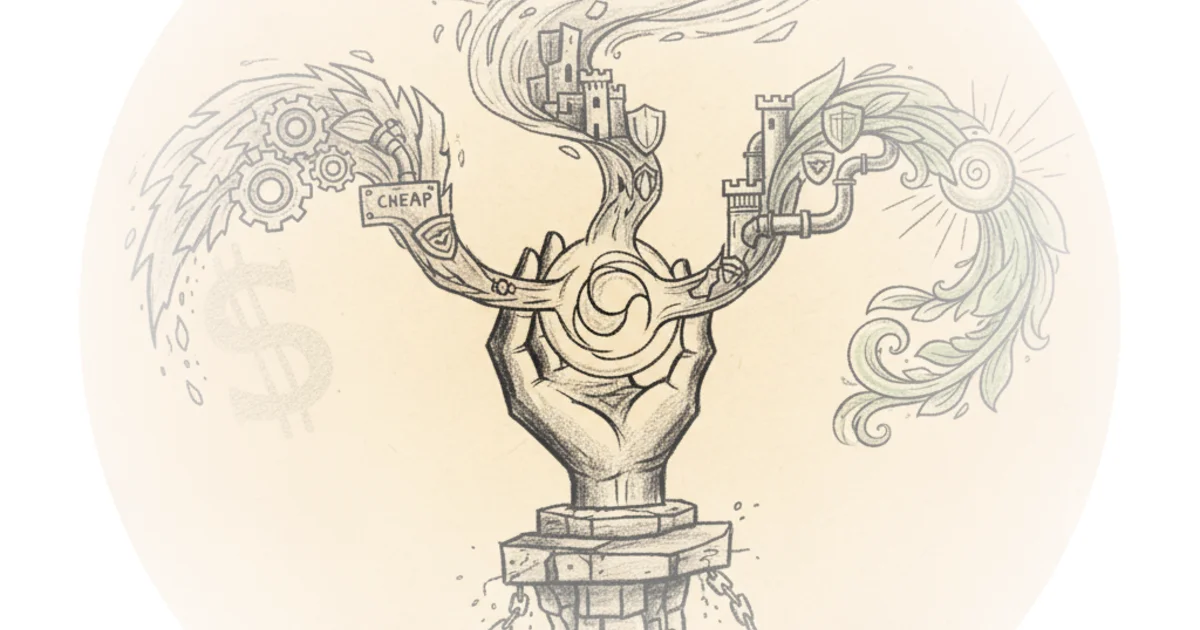
The author uses Iceland and Germany to illustrate the stakes. Iceland, by harnessing domestic geothermal and hydro power, has insulated itself from geopolitical shocks, becoming a hub for energy-intensive industries like aluminum smelting and AI data centers. In stark contrast, Germany's reliance on imported Russian gas left it vulnerable; when the invasion of Ukraine occurred, "energy prices rose by 35% to become some of the most expensive rates on the planet," triggering inflation and a trade deficit. The lesson is clear: domestic energy abundance is the ultimate economic shield.
"When push comes to shove, energy abundance and security come first, and nobody wants to make sacrifices while other economies benefit from going full steam ahead since that won't fix the problem anyway."
This observation cuts to the heart of the political deadlock. Nations are trapped in a prisoner's dilemma where the rational short-term move is to ignore climate commitments to maintain competitiveness, even though the collective long-term result is disaster. Critics might argue that this framing ignores the moral imperative of the climate crisis, but the author's point is precisely that the moral argument has failed to move the needle. We need an economic argument that speaks to GDP, not just ethics.
The Cold-Hearted Economic Case
The commentary takes a sharp turn into a thought experiment: what if we looked at global warming purely as a "cold-hearted economist without care for the extinction of polar bears or habit wrecking wildfires, unless of course it affects our GDP"? This reframing is the article's most distinctive move. It forces the reader to confront the financial reality of inaction. The author defines the problem as a classic market failure: fossil fuels create negative externalities where the cost of pollution is imposed on society, not the buyer or seller. It is, as the text puts it, "a global smoking room" where everyone smokes, the air fills with toxic fumes, and eventually, no one can breathe.
The economic costs of this "hot box" are staggering. Extreme weather events already cost $143 billion annually. Agricultural productivity has dropped by 21% due to human-induced warming, and heat stress could reduce the global labor supply by up to 1.2 billion workers. While there are isolated benefits—such as "carbon fertilization" boosting wheat yields or new Arctic shipping routes—the overall net effect is decisively negative.
"One of the most widely cited empirical studies estimates that global GDP would be about 23% lower by 2100 compared to a world without climate change."
This figure is a median estimate; newer research suggests the loss could be as high as 50%. The author contrasts this with the cost of mitigation. The Stern Review and subsequent analyses from the IPCC and International Monetary Fund suggest that limiting warming to safe levels requires an investment of only 2% to 3% of global GDP annually. The math is undeniable: paying 3% now to avoid losing 23% (or 50%) later is the most rational economic decision possible.
The Implementation Gap
So why are we failing if the economics are so clear? The author identifies a brutal truth about human nature and political structure. The costs of mitigation are "frontloaded," meaning we pay the price today while the benefits only materialize decades from now, often after the current decision-makers are dead. This creates a massive utility mismatch where short-term survival trumps long-term prosperity.
Furthermore, the solution requires global coordination in an era of eroding trust. "With increasing geopolitical tensions and AI arms race, low levels of trust between the two global superpowers, and a general erosion of the global rules-based order, it's becoming increasingly difficult to focus and cooperate on shared long-term issues." Rich nations lack the incentive to act because they are insulated from the worst effects, while poorer nations feel entitled to burn fossil fuels to catch up, given that the rich did exactly the same thing for centuries.
"Net zero will only be achieved if it is economically viable."
This is the crux of the argument. The author suggests that environmentalism must be subsumed by economic pragmatism to succeed. If the transition to green energy is framed as a cost rather than an investment in security and stability, it will never happen. The hypocrisy of nations like Australia or Norway, which boast about domestic green transitions while exporting fossil fuels, further complicates the picture, proving that national accounting tricks cannot solve a global atmospheric problem.
Bottom Line
Economics Explained delivers a powerful, if unsettling, verdict: the case for climate action is strongest when it ignores the environment entirely and focuses solely on the balance sheet. The argument's greatest strength is its ruthless clarity in quantifying the cost of inaction against the cost of mitigation. However, its biggest vulnerability lies in its assumption that rational economic calculation can overcome deep-seated political fragmentation and the human tendency to prioritize the immediate over the existential. The path forward isn't just about better technology; it's about aligning short-term political incentives with long-term economic survival.